
Gooseberry aphid
Aphidula grossulariae
Description
How to identify
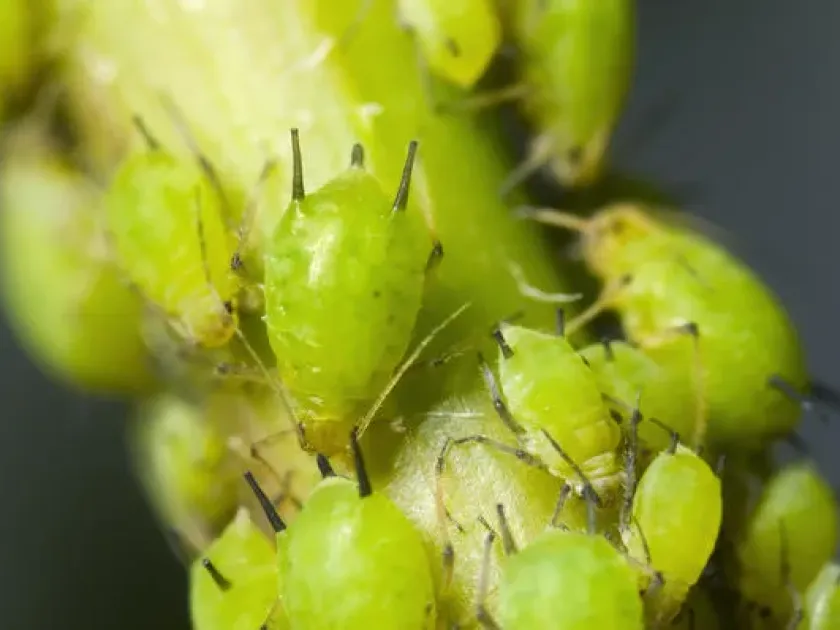
The gooseberry aphid Aphidula grossulariae is a small insect belonging to the order Hemiptera. These pests are primarily known for their high reproductive rate and specific host preference for currants and gooseberry plants.
The life cycle begins with overwintering eggs laid on the bark of young shoots near the buds. As soon as temperatures rise in spring, these eggs hatch into fundatrix larvae that start feeding on the emerging foliage.
Throughout the growing season, the aphid produces several generations. The population includes both wingless individuals, which remain on the host plant, and winged forms that migrate to ensure the survival and expansion of the colony.
A distinctive feature of this species is its complex relationship with ants. Ants provide protection for the aphids against natural predators and actively move them between plants, significantly contributing to the spread of infestations.
In late autumn, the cycle concludes with the appearance of sexual individuals that produce winter-resistant eggs, ensuring the species persists until the following spring season.
What it damages
The primary hosts for this pest include gooseberry and various currant species. By piercing the plant tissues and extracting sap, the aphids rob the host of essential nutrients required for vigorous growth.
Feeding damage causes severe deformation of young leaves, which curl and cluster together. This protects the aphids from predators and pesticides but permanently stunts the growth of the affected shoots.
The loss of sap leads to general plant weakness, reducing its ability to photosynthesize and accumulate starch. This makes the bushes more susceptible to secondary infections and harsh winter conditions.
Aphids excrete a sugary substance known as honeydew. This substance covers the leaves, providing an ideal substrate for the growth of sooty mold, which creates a black layer that further inhibits photosynthesis.
If left unmanaged, heavy infestations can cause significant yield loss, reduced fruit size, and, in severe cases, the death of young shoots, compromising the longevity of the berry bushes.
Signs of infestation
Early symptoms appear in spring when leaves at the tips of shoots begin to roll and curl. These tightly curled leaves serve as protective chambers for expanding colonies of green aphids found underneath.
Affected shoots often show distorted growth and reduced internode length. The tips of the stems may become twisted, and the leaves may change color, turning yellowish or displaying reddish discoloration.
The presence of honeydew is a clear sign of an aphid problem. The leaves appear shiny and sticky initially, and later develop a black, powdery coating caused by the growth of sooty mold fungi.
Increased ant activity on the bushes is a reliable indicator. Ants are constantly visiting the aphid colonies to harvest the honeydew, making them an easy-to-spot beacon for early detection of the pest.
- Deformed and tightly curled apical leaves.
- Visible colonies of aphids on the undersides of leaves.
- Twisted and stunted growth of shoot tips.
- Sticky honeydew secretions and black sooty mold.
- Increased ant presence on the stems and leaves.
Control measures
Cultural control practices are essential. Regularly pruning out infested shoot tips and removing suckers can significantly reduce the local aphid population early in the season.
Managing the ant population is a critical component of control. Sticky bands applied to the main stems of the bushes act as a mechanical barrier, preventing ants from reaching the aphids and protecting them.
Chemical control should be applied using selective insecticides if thresholds are exceeded. It is crucial to perform treatments either before flowering or after harvesting to protect beneficial pollinators.
Encouraging natural predators such as ladybugs, lacewings, and hoverflies is highly effective. Planting nectar-producing flowers around the berry patch provides a habitat for these beneficial insects.
Consistent monitoring throughout the spring and early summer allows for prompt intervention. Detecting the first clusters of aphids prevents the mass migration and colonization that typically occur later in the season.
Taxonomy
- Latin name
- Aphidula grossulariae
- Order
- Hemiptera (bugs, aphids, leafhoppers)
- Family
- Aphididae
- EPPO code
- APHDGR
Discussion
No discussions yet — be the first.