
Green apple aphid
Aphidula
Description
How to identify
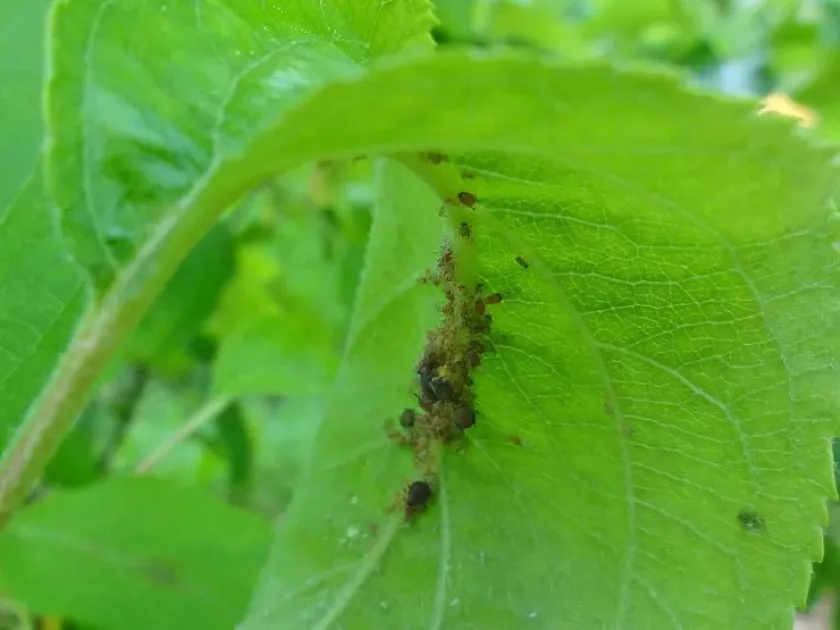
The green apple aphid (Aphis pomi), formerly classified within Aphidula, belongs to the family Aphididae. It is a small insect, approximately 1.5–2 mm long, recognized by its vibrant green body and dark appendages.
Both winged and wingless forms exist within the colony. The wingless morphs are primarily responsible for rapid population growth, while winged forms allow the aphid to disperse to different branches or nearby trees.
The species overwinters as black, oval-shaped eggs laid in bark crevices of young twigs or near buds. These eggs are highly resistant to cold weather and serve as the primary source of spring infestation.
It is a host-specific species, meaning it spends its entire life cycle on apple trees. It does not require alternate hosts, which makes it a persistent threat throughout the growing season.
These insects are social in a way that they form dense colonies, often covering the entire circumference of tender new shoots, where they feed on nutrient-rich phloem sap.
What it damages
The primary host is the apple tree, though it may occasionally colonize pear, hawthorn, and rowan. It is particularly damaging to nursery trees and young orchards where rapid growth is essential.
By extracting plant sap, aphids deprive the tree of vital nutrients and water. This metabolic disruption leads to the cessation of shoot elongation and severe stunted growth.
Leaves affected by aphids curl and twist, creating protective microenvironments for the insects. This curling makes direct contact with contact insecticides difficult to achieve.
The secretion of honeydew promotes the colonization of sooty mold, which impairs photosynthesis. This secondary infection further weakens the tree, affecting overall vigor and fruit production.
In cases of severe infestation, young apple trees may lose their terminal growth, leading to poor structural development and reduced winter hardiness.
When it appears
Hatching from overwintered eggs typically occurs during the bud-burst stage in early spring. This is the critical window for initial pest scouting and intervention.
The population reaches its peak during the early to mid-summer period when succulent new growth is abundant. High temperatures and humidity generally favor explosive population growth.
As the shoots begin to harden in late summer, the nutritional value of the phloem drops, and the aphid population naturally declines or shifts towards the production of winter eggs.
Autumn marks the transition phase where sexual morphs are produced. Mating occurs, and females lay the overwintering eggs on the shoots to prepare for the next season.
Monitoring the stages of tree phenology is essential for agronomists, as it helps determine the optimal timing for protective spraying before the population reaches an uncontrollable density.
Signs of infestation
The most reliable sign of an infestation is the curling and yellowing of leaves on the terminal shoots. Checking the underside of these leaves usually reveals the aphid colony.
Increased ant activity is a strong indicator of aphid presence. Ants protect the aphids from predators to collect the honeydew, effectively acting as "shepherds" for the colony.
Sticky residue on the leaves and branches is a clear sign of honeydew accumulation. This sticky substance eventually turns black due to the growth of sooty mold fungi.
Stunted growth of new shoots is a symptom that suggests the infestation has been present for some time and is beginning to affect the tree's health significantly.
- Curled and deformed leaves
- Presence of ants on branches
- Sticky honeydew secretions
- Sooty mold on foliage
- Stunted shoot development
Control measures
Good orchard sanitation is the first line of defense. Pruning out water sprouts and root suckers helps reduce the initial nesting grounds for aphids in early spring.
Managing nitrogen fertilization is crucial. Over-fertilization results in excessive tender growth that attracts aphids, creating an ideal environment for them to thrive.
Biological control plays a significant role. Encouraging natural enemies like ladybirds, lacewings, and hoverflies can often keep aphid populations below the economic injury level.
Chemical control should be implemented when scouting indicates that the threshold of infestation has been exceeded. Systemic insecticides are preferred for their ability to reach protected aphids in curled leaves.
Rotation of chemical classes is necessary to manage resistance. Given the high reproductive rate of aphids, selecting different modes of action is vital for long-term pest management success.
Taxonomy
- Latin name
- Aphidula
- Order
- Hemiptera (bugs, aphids, leafhoppers)
- Family
- Aphididae
- EPPO code
- APHDSP
Discussion
No discussions yet — be the first.