
Aphelenchoides sacchari
Aphelenchoides sacchari
Description
How to identify
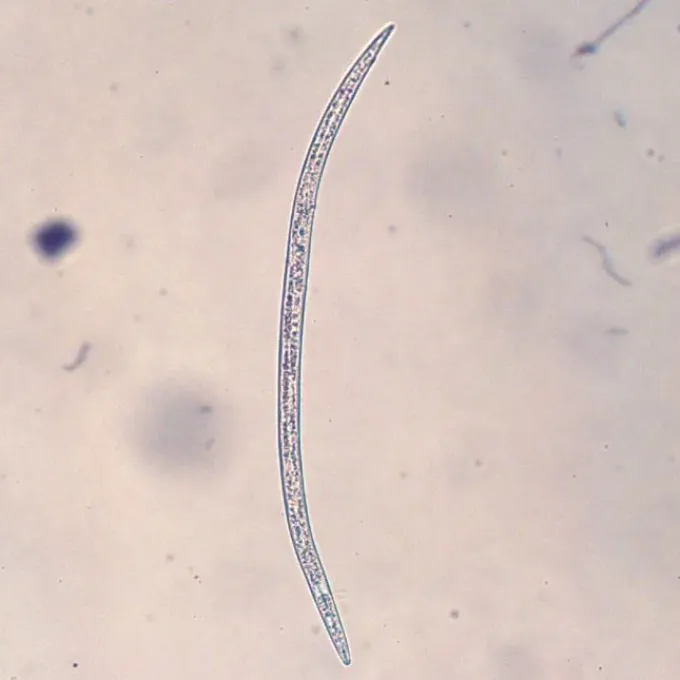
Aphelenchoides sacchari is a microscopic, thread-like nematode belonging to the order Tylenchida and the family Aphelenchoididae. This pest exhibits a unique lifestyle, capable of acting both as a plant parasite and a mycophagous organism that feeds on fungal hyphae in the soil.
Adult specimens are characterized by a distinct body structure featuring a well-developed stylet, which is utilized for penetrating plant cells or fungal mycelium. Due to their extremely small size, detection is only possible through laboratory diagnostic procedures involving microscopy.
Unlike many other herbivorous nematodes, this species demonstrates significant plasticity in its diet. This biological adaptation allows the population to survive in soil environments even in the absence of a host plant, utilizing organic matter and soil micro-fungi as alternative nutrition.
The optimal temperature range for active reproduction and development corresponds to moderate climatic conditions. High humidity enables these nematodes to migrate effectively within the thin films of water surrounding soil particles, facilitating their spread across fields.
The lifecycle of the pest encompasses the egg stage, four larval stages, and the adult stage. The speed of generation turnover is directly dependent on environmental temperature and the availability of nutrient sources, ensuring the continuous growth and maintenance of the local population.
What it damages
This nematode species causes substantial damage to a wide range of agricultural and ornamental crops, with particular impact on Solanaceae and Liliaceae families. Infestations occur in both open-field conditions and greenhouse environments, where controlled climates favor their activity.
The infection typically begins via the root system or aerial plant parts when soil moisture levels are high. By feeding on cell sap, the nematodes disrupt metabolic processes and photosynthesis, leading to reduced vigor and stunted growth in the infested plants.
Beyond direct physical damage, these pests often serve as vectors for pathogenic microorganisms. Micro-wounds created by the stylet serve as entry points for bacterial and fungal infections, which subsequently induce secondary rot and tissue degradation.
Economic damage is observed through the loss of product marketability, significant yield reduction, and developmental delays. Mass outbreaks of nematodes can lead to the death of seedlings, which is particularly devastating for nurseries and greenhouse production.
The level of damage correlates with the population density of the pest within the substrate and the duration of favorable conditions. Neglecting management practices often leads to cumulative losses that jeopardize the entire harvest cycle.
Signs of infestation
Initial symptoms of an infestation manifest as general plant stress, including leaf chlorosis and stunted growth. Infected plants consistently lag behind healthy specimens in size and development despite adherence to irrigation and fertilization schedules.
Aerial plant parts often exhibit leaf deformation and the appearance of necrotic lesions that gradually expand over the leaf surface. Root systems under attack show dark discoloration, and a decline in the formation of fine feeder roots is frequently observed.
Microscopic examination of the root tissues often reveals areas of softening associated with nematode activity. As a physiological response to root damage, plants may display excessive root branching in an attempt to compensate for the lost functional mass.
Diagnosis is frequently challenging because these symptoms mimic nutrient deficiencies or fungal pathogens. A definitive identification requires professional phytonematology analysis of soil samples or symptomatic plant tissues to confirm the presence of this specific species.
Another common sign is reduced drought tolerance, as damaged roots lose their ability to efficiently uptake water, causing the plant to wilt even under adequate watering conditions.
Control measures
The primary control method involves strict quarantine measures and the utilization of certified disease-free planting material. Using validated seeds and transplants significantly lowers the risk of introducing this pest into new areas.
Implementing thermal soil treatment before planting is an effective agrotechnical practice. Steam sterilization or soil solarization can effectively eliminate nematode populations residing in the upper soil layers.
Rotation strategies, including the cultivation of antagonistic plants, can naturally suppress population numbers. Maintaining balanced soil moisture and preventing waterlogging is crucial to hinder the migration of nematodes.
Chemical control, specifically the application of nematicides, is recommended only in cases of high infestation density. Applications must follow strict regulatory guidelines, particularly regarding safety intervals before the harvesting period.
- Disinfection of farming tools and equipment after contact with infested areas.
- Immediate removal and destruction of plants showing clear signs of infestation.
- Enhancing soil health by incorporating high-quality organic fertilizers.
- Application of biological control agents based on entomopathogenic fungi.
Taxonomy
- Latin name
- Aphelenchoides sacchari
- Order
- Nematodes
- Family
- Aphelenchoididae
- EPPO code
- APLOSA
Discussion
No discussions yet — be the first.