
Lily nematode
Aphelenchoides lilium
Description
How to identify
The lily nematode (Aphelenchoides fragariae) is a microscopic foliar nematode that belongs to the order Aphelenchida. Despite its small size, it is a significant agricultural pest capable of devastating ornamental bulbous crops.
Adult nematodes are slender, worm-like organisms measuring less than 1 mm in length. Due to their transparency, they cannot be seen with the naked eye, necessitating the use of a microscope for accurate identification.
These pests live and reproduce within the plant tissues, specifically in the intercellular spaces. Their life cycle is heavily influenced by environmental moisture, which allows them to migrate over plant surfaces.
Unlike soil-borne nematodes, the lily nematode spends the majority of its life cycle in the aerial parts of the plant, including leaves, stems, and flower buds, feeding on cell contents.
They overwinter as eggs or larvae inside dried plant debris or within the scales of dormant lily bulbs, allowing the population to persist from season to season in the garden environment.
What it damages
The primary hosts include various species of lilies, strawberries, and numerous ferns. The damage is caused by the nematode feeding on plant cells using its stylet, leading to structural breakdown.
This feeding mechanism causes localized cell death and disrupts the plant's ability to transport nutrients, resulting in severe stunting and, in extreme cases, the total collapse of the plant.
Signs of infestation
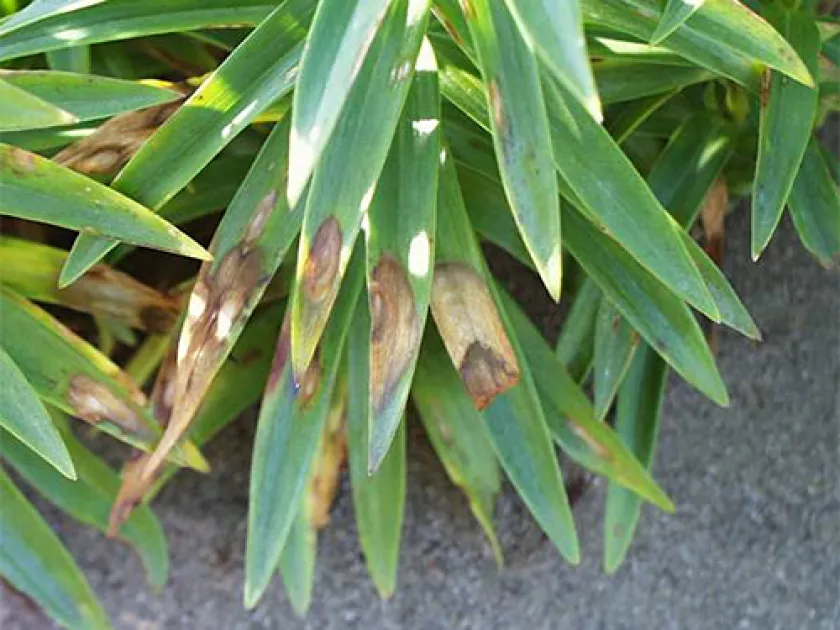
The most common symptom is the development of brown, wedge-shaped lesions between the leaf veins. These areas eventually become necrotic, leading to leaf curling, drying, and premature shedding.
Stunted and distorted growth is a hallmark of severe infestation. Stems often become twisted or fail to reach their full height, and internodes may appear significantly shortened.
Flowers on infected plants are frequently malformed or fail to open entirely. Buds may turn brown and wither before they have the chance to bloom, which ruins the plant's ornamental value.
In bulbs, symptoms include brown discolorations and softened scales. These damaged tissues become highly susceptible to secondary bacterial and fungal infections, accelerating the rot process.
Plants affected by the nematode often show signs of overall weakness and reduced vigor, making them more susceptible to other environmental stressors, pests, and various plant diseases.
Control measures
Prevention is the most effective management strategy. Always start by inspecting bulbs for any signs of decay or softening and purchase planting stock from reputable suppliers.
A hot water treatment can be employed as a remedial measure: submerge dormant bulbs in 45–48°C water for approximately 20–30 minutes to kill the nematodes without damaging the bulbs.
Sanitation is critical. Infected plants should be promptly rogued out and destroyed (preferably by burning) to eliminate the source of infestation and prevent further spread to healthy plants.
Practice crop rotation by avoiding the planting of susceptible species in the same site for several years. This starves the nematode population and allows the site to recover naturally.
Avoid overhead irrigation whenever possible, as splashing water is the primary mode of transmission for these nematodes. Use drip irrigation to keep the foliage dry and reduce the risk of spread.
Taxonomy
- Latin name
- Aphelenchoides lilium
- Order
- Nematodes
- Family
- Aphelenchoididae
- EPPO code
- APLOLI
Discussion
No discussions yet — be the first.