
Foliar nematode Aphelenchoides hamatus
Aphelenchoides hamatus
Description
How to identify
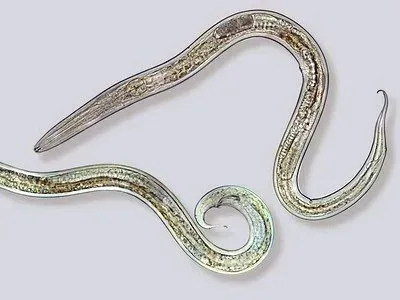
The foliar nematode Aphelenchoides hamatus belongs to the order Tylenchida and the family Aphelenchoididae. These are microscopic roundworms that specifically target the aerial parts of various plant species, living as endoparasites within leaves and stems.
The morphology of this pest includes a slender, worm-like body and a specialized oral spear known as a stylet. This stylet is used to penetrate plant cells, allowing the nematode to extract vital fluids while avoiding external exposure to harsh environmental conditions.
The biological cycle of Aphelenchoides hamatus is heavily dependent on surface moisture. The nematodes move through water films on the plant surface to access stomata, which serve as entry points into the leaf tissue where they reproduce rapidly.
These nematodes possess a high reproductive rate, enabling the population to grow significantly within a single growing season. Under unfavorable conditions, they can enter a state of dormancy, which allows them to survive in dry plant debris for extended periods.
Dissemination often occurs through contaminated irrigation water, gardening tools, or the movement of infected plant material. Once established, they can persist in the environment if proper sanitation practices are not strictly maintained.
What it damages
This species infests a wide range of host plants, particularly ornamental varieties, ferns, and bulbous crops. By disrupting cellular function, the nematode severely weakens the host plant, rendering it susceptible to secondary infections and environmental stress.
Signs of infestation
Initial symptoms are characterized by interveinal chlorosis, where yellowing appears between the leaf veins. As the infestation progresses, these areas turn necrotic, showing characteristic brown or black patches that often expand across the entire leaf surface.
Heavily infected plants show severe deformation, including crinkled or twisted leaves, stunted stems, and premature leaf drop. In many cases, the reduction in photosynthetic area prevents the plant from flowering or producing healthy growth.
Control measures
Effective management begins with strict sanitation and the use of certified pathogen-free planting material. Quarantine of new plants is essential to prevent the accidental introduction of Aphelenchoides hamatus into clean greenhouses or gardens.
Cultural practices such as avoiding overhead irrigation are crucial, as keeping leaves dry prevents the migration of nematodes. Proper spacing of plants to improve airflow and quick removal of any infested debris are mandatory steps for infection control.
In cases of infestation, systemic nematicides or biological agents can be applied, though prevention remains the most effective tool. Soil steaming or solarization can also be used to treat infested growing media before replanting.
Taxonomy
- Latin name
- Aphelenchoides hamatus
- Order
- Nematodes
- Family
- Aphelenchoididae
- EPPO code
- APLOHA
Discussion
No discussions yet — be the first.