
Aphelenchoides goodeyi
Aphelenchoides goodeyi
Description
How to identify
Aphelenchoides goodeyi is a microscopic foliar nematode belonging to the order Aphelenchida and the family Aphelenchoididae. As a specialized plant parasite, it has evolved complex physiological traits to survive and thrive on various hosts under specific environmental conditions.
The body of the nematode is thread-like and nearly transparent, rendering it invisible to the naked eye. Accurate identification requires advanced laboratory techniques, such as microscopic inspection of the esophagus and tail region, to distinguish it from other related species.
The life cycle of this organism is intrinsically linked to moisture. The nematodes require a thin film of water on the plant surface to migrate, mate, and reproduce. Consequently, high humidity or rain significantly promotes the spread of the pest across the canopy.
These nematodes exhibit remarkable resilience, often surviving in soil or plant debris when environmental conditions are unfavorable. They possess a dormant stage that allows them to withstand periods of desiccation, making them a persistent threat in agricultural environments.
Dissemination usually occurs through infested cuttings, contaminated soil, or shared gardening tools. Given their high reproductive capacity, a small initial population can quickly expand into a severe infestation if the climate is suitable for their development.
What it damages
This nematode primarily damages a variety of ornamental and greenhouse plants, with ferns, begonias, and chrysanthemums being particularly susceptible. The parasite exploits these hosts by feeding on internal leaf tissues, leading to significant physiological stress.
Upon penetrating the leaf tissue via the stomata, the nematode consumes the cell contents. This feeding behavior disrupts photosynthesis and severely impacts the plant's overall metabolic functions, often resulting in stunted growth and diminished vitality.
Damage to the apical meristem or growing points is especially critical, as it leads to deformation of emerging leaves and shoots. In many cases, the affected plant loses its aesthetic value, which is particularly detrimental for commercial ornamental production.
As the nematode population increases, the cumulative damage results in extensive leaf necrosis and premature abscission. Weakened plants are subsequently predisposed to secondary infections by pathogenic fungi and bacteria, further complicating recovery.
- Development of chlorotic interveinal spots.
- Leaf curling and deformation of young shoots.
- Necrosis of leaf tissue edges.
- Reduction in biomass and stunted growth.
- Total loss of ornamental value in infested crops.
Signs of infestation
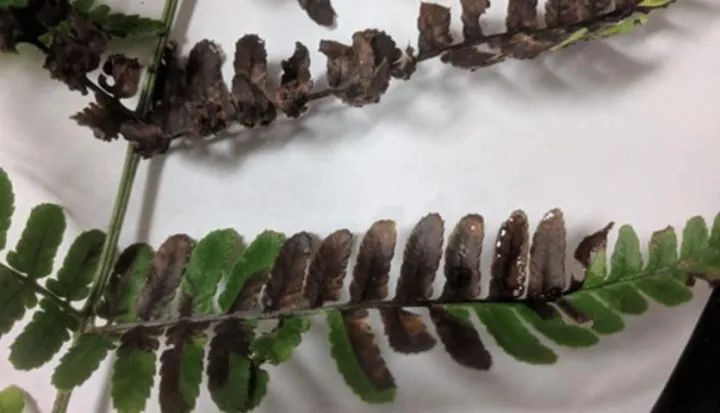
The initial signs of infection often manifest as small, brown, or tan spots on the foliage, which are frequently constrained by leaf veins. These lesions gradually expand and coalesce, leading to large areas of necrotic tissue on the leaf blade.
As the infestation progresses, characteristic leaf distortion occurs. Leaves may become crinkled, brittle, or twisted, and growth in the terminal buds is often suppressed, leading to a rosetted or malformed plant architecture.
In humid conditions, infected areas may appear water-soaked or slimy, which is often mistakenly attributed to bacterial leaf spot. Professional diagnostic procedures are essential to differentiate these signs from non-parasitic or fungal physiological disorders.
The distribution of the pest within a greenhouse is typically patchy. Monitoring should be focused on the foliage, especially in the early morning hours, as moisture levels during this time provide optimal conditions for nematode migration.
A definitive diagnosis is only possible through laboratory phytopathological analysis. Specialists utilize the Baermann funnel technique to extract the nematodes from the plant tissues, allowing for precise identification and quantification of the infestation.
Control measures
The primary control strategy is the exclusive use of clean, certified planting material. Sourcing plants from reliable nurseries that implement strict phytosanitary measures is the most effective way to prevent the introduction of this pest into your garden or greenhouse.
Cultural management involves avoiding overhead irrigation, which minimizes the water films necessary for nematode mobility. Ensuring adequate ventilation and air circulation within growing facilities helps maintain leaf dryness and reduces the risk of population outbreaks.
Thermal treatment is a highly effective non-chemical control method. Immersing infected cuttings in hot water at 45–48 degrees Celsius for 10 to 15 minutes can eliminate nematodes without harming the plant tissues, provided the temperature is strictly controlled.
Once an infection is identified, immediate removal and destruction of the infested plant material are mandatory to prevent further spread. Additionally, all tools and equipment must be rigorously disinfected after each use in the infected zone.
When infestation levels exceed acceptable thresholds, chemical control using systemic nematicides may be required. These products should be applied according to professional regulations, ensuring thorough coverage to maximize the contact of the active ingredient with the parasite.
Taxonomy
- Latin name
- Aphelenchoides goodeyi
- Order
- Nematodes
- Family
- Aphelenchoididae
- EPPO code
- APLOGO
Discussion
No discussions yet — be the first.