
New Zealand leafhopper
Anzygina zealandica
Description
How to identify
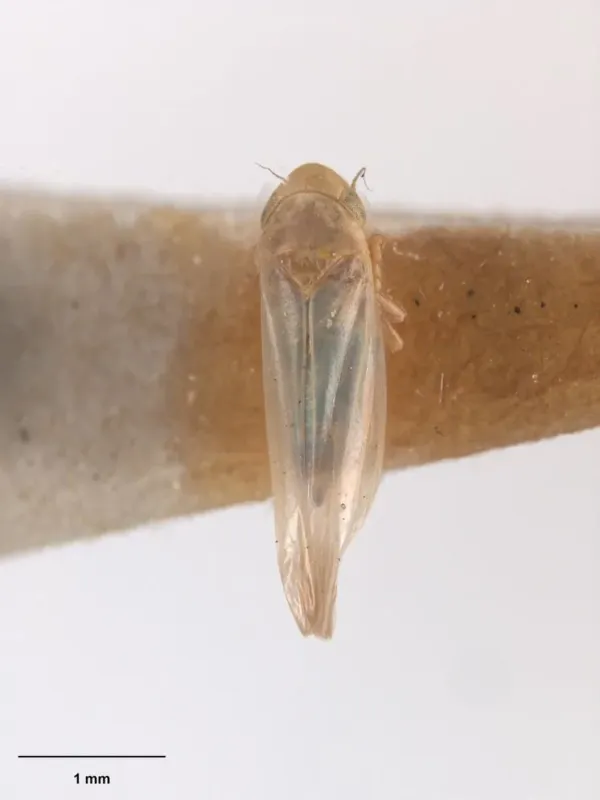
The New Zealand leafhopper (Anzygina zealandica) belongs to the order Hemiptera and the family Cicadellidae. It is a small insect, with adults measuring only 3-4 mm in length and displaying a pale or greenish-yellow coloration.
The pest has an elongated body shape, adapted for rapid jumping and flight. Nymphs resemble adults but are significantly smaller, wingless, and often hide on the undersides of leaves.
Originally from New Zealand, this species has spread globally to various temperate regions. The insect maintains a cryptic lifestyle, which makes early detection during the colonization phase difficult.
Reproduction is sexual, with females laying eggs inside plant tissues, primarily in petioles and leaf veins. This behavior protects the offspring from external factors and makes controlling eggs a challenging task for growers.
The life cycle includes the egg stage, five nymphal instars, and the adult stage. In favorable temperatures, the species can produce multiple generations per season, leading to exponential population growth by late summer.
What it damages
This pest is polyphagous, causing significant damage to vineyards as well as a wide range of fruit and ornamental crops. It feeds on plant sap by piercing the leaf epidermis with its proboscis.
Damage affects both young shoots and mature foliage. Extensive feeding by these insects disrupts normal photosynthesis, weakens plant immunity, and reduces fruit quality.
A particular danger is the leafhopper's ability to act as a vector for phytoplasmas and viral plant diseases. Even at low densities, the pest can transmit infections that cause leaf yellowing and deformation.
Under heavy infestation, premature leaf drop occurs, which negatively impacts the formation of fruit buds for the following season. This results in long-term economic losses for horticultural and viticultural operations.
Mass outbreaks are often triggered by hot and dry climatic conditions, which accelerate the insect's metabolism. The degree of damage is directly proportional to the population density during the crop's active growth period.
Signs of infestation
The first sign of leafhopper presence is the appearance of small, light-colored spots on the upper side of the leaves. These points represent areas where cell puncture has occurred, destroying chlorophyll content.
Upon inspecting the underside of the leaves, one may notice shed nymphal skins (exuviae), which are white or transparent. This is a reliable indicator of an active pest population.
Severe infestations lead to pronounced chlorosis (yellowing) of the leaf blade, which eventually transitions into tissue necrosis. The leaves develop a marbled pattern and may drop prematurely.
The presence of large numbers of adults is easily detected by shaking the branches: insects swarm in flight, performing characteristic jumps. They are also active in the evening, moving between adjacent plants.
A secondary sign of infestation is the development of sooty mold on the insects' honeydew secretions if the population reaches high density. Leaves become sticky and covered with a dark film.
Control measures
Effective protection begins with monitoring using yellow sticky traps. These allow for timely detection of adult presence and help estimate the population dynamics of the pest in the garden.
Agricultural practices include regular sanitary pruning and the destruction of fallen leaves, which can serve as overwintering sites for eggs. Maintaining proper irrigation is also vital, as drought-stressed plants are more attractive to pests.
Biological control involves utilizing natural enemies like predatory bugs and lacewings, which naturally limit leafhopper numbers. Creating habitats for beneficial insects is a crucial step in integrated pest management.
Chemical control measures should only be implemented when the economic threshold is reached. It is recommended to use systemic insecticides, which penetrate the plant tissues to eliminate pests as they feed on sap.
- Spraying contact insecticides during the early morning hours.
- Rotating active ingredients to prevent the development of resistance.
- Thoroughly applying treatments to the undersides of leaves where nymphs congregate.
Taxonomy
- Latin name
- Anzygina zealandica
- Order
- Hemiptera (bugs, aphids, leafhoppers)
- Family
- Cicadellidae
- EPPO code
- ERYTIX
Discussion
No discussions yet — be the first.