
Anzygina honiloa leafhopper
Anzygina honiloa
Description
How to identify
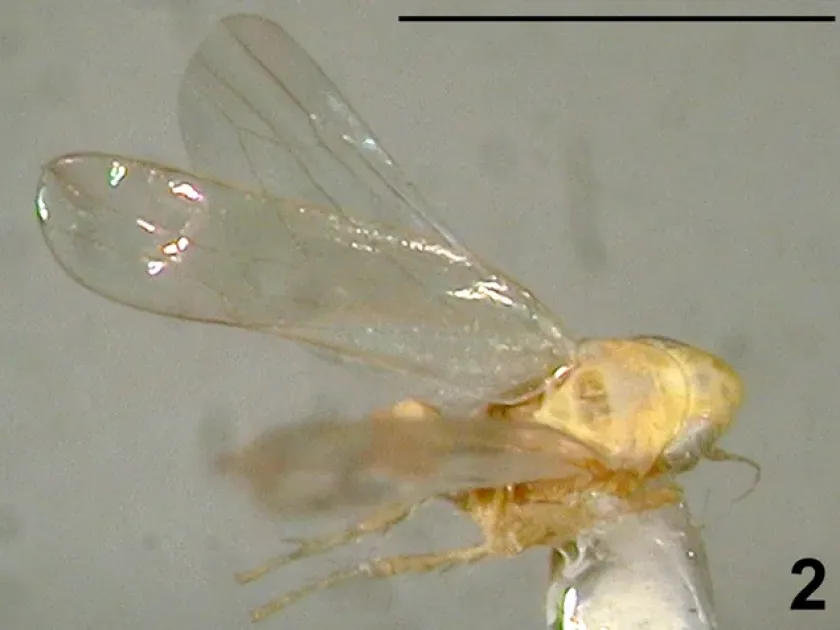
The Anzygina honiloa leafhopper is a small insect belonging to the Cicadellidae family within the order Hemiptera. These insects are known for their distinct jumping ability and wedge-shaped appearance.
Adults typically feature a streamlined body with wings folded in a roof-like manner over their backs. Their coloration often blends with the host plant, making them difficult to spot during the early stages of infestation.
Nymphs are similar in appearance to adults but lack functional wings. They are highly active and tend to reside on the underside of leaves to avoid predators and environmental stressors.
They possess a piercing-sucking mouthpart designed specifically to extract xylem or phloem fluids from plants, causing physiological disruption in the host.
Development involves several nymphal stages, and the life cycle is significantly influenced by ambient temperatures, often accelerating in greenhouse conditions.
What it damages
This pest is highly polyphagous, attacking a variety of horticultural and agricultural crops. Its broad host range makes it a consistent threat across different seasons.
By constantly feeding on plant juices, the insect causes substantial sap loss, which leads to reduced photosynthesis and overall vigor of the host plant.
Young plants are particularly vulnerable, as the damage from feeding often causes stunted growth, leaf deformation, and even plant death in severe cases.
Beyond physical injury, Anzygina honiloa can serve as a vector for various plant pathogens, facilitating the spread of viral diseases throughout the field.
In intensive cultivation, the economic damage caused by these insects can be severe due to yield loss and the degradation of product quality.
Signs of infestation
The first signs of infestation are characterized by tiny stippling or chlorotic spots on the leaf surface, which gradually expand as feeding continues.
A tell-tale sign of a high population is the presence of pale, mottled patches on the foliage. Eventually, affected leaves turn yellow and may drop prematurely.
Excreta, appearing as minute dark spots on the foliage, often accumulate during heavy infestations, providing an environment for secondary fungal growth.
Leaf curling or crinkling can occur as a response to the salivary toxins injected by the leafhopper during the feeding process.
Monitoring the undersides of leaves will often reveal the presence of cast-off skins (exuviae) left behind by nymphs, indicating a breeding colony.
Control measures
Effective management requires a combination of cultural practices, monitoring, and, when necessary, targeted chemical interventions to keep populations below thresholds.
Sanitation is key; removing weeds that serve as alternative hosts significantly reduces the risk of leafhopper colonization in the main crop.
Sticky yellow traps are highly recommended for monitoring adult populations. These traps help identify the timing of outbreaks and provide a basic level of control.
Integrated Pest Management (IPM) should emphasize the use of natural predators and biological insecticides to maintain balance within the ecosystem.
Chemical control should be applied judiciously, using systemic insecticides only when necessary and rotating products with different modes of action to prevent resistance.
Taxonomy
- Latin name
- Anzygina honiloa
- Order
- Hemiptera (bugs, aphids, leafhoppers)
- Family
- Cicadellidae
- EPPO code
- ANZYHO
Discussion
No discussions yet — be the first.