
Carrot root aphid
Anuraphis subterranea
Description
How to identify
Carrot root aphid (Anuraphis subterranea) is a specialized insect pest belonging to the Aphididae family. Unlike leaf-feeding aphids, this species primarily inhabits the root zone of carrot crops.
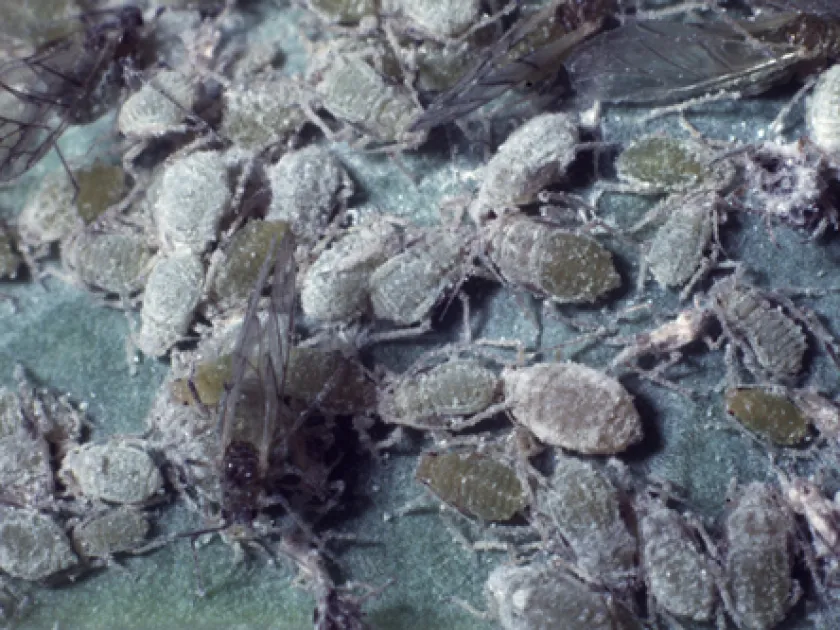
The adult aphids are small, often measuring about 2 mm, with a pale yellow or whitish body. They are frequently covered in a waxy, powdery substance that serves as a protective layer against environmental stress.
They have a complex life cycle involving migration between hosts, but during the summer, they thrive in subterranean environments around the roots of Apiaceae plants.
A distinctive feature of this species is its symbiotic relationship with ants, which transport the aphids to healthy roots and protect them from predators in exchange for honeydew.
Because they live underground, they often go unnoticed until significant damage has already occurred, making early detection difficult for growers.
What it damages
This pest targets carrots, parsnips, and celery. The damage is caused by the aphid feeding on the sap of the taproot, which stunts the development of the vegetable.
Severe infestations result in yellowing, wilting, and premature senescence of the foliage, as the root system is no longer capable of supplying sufficient nutrients to the plant.
The roots themselves become stunted, deformed, and often covered in nodules or necrotic lesions, which significantly reduces the marketable quality of the crop.
The feeding process creates wounds on the root surface, which provide entry points for soil-borne pathogens, leading to secondary bacterial or fungal rot infections.
Young plants are particularly vulnerable; an aphid outbreak during the early growth stages can result in the total loss of the crop stand.
When it appears
The aphid population typically begins to build up in late spring when soil temperatures reach levels conducive to rapid development, usually around May or June.
The peak of the infestation usually occurs during the hot and dry summer months, as dry soil conditions facilitate the movement of aphids through soil cracks towards the roots.
As autumn approaches, the aphids prepare for winter, laying eggs on the roots of overwintering host plants or deep in the soil, where they survive until the following season.
Each generation develops rapidly in warm weather, allowing for multiple overlapping generations to build up large colonies within a single growing season.
Water-stressed plants are more susceptible to aphid colonization, which is why infestations often follow periods of prolonged drought in commercial or home gardens.
Signs of infestation
The most common sign of an infestation is uneven or stunted growth in certain parts of the carrot field, where plants appear significantly smaller than their neighbors.
Foliage may show symptoms of nutrient deficiency or drought, such as chlorosis and wilting, despite regular irrigation, because the roots are damaged.
When inspecting the soil around the base of the plant, one can observe white, cottony, or powdery masses attached to the carrot roots, representing the aphid colonies.
Increased ant activity around the carrot rows is a strong indicator of the presence of aphids below the soil surface, as ants act as farmers to these colonies.
Upon harvest, affected roots will show visible distortions, irregular shapes, and in some cases, symptoms of rot caused by secondary infections.
Control measures
Crop rotation is the most effective preventative measure; avoiding the planting of carrots or related umbellifers in the same plot for at least three years helps break the life cycle.
Effective weed control is essential, as many wild members of the Apiaceae family serve as reservoirs for the aphids during the season and between years.
Managing ant populations within the garden helps reduce the spread of aphids, as ants are known to move them between plants to maximize their own food source.
Deep cultivation of the soil after harvest helps expose overwintering stages to the elements, reducing the number of aphids that will survive into the next spring.
- Maintain consistent soil moisture to prevent cracks that provide access to roots.
- Apply systemic insecticides where permitted, ensuring they reach the root zone.
- Use biological control agents such as predatory beetles or lacewings.
- Remove and destroy severely infested crop residues immediately after harvest.
Taxonomy
- Latin name
- Anuraphis subterranea
- Order
- Hemiptera (bugs, aphids, leafhoppers)
- Family
- Aphididae
- EPPO code
- ANURSU
Discussion
No discussions yet — be the first.