
Pear-mugwort aphid
Anuraphis pyrilaseri
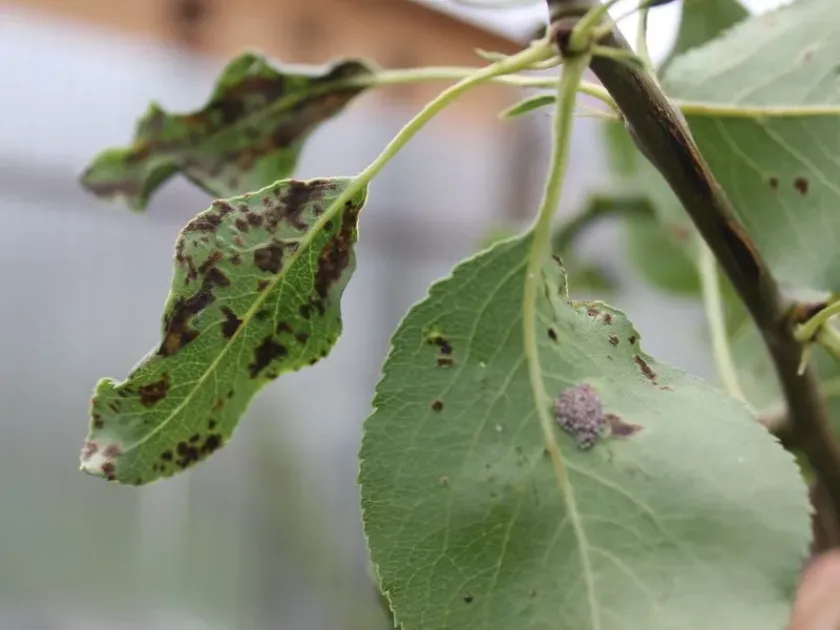
Description
How to identify
The pear-mugwort aphid (Anuraphis pyrilaseri) is a species of the Aphididae family known for its host-alternating life cycle. These small insects are common pests in orchards, characterized by their ability to thrive on both primary and secondary host plants.
Adult aphids are generally oval-shaped, displaying colors ranging from yellowish-green to brownish, which aids in camouflage on the foliage of the host tree.
They typically colonize the undersides of young leaves and shoot tips, where they establish dense, thriving populations that are easily identified by a close inspection of the infested plant parts.
The life cycle involves a migration pattern between pear trees in the spring and autumn and herbaceous plants, primarily mugwort (Artemisia), during the summer months.
Their presence is almost always accompanied by significant ant activity, as ants are drawn to the honeydew secreted by the aphids during their feeding process.
What it damages
These aphids cause damage by piercing the plant tissues and extracting nutrient-rich cell sap from young leaves and growing shoots, leading to severe physiological stress.
Infestation results in the curling, distortion, and yellowing of foliage, which restricts the tree's photosynthetic capacity and hinders healthy growth.
The stunted and deformed shoots, combined with reduced leaf vigor, significantly decrease the overall health and productivity of the pear tree over time.
Honeydew secretion promotes the growth of sooty mold, a fungus that forms a black coating on leaves, further impeding gas exchange and light absorption.
Repeated annual infestations weaken the trees, making them susceptible to winter injury and increasing their vulnerability to various secondary pathogens.
When it appears
The life cycle begins in early spring when eggs deposited on the bark of pear trees hatch into fundatrices, which coincide with the onset of bud break.
Late spring and early summer represent the peak period of population density, during which the aphids colonize new growth and reproduce rapidly.
During mid-summer, winged migrants leave the pear trees to colonize secondary hosts like mugwort, where they continue their seasonal development.
In autumn, sexual forms return to the pear trees to mate and lay overwintering eggs on the woody parts of the tree, ensuring survival through the cold months.
Environmental variables, particularly temperature and humidity levels, directly dictate the pace of generation cycles and the success of seasonal migrations.
Signs of infestation
Leaf curling on the tips of pear shoots is the most prominent visual sign of an active infestation, as aphids hide inside the rolled leaves.
Sticky residue (honeydew) on the leaves and branches is a clear indicator that aphids have been actively feeding in the vicinity.
Increased ant traffic along the trunks and branches is a classic behavioral symptom, as ants protect and farm the aphids for their sweet secretions.
A black or dark sooty mold coating on the leaves indicates a heavy aphid infestation that has persisted for an extended period.
Noticeable distortion or crooked growth of new shoots is a reliable physical sign of long-term aphid damage to the apical meristems.
Control measures
Effective management begins with dormant season treatments using oil-based sprays to target and destroy overwintering eggs on the tree bark.
During the growing season, systemic insecticides are often required to control internal populations that are protected within curled leaves.
- Remove secondary host weeds, specifically mugwort, from around the orchard perimeter.
- Install sticky bands on trunks to block ants and disrupt their protection of aphid colonies.
- Encourage beneficial predators like lady beetles, lacewings, and hoverflies to naturally suppress populations.
Regular orchard monitoring is essential to catch early signs of colonization before the damage to shoots becomes irreversible.
Post-harvest sanitary practices, such as removing damaged wood, help decrease the number of overwintering eggs present for the following season.
Taxonomy
- Latin name
- Anuraphis pyrilaseri
- Order
- Hemiptera (bugs, aphids, leafhoppers)
- Family
- Aphididae
- EPPO code
- ANURPL
Discussion
No discussions yet — be the first.