
Anuraphis
Anuraphis
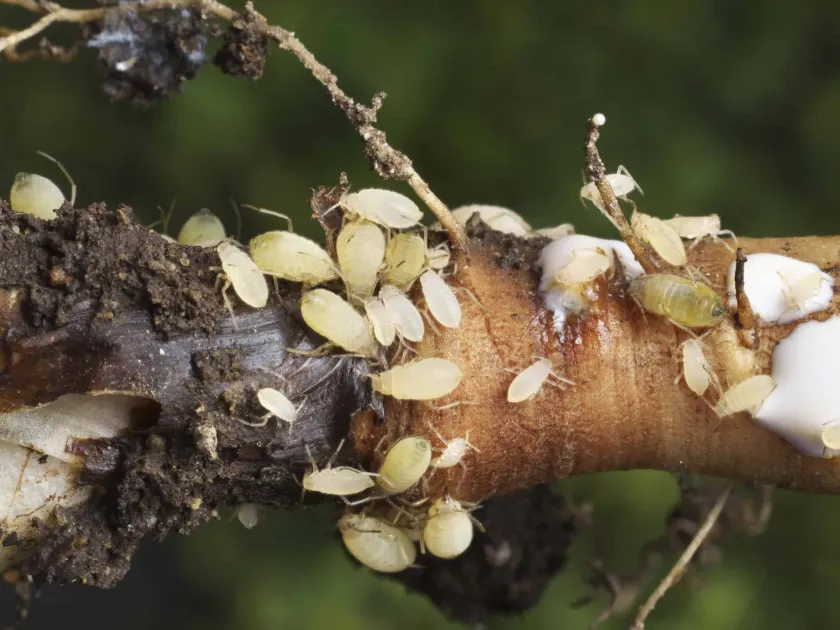
Description
How to identify
The genus Anuraphis belongs to the family Aphididae (aphids) and is well-known in pomology for its ability to damage fruit trees, particularly pear.
These insects have a typical aphid morphology with soft bodies and distinct siphunculi, usually appearing in varying shades of brown, green, or grey.
The most significant species, Anuraphis farfarae, undergoes a heteroecious life cycle, meaning it migrates between primary and secondary hosts throughout the season.
Overwintering occurs in the egg stage, with eggs firmly attached to the bark near buds, waiting for spring temperatures to trigger hatching.
Once the buds begin to burst, the nymphs emerge and immediately start feeding on the tender emerging leaves, initiating colony formation.
What it damages
The primary host plant is the pear tree, where the aphid causes severe damage during the early growing season by colonizing young leaves and shoots.
During the summer months, the population migrates to alternative hosts, with herbaceous plants such as coltsfoot (Tussilago farfara) serving as vital shelters.
Damage results in the inhibition of shoot growth and a significant reduction in the photosynthetic capacity of the canopy due to foliage curling.
Economic losses are associated with decreased fruit quality and weakened tree vigor, which impacts future yields significantly.
If left unmanaged, heavy infestations can lead to substantial leaf drop and a decrease in the overall productivity of the orchard.
Signs of infestation
The most diagnostic sign of an Anuraphis infestation is the formation of conspicuous red or yellowish leaf galls on pear foliage during spring.
These galls are created by the feeding activity of the aphids, which inject saliva into the plant tissue, inducing a structural response.
Leaves affected by the feeding tend to curl, twist, and eventually become necrotic, leading to early senescence and reduced tree health.
The presence of honeydew on the leaves, which often attracts ants and serves as a substrate for sooty mold, is a secondary indicator of the infestation.
Under closer inspection, the underside of the curled leaves reveals clusters of these aphids, often accompanied by their shed exoskeletons.
Control measures
The management strategy focuses on early spring interventions, such as dormant oil sprays, to eliminate overwintering eggs before the foliage emerges.
When infestations are identified during the growing season, systemic insecticides are the most effective way to reach the aphids hidden inside the leaf galls.
Cultural control is essential; removing coltsfoot and other primary summer hosts from the orchard environment disrupts the life cycle of the aphid.
Integrated Pest Management (IPM) encourages the preservation of natural predators, such as ladybugs and lacewings, which can significantly regulate aphid populations.
- Application of dormant oil sprays in early spring.
- Use of systemic insecticides after bud break.
- Removal of weeds such as coltsfoot near the orchard.
- Monitoring for the presence of natural predators.
Taxonomy
- Latin name
- Anuraphis
- Order
- Hemiptera (bugs, aphids, leafhoppers)
- Family
- Aphididae
- EPPO code
- ANURSP
Discussion
No discussions yet — be the first.