
Cereal root aphid
Anoecia nemoralis
Description
How to identify
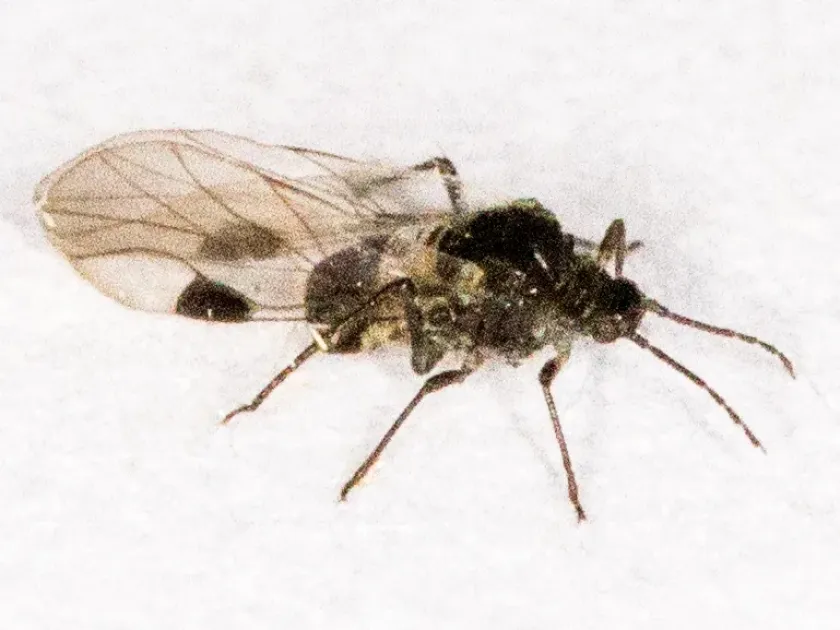
The cereal root aphid Anoecia nemoralis belongs to the order Hemiptera, family Aphididae. It is a specific species known for its heterocenous life cycle, alternating between woody primary hosts and subterranean parts of grasses.
Adults and nymphs are typically oval-shaped, varying in color from yellowish-brown to grayish. Measuring between 1.5 and 2.5 millimeters in length, they are often overlooked during routine field inspections due to their subterranean habitat.
A key morphological characteristic is the presence of well-developed siphunculi and specific wing venation in alate (winged) forms. The nymphs are often covered in a waxy secretion that protects them from excessive soil moisture.
The population development is heavily influenced by environmental factors and the presence of primary hosts, specifically dogwood (Cornus) species, which serve as the wintering site.
Identification typically requires microscopic analysis to differentiate A. nemoralis from other soil-dwelling aphids. Field agronomists should remain alert to the presence of ant activity, which often indicates the protection of aphid colonies.
What it damages
The primary hosts for Anoecia nemoralis include cereal crops like wheat, barley, and oats, alongside various wild grass species. The pest causes damage by feeding on the root system, extracting vital plant sap.
This feeding activity disrupts the plant's metabolic processes, resulting in stunted growth and a significantly weakened root system. Consequently, the plant is less capable of absorbing water and nutrients.
Severe infestations are particularly dangerous during drought periods, when plants are already under physiological stress. Damaged roots become susceptible to secondary infections by soil-borne fungal pathogens.
Early-season infestation can lead to local crop thinning and irregular plant stands. This reduction in density can have a major impact on the final grain yield.
Furthermore, aphid saliva contains enzymes that may deform root hairs and cause localized tissue necrosis, further impairing the plant's health and vigor.
When it appears
The life cycle of Anoecia nemoralis is complex. The spring generations develop on primary woody hosts, where they complete their initial life stages.
In early summer, winged individuals migrate to the root systems of cereal crops. This migration marks the start of the colonization phase in agricultural fields.
Throughout the summer months, the aphids reproduce parthenogenetically, forming multiple generations on the host roots. Their reproductive rate is highly dependent on soil temperature and moisture levels.
As temperatures drop in the autumn, winged females migrate back to the woody primary hosts to lay overwintering eggs in bark crevices.
The summer season is the period of highest risk for cereal crops, as aphid colonies reach peak density in the rhizosphere during the active vegetative growth phase.
Signs of infestation
Direct observation of Anoecia nemoralis is difficult because of its subterranean lifestyle. Symptoms of infestation are usually manifested through the overall physiological decline of the crop.
Infected plants exhibit yellowing of the lower leaves, stunted development, and reduced tillering. In severe cases, particularly during dry seasons, the plants may wilt and fail to reach maturity.
A strong indicator of aphid presence is the constant activity of ants at the base of the stems, as ants often farm the aphids for their honeydew secretions.
Careful excavation of the soil around the roots often reveals clusters of yellowish or greyish aphids. The roots may appear weakened or covered in a whitish, waxy substance produced by the aphids.
- Yellowing and wilting of lower leaves.
- Stunted plant height and reduced tillering.
- Visible ant activity at the base of plants.
- Discovery of aphid colonies upon root excavation.
- Patches of sparse or dead vegetation in the field.
Control measures
Effective management of Anoecia nemoralis requires an integrated approach, focusing on cultural practices and preventative chemical measures. Weed management is crucial as wild grasses serve as reservoir hosts.
Maintaining spatial isolation from dogwood (Cornus) plantings can significantly reduce the pressure of migrating aphids in the spring.
Seed treatments with systemic insecticides are considered the most efficient method for protecting young seedlings from early-season colonization by soil-dwelling pests.
Crop rotation helps disrupt the pest's life cycle and prevents the buildup of aphid populations in the soil over successive seasons.
While foliar insecticide sprays are standard for aerial aphids, they are ineffective against root-feeding species. Therefore, proactive soil management and seed treatments remain the primary defensive strategies.
Taxonomy
- Latin name
- Anoecia nemoralis
- Order
- Hemiptera (bugs, aphids, leafhoppers)
- Family
- Aphididae
- EPPO code
- ANOENE
Discussion
No discussions yet — be the first.