
Anoecia
Anoecia
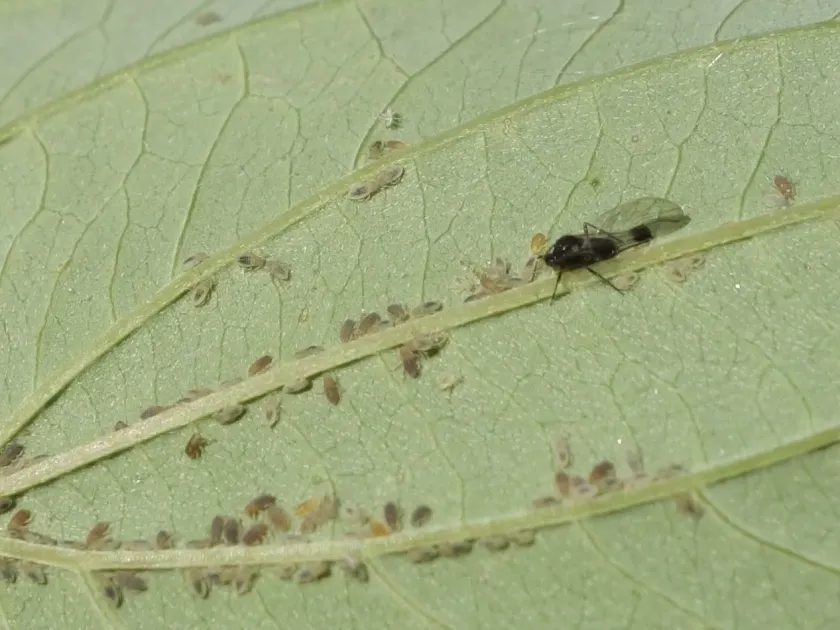
Description
How to identify
Anoecia is a genus of aphids belonging to the family Aphididae. These are small insects, often dark, brownish, or yellowish in color, characterized by short antennae and a specific wing venation pattern.
The life cycle of this pest involves heteroecy, which is the migration between different host plants. Primary hosts are typically woody shrubs, such as dogwood (Cornus).
For secondary colonization, Anoecia aphids move to the root systems and the base of stems of herbaceous plants, primarily grasses from the family Poaceae.
A distinctive feature of many species in this genus is their ability to exist in symbiosis with ants, which protect the aphid colonies in exchange for sugary honeydew secretions.
Identifying specific species within the genus requires microscopic analysis, as the morphological traits of adults and nymphs are very similar to other members of the subfamily Anoeciinae.
What it damages
The pest is most dangerous to cereal crops: wheat, barley, oats, as well as various types of fodder and wild grasses.
Damage is caused by both adults and nymphs, which suck sap from the roots and subterranean parts of the grass stems, often going unnoticed by agronomists during early stages.
Severe damage occurs during dry periods when plants are already moisture-stressed, and the additional exhaustion of the root system leads to a loss of turgor pressure.
During mass outbreaks, Anoecia can cause stunted plant growth, yellowing, and premature wilting of the crops, which ultimately has a negative impact on yield.
In addition to direct damage, Anoecia can act as a potential vector for plant viral diseases common in cereal agroecosystems.
When it appears
In spring, after overwintering as eggs on the bark of primary hosts (shrubs), fundatrices hatch and give rise to several generations.
By early summer, winged individuals migrate to secondary hosts—cereal crops or weedy grasses—where they form extensive colonies.
Several generations develop throughout the summer, with fecundity increasing noticeably during hot weather, peaking in June and July.
In autumn, there is a reverse migration of winged females and males back to the primary hosts to lay overwintering eggs, ensuring the species survives the cold season.
Under mild winter conditions, part of the population can survive on the roots of winter cereals, complicating forecasting and control efforts.
Signs of infestation
The presence of Anoecia is often indicated by increased ant activity in the fields, as ants "tend" the aphid colonies at the base of stems or just below the soil surface.
Visual inspection of plants often reveals general stunting, yellowing of lower leaves, and partial deformation of the plant cluster caused by nutrient depletion.
Digging up damaged plants may reveal clusters of small, often dark-colored insects on the roots or root crown, as well as the presence of a characteristic honeydew residue.
Heavy infestations are characterized by the drying out of entire patches of the field, which appear as clusters of stunted, short plants against the background of the field.
An indirect sign is the presence of primary hosts (like dogwood) in the immediate vicinity of agricultural land.
Control measures
The primary control measure is strict adherence to agronomic practices, including deep autumn plowing, which destroys the pest's overwintering habitats and reduces population density.
It is recommended to eliminate weeds in fields and along field borders, as wild grasses serve as reservoirs for Anoecia reproduction during the off-season.
The use of systemic insecticides for seed treatment is effective in protecting young winter crop seedlings from early aphid colonization.
During the growing season, if the economic threshold is exceeded, spraying crops with broad-spectrum insecticides, preferably those with translaminar effects, is necessary.
It is important to monitor the status of shelterbelts where primary hosts (dogwood) grow and, if necessary, perform early spring treatments there to prevent aphid migration into the fields.
Taxonomy
- Latin name
- Anoecia
- Order
- Hemiptera (bugs, aphids, leafhoppers)
- Family
- Aphididae
- EPPO code
- ANOESP
Discussion
No discussions yet — be the first.