
European eel
Anguilla anguilla
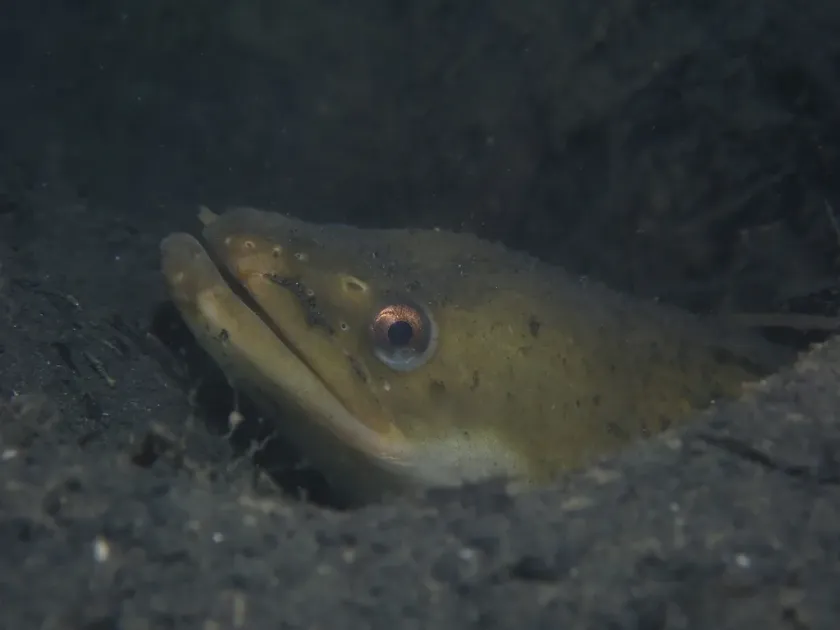
Description
How to identify
The European eel (Anguilla anguilla) is a predatory fish species belonging to the order Anguilliformes. It is characterized by its elongated, serpentine body covered with minute scales embedded deep in the skin, which gives it a smooth and slippery appearance.
This fish has a complex life cycle, migrating from freshwater rivers and lakes across Europe to the Sargasso Sea to spawn. The larvae, known as leptocephali, drift back to coastal waters before migrating inland as glass eels.
Adult eels go through several developmental stages, changing color from transparent to yellowish-brown, and eventually to a silvery hue when they mature and prepare for their final migration back to the ocean.
As nocturnal predators, they are equipped with highly developed sensory systems to detect prey in dark or murky water conditions. They can inhabit a wide range of aquatic environments, including ponds, rivers, and coastal lagoons.
Taxonomically, they are strictly classified as fish. Any reports suggesting they are plant pests are scientifically inaccurate, as they possess neither the biology nor the behavioral patterns to interact with plant tissues negatively.
What it damages
The European eel causes zero damage to agricultural crops. It is not a herbivore and does not consume or damage roots, stems, leaves, or fruits of any cultivated plants, making it irrelevant to plant pathology and crop protection.
Their feeding habits are exclusively carnivorous, focusing on invertebrates, small fish, and amphibians found within water bodies. They act as essential components of the aquatic food web, maintaining balance by controlling smaller organism populations.
In modern aquaponics, European eels are occasionally kept in closed systems where they are viewed as a resource rather than a hazard. Their waste provides organic nutrients that, after biofiltration, serve as a fertilizer source for hydroponic crops.
Confusion often arises due to the term "eel" being shared with "eelworms" (nematodes). While nematodes are devastating agricultural pests, the European eel is a vertebrate fish with entirely different ecological and biological characteristics.
Therefore, farmers and agronomists do not need to implement any monitoring or management practices to protect crops from this species. They pose no threat to the integrity of agricultural production cycles.
Control measures
No control measures are needed as the European eel is not a pest. In fact, due to overfishing and habitat destruction, this species is strictly regulated and protected in many regions, emphasizing the need for its conservation.
If there is a concern regarding eels entering irrigation pump systems, the appropriate solution is to install physical screening or filtration equipment. This prevents the fish from damaging pumps while protecting the aquatic wildlife.
Agricultural operations should emphasize water quality management. Pesticide and herbicide runoff into ponds or canals should be prevented, as eels are highly sensitive indicators of chemical pollution in aquatic habitats.
Integrated farming practices should promote the health of aquatic ecosystems. Eels contribute to a stable environment, which indirectly benefits overall farm biodiversity and provides natural control over aquatic pests like mosquito larvae.
In summary, the focus for this species should remain on sustainable water management and habitat preservation. Misidentifying this fish as a threat to crops is a common error that should be addressed through proper biological education.
Taxonomy
- Latin name
- Anguilla anguilla
- Family
- Anguillidae
- EPPO code
- ANGLAN
Discussion
No discussions yet — be the first.