
Stem nematode
Anguilla
Description
How to identify
The stem nematode Ditylenchus dipsaci is a microscopic worm belonging to the order Tylenchida and the family Anguinidae.
This pest has a wide host range, with a life cycle that includes four larval stages, all of which are capable of causing significant damage to plant tissues.
Stem nematodes thrive in cool, moist conditions, making them particularly problematic in damp climates or poorly drained soil environments.
They can persist for several years in soil, plant debris, or infested seeds, utilizing a survival mechanism called anhydrobiosis to withstand harsh conditions.
Due to their size, identification relies heavily on laboratory techniques, such as Baermann funnel extraction or molecular methods, to confirm their presence.
What it damages
The stem nematode causes extensive damage to various crops, including onions, garlic, potatoes, strawberries, and many forage legumes.
By migrating through the parenchyma, these nematodes inject enzymes that break down cell walls, leading to the collapse of tissue structure.
Affected tissues become spongy or distorted, providing a perfect environment for opportunistic fungi and bacteria to colonize and worsen the rot.
The feeding activity results in significant reductions in crop quality, often rendering produce unmarketable and causing heavy post-harvest storage losses.
Systemic damage often leads to stunted plant growth, chlorosis, and in severe cases, the complete death of the plant before maturity.
Signs of infestation
Early symptoms include leaf curling, stem swelling, and the development of distorted, "bloated" tissues on the surface of stems and foliage.
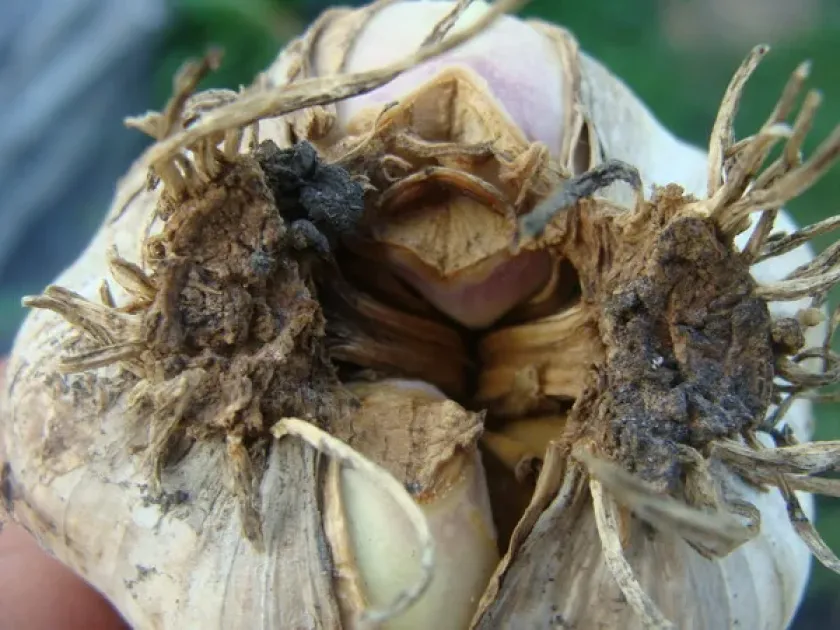
In bulb crops, transverse sections often reveal a distinct browning of scales, while the entire bulb may become soft and lighter in weight.
Potato tubers show characteristic dry, gray rot under the skin, which eventually leads to the cracking and structural failure of the tuber epidermis.
On strawberry plants, symptoms manifest as thickened, brittle leaf petioles and significantly reduced leaf size, resulting in a stunted appearance.
Field patches with stunted, chlorotic, or wilted plants often indicate established populations of stem nematodes spreading from a central focus.
Control measures
Implementing a strict crop rotation plan is the primary defense, avoiding the planting of host crops in infested fields for at least three to four years.
Sanitation is critical; all infested plant material must be removed and destroyed to prevent the buildup of nematode populations in the soil.
Using certified, nematode-free seeds and planting material is the most effective preventive measure to avoid introducing the pest into new areas.
Soil solarization or the use of cover crops with nematicidal properties can effectively reduce the nematode density in the topsoil before planting.
Integrated Pest Management (IPM) strategies, including chemical soil treatments, should be utilized only as a last resort due to their environmental impact.
Taxonomy
- Latin name
- Anguilla
- Family
- Anguillidae
- EPPO code
- ANGLSP
Discussion
No discussions yet — be the first.