
Anaceratagallia ribauti
Anaceratagallia ribauti
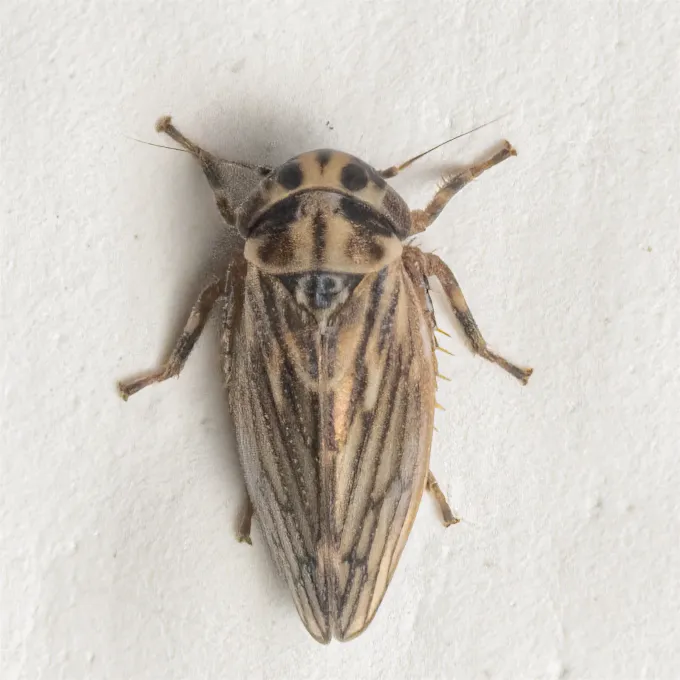
Description
How to identify
Anaceratagallia ribauti is a small insect belonging to the order Hemiptera, family Cicadellidae (leafhoppers). Adults typically measure between 3 to 4 millimeters in length, making them difficult to spot without close inspection.
The insect possesses a grayish to brownish coloration, which provides excellent camouflage against plant foliage. Their head is broad with well-developed compound eyes, and their transparent wings are usually held roof-like over the body.
Nymphs resemble the adults but are wingless and smaller in size. They are highly active and typically reside on the underside of leaves, feeding on plant sap. Their rapid movement allows them to escape quickly when disturbed.
This species is widely distributed throughout temperate regions, preferring warm, dry habitats. Their population density is heavily influenced by the availability of weeds, which act as primary hosts during the early stages of the growing season.
Their biological resilience to moderate moisture fluctuations makes them persistent pests, capable of establishing large colonies if left unchecked during favorable weather conditions.
What it damages
This pest attacks a variety of agricultural crops, including vegetables, sugar beets, and legumes. Seedlings are particularly vulnerable, as feeding can lead to stunted growth or total plant failure if infestations are severe.
Both nymphs and adults feed by piercing leaf tissues and extracting sap, which disrupts photosynthesis and nutrient translocation. This direct damage leads to yellowing, loss of vigor, and reduced yields.
Beyond direct mechanical injury, Anaceratagallia ribauti is a documented vector for various plant viruses and phytoplasmas. Even low numbers of these insects can introduce diseases that significantly damage crop quality and overall harvest volume.
Feeding damage often starts at the field margins, where the insects migrate from surrounding vegetation. From there, they gradually spread throughout the field as their population increases.
The weakened plants become more susceptible to secondary infections and environmental stress, ultimately leading to significant economic losses for farmers if management measures are not implemented.
When it appears
The activity of Anaceratagallia ribauti begins in the spring when ambient temperatures rise above 12-15 degrees Celsius. This onset marks the emergence of the first generation from winter dormancy.
Peak population levels generally occur in the early summer months. During this time, the development of multiple generations leads to the highest intensity of damage to crop fields.
The insects are most active during bright daylight hours. When weather conditions are unfavorable or during extremely hot parts of the day, they tend to move into the lower foliage or shaded areas to shelter.
As autumn approaches, activity declines as the insects prepare for hibernation. Overwintering typically occurs in the egg stage, deposited within the tissues of host plants or buried under plant debris.
Early season monitoring in May and June is crucial for identifying the presence of colonies before they reach a stage that causes irreparable damage to the developing crops.
Signs of infestation
The first signs of infestation are typically small white stippling marks on the upper leaf surfaces. These marks are caused by the piercing-sucking mouthparts of the insects during feeding.
Examining the underside of the leaves often reveals cast skins (exuviae) left behind by nymphs. These white, translucent skins are a strong indicator of an active population presence.
Severe infestations often result in leaf curling, yellowing, and eventual tissue necrosis. In some cases, the plants may show visible signs of growth retardation compared to healthy areas of the field.
A definitive sign is the insects' behavior: upon touching the foliage, adults will jump instantly, making them visible to an experienced observer walking through the crop.
- Stippling and chlorotic spots on leaves.
- Curling and distortion of young foliage.
- Presence of cast nymphal skins on leaf undersides.
- Reduced growth and stunted plant development.
Control measures
Effective management begins with strict field hygiene, including the removal of weeds and crop residues that serve as overwintering sites for the pest.
Chemical control involving systemic insecticides is recommended when population thresholds are exceeded. It is essential to apply these treatments during the peak emergence of nymphs to ensure maximum efficacy.
Biological control strategies, such as the use of entomopathogenic fungi or encouraging natural predators in the ecosystem, can help suppress populations without heavy reliance on synthetic chemicals.
Crop rotation and maintaining a physical barrier or spatial distance from perennial grass areas can significantly reduce the risk of migration into the main fields.
Implementing a monitoring program using yellow sticky traps is highly effective for timing interventions, ensuring that control measures are applied at the most vulnerable stage of the pest's life cycle.
Taxonomy
- Latin name
- Anaceratagallia ribauti
- Order
- Hemiptera (bugs, aphids, leafhoppers)
- Family
- Cicadellidae
- EPPO code
- ANCARI
Discussion
No discussions yet — be the first.