
Anaceratagallia
Anaceratagallia
Description
How to identify
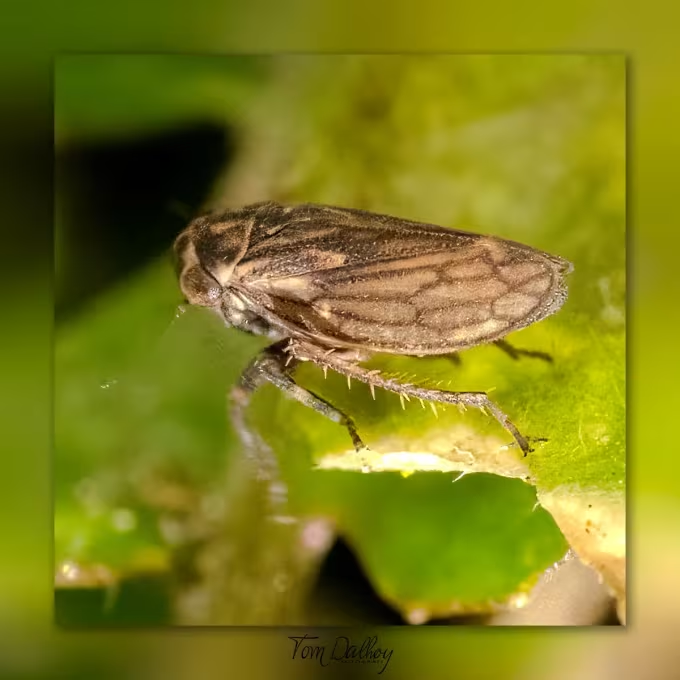
Anaceratagallia is a genus of insects belonging to the order Hemiptera and the family Cicadellidae. These leafhoppers are very small, typically measuring between 3 to 4 millimeters in length. Their coloration ranges from grayish to brownish, which provides excellent camouflage against leaves and stems.
Adults possess a characteristic triangular head and wings folded in a roof-like manner over their bodies. Due to their small size and subtle differences between species, precise identification often requires microscopic examination of genital structures, making it a challenge for field diagnostics.
Nymphs resemble smaller, wingless versions of the adults, often displaying a lighter greenish or yellowish hue. They progress through several developmental stages (instars), gradually increasing in size and developing wing pads before reaching the adult stage.
Their activity level is highly temperature-dependent. Hot, dry weather creates optimal conditions for rapid reproduction, leading to significant population explosions. In favorable climates, these insects can complete multiple generations in a single season, quickly spreading across agricultural fields.
Equipped with specialized hind legs, these insects are exceptionally agile and capable of powerful jumps. This mobility makes them difficult to catch or observe closely in the field, as they instinctively leap to safety at the slightest vibration or disturbance of the plant canopy.
What it damages
Anaceratagallia are generalist feeders, known as polyphagous insects, capable of attacking a wide range of crops including tomatoes, peppers, eggplants, and sugar beets. They also utilize various weed species as alternative hosts, which serve as reservoirs throughout the growing season.
Both adults and nymphs cause damage by piercing the plant epidermis and extracting sap. This feeding behavior depletes the plant's essential nutrients, stunts growth, and reduces photosynthetic efficiency, leading to weaker plants and lower yields, especially during early developmental stages.
The primary concern regarding these insects is their role as vectors for dangerous plant viruses and phytoplasmas. During feeding, they can introduce pathogens into the vascular system of the plant, which often results in severe curling, yellowing, and deformation of the foliage.
Even a low-density population can be catastrophic if the insects are carrying viral loads. Systemic infections transmitted by these leafhoppers are often untreatable, potentially leading to total crop failure on infested patches, making early detection vital for field management.
In drought conditions, damage is significantly exacerbated. Stressed plants have less capacity to recover from the nutrient loss caused by leafhoppers, leading to faster wilting, leaf senescence, and overall yield reduction compared to adequately irrigated plants.
When it appears
The pest is active throughout the entire growing season, from early spring to late autumn. Adults and overwintering stages emerge as soon as temperatures exceed +10...+12 degrees Celsius, seeking out the first available green vegetation for feeding and reproduction.
The population usually peaks in mid-summer during the warmest months of the year, which facilitate the fastest developmental cycles. This is the period of highest risk for crops, requiring consistent monitoring and intervention to prevent the population from reaching economic threshold levels.
Early in the season, populations often build up on peripheral weeds. As the crops grow and become more suitable, these leafhoppers migrate into the field, making the perimeter of the farm a critical zone for early observation and necessary preemptive treatments.
As temperatures drop in autumn, the insects seek protected sites for hibernation. Field debris, unplowed soil, and hedgerows are common overwintering spots, highlighting the importance of sanitation practices at the end of the harvest season to interrupt their life cycle.
Understanding the seasonal dynamics allows for better timing of management activities. By predicting the peaks of infestation, agronomists can apply controls more effectively, reducing the need for repeated chemical applications and minimizing the impact on the environment.
Signs of infestation
The first visual signs of an infestation include the appearance of tiny, light-colored stippling or spots on the leaves caused by the insect's piercing-sucking feeding. Over time, these spots expand, causing the leaves to lose their healthy green color and become chlorotic.
Severe infestations often cause leaf curling, twisting, and deformation of the growing tips. If a virus is present, the plant may exhibit mosaic patterns or stunted growth, which are clear indicators of a systemic pathogen transmitted by the feeding insects.
Inspecting the underside of the leaves may reveal nymphs or the discarded white exuviae (skins) left behind after molting. Their presence in these areas is a strong indicator of an active population that is continuously feeding on the plant's vascular tissue.
The presence of sticky honeydew on foliage is another telltale sign. This substance encourages the growth of sooty mold, a black fungus that further covers the leaf surface, blocking sunlight and interfering with the plant's ability to undergo normal photosynthesis.
Finally, a massive movement of small insects jumping when the foliage is disturbed is a primary indicator. This sudden "cloud" of jumping insects is a clear warning that an infestation is present and requires immediate action to protect the economic integrity of the crop.
Control measures
Managing Anaceratagallia effectively requires an integrated pest management (IPM) strategy. The most fundamental step is robust weed control throughout the season, which eliminates alternative host plants and reduces the available breeding sites for the leafhoppers.
Good agricultural practices, including the use of virus-resistant crop varieties and proper spatial separation between fields, are essential. Deep plowing of crop residues post-harvest is also recommended to destroy overwintering sites and reduce the population for the following year.
Chemical control remains the most reliable method for suppressing high-density populations. Systemic insecticides are preferred as they are absorbed by the plant, providing longer-lasting protection. Rotating between different chemical classes is necessary to avoid the development of pest resistance.
Biological control options, such as encouraging natural predators like lady beetles, lacewings, or parasitic wasps, can help manage lower populations. Using biocontrol agents is a sustainable practice that minimizes chemical reliance, making it suitable for high-quality vegetable production.
- Deploy yellow sticky traps to monitor population density and migration.
- Ensure thorough sanitation by removing field debris after harvest.
- Apply registered insecticides when infestation thresholds are exceeded.
- Use row covers on young crops to provide physical barriers during vulnerable stages.
- Promote biodiversity around fields to support natural insect predator populations.
Taxonomy
- Latin name
- Anaceratagallia
- Order
- Hemiptera (bugs, aphids, leafhoppers)
- Family
- Cicadellidae
- EPPO code
- ANCASP
Discussion
No discussions yet — be the first.