
Cotton leafhopper
Amrasca terraereginae
Description
How to identify
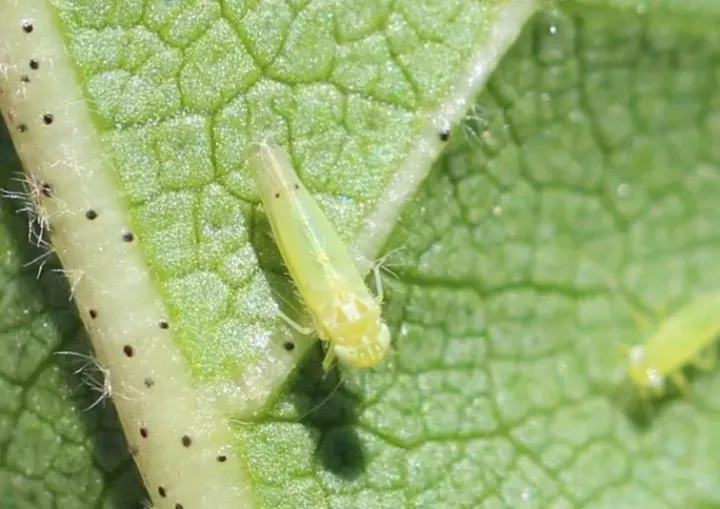
The cotton leafhopper (Amrasca terraereginae) is a member of the Cicadellidae family within the order Hemiptera. These small insects typically measure between 2 and 3 millimeters in length and are recognized by their wedge-shaped bodies and distinct light-green coloration.
Adult leafhoppers are highly mobile, possessing the ability to jump and fly rapidly when disturbed, which makes them difficult to track during field inspections. Nymphs, or immatures, resemble adults but lack functional wings, progressing through several growth stages before reaching maturity.
The insect's lifecycle is highly temperature-dependent, allowing for multiple generations within a single growing season under favorable conditions. This rapid turnover is what makes them such prolific pests in agricultural settings.
Females deposit their eggs directly into the leaf tissue, particularly along the main veins, providing protection for the developing nymphs and making manual removal or superficial treatments ineffective.
Feeding is performed by piercing the epidermis of the plant and extracting sap, which introduces toxic salivary enzymes into the plant's vascular system, causing systemic stress.
What it damages
While named for its preference for cotton, the cotton leafhopper is a polyphagous pest capable of infesting various crops, including eggplant, beans, and several common weeds that act as alternate hosts.
Both adults and nymphs feed by sucking sap from the undersides of leaves. This feeding activity results in significant chlorosis, leading to the characteristic yellowing and curling of leaf edges, often referred to as "hopper burn."
The damage disrupts the plant's physiological processes, specifically inhibiting photosynthesis and nutrient transport, which inevitably leads to stunted growth and reduced vigor.
Severe infestations cause premature leaf drop and the shedding of flower buds or young bolls, which can result in substantial yield losses if not addressed promptly.
Beyond direct damage, the physical weakness caused by the leafhoppers makes plants more susceptible to secondary infections and opportunistic pathogens, further compounding the economic loss.
Signs of infestation
The most reliable sign of a cotton leafhopper infestation is the presence of pale, yellowish spots on the underside of leaves, starting from the lower canopy and moving upwards.
As the population density increases, leaves show clear symptoms of curling downwards at the margins, eventually turning brown and crisp as the tissue dies due to prolonged sap extraction.
Plants heavily infested with leafhoppers appear noticeably shorter and thinner compared to healthy ones, with a marked decrease in the number of healthy fruiting structures.
When disturbing an infected plant, one can observe adult leafhoppers fluttering away in a characteristic sideways movement, which is a telltale sign of their presence in the canopy.
In cases of chronic infestation, the entire field may take on a sickly yellow appearance, with the most severely damaged leaves dropping off early, leaving the lower parts of the stem bare.
Control measures
Effective management requires a combination of strategies, starting with the use of yellow sticky traps to monitor adult populations and determine the timing of interventions.
Cultural control is essential; maintaining clean fields by removing weeds that serve as alternate hosts significantly reduces the primary reservoir of the pest.
Chemical control should prioritize systemic insecticides that provide long-lasting protection. It is critical to rotate active ingredients to avoid the development of pesticide resistance, which is a major concern with Amrasca species.
Integrated Pest Management (IPM) practices encourage the conservation of natural predators, such as spiders, lady beetles, and predatory hemipterans, which naturally prey on leafhoppers.
Regular scouting is required to detect early infestation stages, allowing for spot treatments rather than field-wide applications, which helps preserve beneficial insect populations and reduces chemical usage.
Taxonomy
- Latin name
- Amrasca terraereginae
- Order
- Hemiptera (bugs, aphids, leafhoppers)
- Family
- Cicadellidae
- EPPO code
- AUSSTR
Discussion
No discussions yet — be the first.