
Amrasca
Amrasca
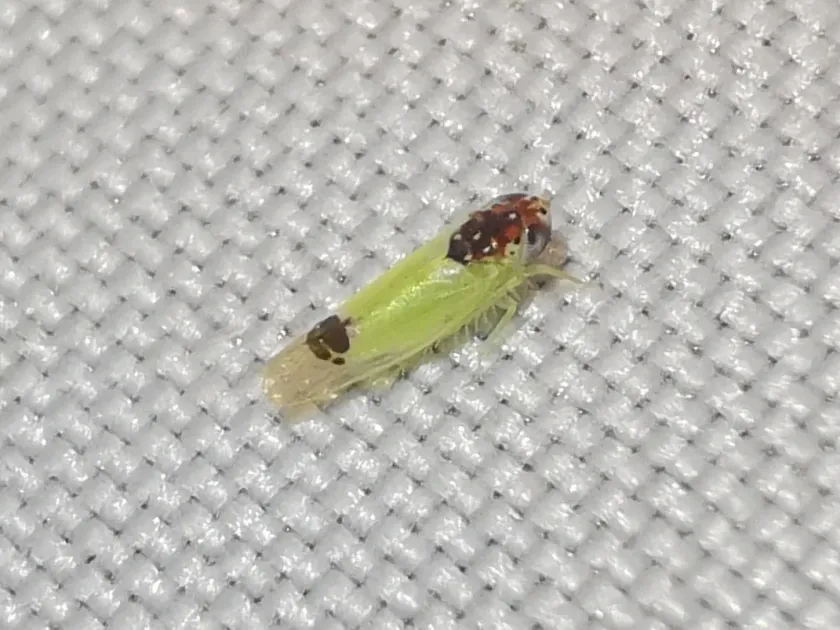
Description
How to identify
The genus Amrasca belongs to the order Hemiptera and the family Cicadellidae. These are small, highly mobile insects, typically light green or yellowish in color, ranging from 2 to 3 mm in length.
The adults possess a wedge-shaped body, which allows them to jump and fly very quickly when disturbed, making them difficult to capture by hand.
Nymphs, or immature stages, are similar to adults but wingless. They are often found on the underside of leaves and have a characteristic side-walking movement.
The lifecycle consists of eggs, several nymphal instars, and adults. In warm and humid climates, the entire generation cycle can be completed in less than three weeks.
High reproductive rates allow populations to explode rapidly, especially during warm seasons, leading to significant economic pressure on susceptible agricultural crops.
What it damages
Amrasca is a significant polyphagous pest known to affect a wide range of important crops, including cotton, okra, eggplant, and various legumes.
Equipped with piercing-sucking mouthparts, the insects feed directly on the plant sap, causing nutrient depletion and systemic stress to the host plant.
Heavy feeding pressure often occurs during dry spells when plants are already stressed, exacerbating the negative impact on growth and yield potential.
Besides physical damage, these insects are known vectors for various plant viruses and phytoplasmas, which can spread diseases throughout an entire field.
The loss of plant vigor results in reduced biomass, stunted growth, and lower quality yields, making effective management crucial for commercial agriculture.
Signs of infestation
The earliest symptom of an Amrasca infestation is the yellowing of leaf margins, which typically starts at the edges and progresses toward the center.
Leaves often curl downwards, forming a cup or boat shape, eventually leading to necrosis and the drying out of the leaf tissues, known as hopper burn.
Visual inspection of the underside of leaves reveals both adult leafhoppers and nymphs, confirming an active infestation in the field.
Stunted plant growth and a general lack of health are common indicators that the pest is actively feeding and causing damage to the crop's vascular system.
Severe infestations often cause flower buds and young fruit to drop prematurely, significantly impacting the total harvest output of the season.
Control measures
Integrated Pest Management (IPM) is the most effective approach to handle Amrasca, involving cultural, biological, and chemical strategies.
Maintaining weed-free fields is essential, as many local weeds serve as alternative hosts for the leafhopper populations during the off-season.
When populations exceed economic injury levels, the application of systemic insecticides is required to stop the spread and protect the crop canopy.
Using resistant cultivars and natural predators, such as lady beetles or lacewings, can help naturally regulate leafhopper numbers in a balanced environment.
- Use yellow sticky traps to monitor adult population dynamics.
- Rotate crops to break the lifecycle of the insect pest.
- Apply insecticides at the first sign of significant infestation.
- Remove and destroy crop residues immediately after harvest.
Taxonomy
- Latin name
- Amrasca
- Order
- Hemiptera (bugs, aphids, leafhoppers)
- Family
- Cicadellidae
- EPPO code
- AMRASP
Discussion
No discussions yet — be the first.