

Hawthorn spider mite
Amphitetranychus viennensis
Description
How to identify
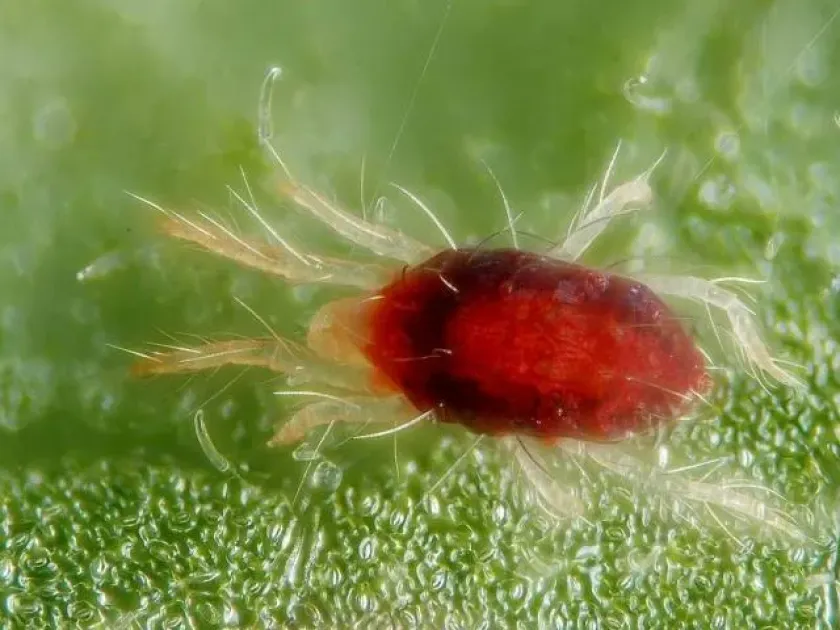
The hawthorn spider mite (Amphitetranychus viennensis) belongs to the Tetranychidae family. These tiny arachnids are roughly 0.4–0.5 mm in size, making them difficult to detect with the naked eye.
Adult mites vary in color from yellowish-brown to deep red or dark brown, depending on their diet and stage of development. The females are typically larger and more spherical in shape than the males.
They overwinter as fertilized females in protected areas, such as bark crevices or plant debris. As temperatures rise in spring, they emerge to infest young leaves and begin their reproductive cycle.
The life cycle is rapid, especially in warm, dry weather. Depending on regional climate conditions, the mite can complete multiple generations within a single growing season.
Because of their high reproduction rate, infestations can explode quickly, turning a minor issue into a severe outbreak within weeks if left unmanaged.
What it damages
This species is a polyphagous pest that primarily infests rosaceous plants, including apple, pear, plum, cherry, peach, and hawthorn trees. Both adults and nymphs feed on plant sap.
Feeding involves puncturing leaf cells, which causes the destruction of chlorophyll. This prevents the tree from performing photosynthesis effectively, severely impacting its energy production.
Heavy infestations result in leaf yellowing, bronzing, and premature senescence. The loss of foliage reduces the tree's vigor and its ability to store reserves for the following season.
Fruit quality is often compromised, as the tree directs its remaining resources to survival rather than fruit development. Yield losses can be significant in orchards if left untreated.
In nursery settings, young saplings may suffer stunted growth or even mortality due to intense feeding pressure, making them susceptible to winter damage.
Signs of infestation
Early signs of an infestation include the appearance of tiny light-colored stippling on the leaves, which are the feeding sites of the mites.
As the mite population increases, these spots coalesce into large discolored patches. Eventually, the entire leaf may take on a characteristic rusty or bronze appearance.
The presence of fine webbing on the undersides of leaves is a clear indicator of a significant infestation. This web helps the mites protect themselves and their eggs.
Premature leaf drop is a hallmark of severe hawthorn spider mite damage. If trees appear sparse or defoliated in mid-summer, an active mite colony is often to blame.
Careful inspection of the undersides of leaves is necessary to confirm the presence of these mites, as they tend to congregate in high densities on the abaxial leaf surface.
Control measures
Cultural control practices are essential. Regularly cleaning orchard floors and removing dead foliage helps eliminate overwintering sites for female mites.
Managing the orchard environment is also key. Keeping trees well-hydrated and reducing dust accumulation can inhibit the mite population's growth, as they thrive in dry, dusty conditions.
Chemical control requires the use of specialized acaricides. It is critical to rotate chemical classes to prevent the development of resistance within the mite population.
Integrated Pest Management (IPM) encourages the use of beneficial insects, such as predatory mites (Phytoseiidae), which can naturally suppress population outbreaks.
- Apply dormant oil sprays to target overwintering females.
- Monitor population thresholds before applying intensive chemical sprays.
- Ensure thorough spray coverage, especially on the undersides of leaves.
Content graph
Connections · Hawthorn spider mite
Most often together:
Marketplace
Products · 2

Biology
Taxonomy
- Latin name
- Amphitetranychus viennensis
- Order
- Mites
- Family
- Tetranychidae
- EPPO code
- TETRVI
Community
Discussion
No discussions yet — be the first.