
Lamium leaf miner
Amauromyza lamii
Description
How to identify
The Lamium leaf miner (Amauromyza lamii) is a fly species belonging to the family Agromyzidae, order Diptera. These small insects are specialized herbivores.
Adult flies are generally dark in color and measure only a few millimeters in length, making them difficult to spot without careful observation of host plants.
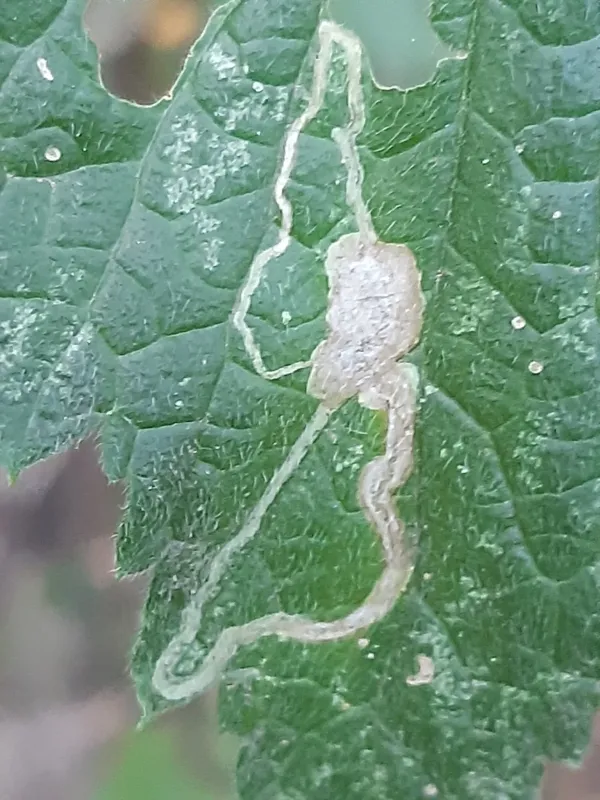
The larvae are typically pale, legless, and worm-like. Their development occurs exclusively within the leaf tissue, where they create tunnels known as mines.
Pupation often happens inside the leaf or within the soil, where the larva transitions into a protective pupal casing called a puparium.
Identification of the specific species often requires microscopic examination of the adult's morphology, specifically the terminalia, to distinguish it from other miners.
What it damages
This pest specifically targets plants within the Lamiaceae family, which includes various herbs such as mint, sage, basil, and many wild lamium species.
Larvae consume the mesophyll tissue inside the leaves. This feeding behavior results in serpentine or blotch-shaped mines that disrupt the plant's photosynthetic process.
Visible damage includes unsightly trails on the leaves, which significantly reduces the quality and marketable value of ornamental and culinary crops.
Severe infestations cause leaves to yellow, wither, and drop prematurely, thereby weakening the plant's overall growth potential and vigor.
The tunnels created by the larvae serve as entry points for secondary pathogens like fungi and bacteria, leading to further decay of the plant tissues.
When it appears
Adult flies emerge in the spring, triggered by rising temperatures and the availability of fresh foliage on host plants in the Lamiaceae family.
During the growing season, multiple generations can occur depending on the climate, leading to a cumulative increase in pest population densities.
Peak feeding activity usually aligns with the period of rapid plant growth during late spring and throughout the summer months.
As autumn approaches, the development cycle slows down as larvae prepare for winter, often overwintering in the soil as pupae until the following year.
Early season monitoring is critical to identify the first sign of larval activity and to implement control measures before a widespread infestation occurs.
Signs of infestation
The most diagnostic sign of a leaf miner infestation is the presence of winding, light-colored tunnels (mines) on the leaf surface.
These mines begin as thin, faint tracks and broaden over time as the larva feeds and grows, eventually appearing as distinct, silvery, or brownish pathways.
Small, dark, scattered dots within the mines indicate the presence of frass (insect excrement), which is a clear indicator that a larva is actively feeding.
Heavily affected leaves often show signs of desiccation, curling, or brown necrotic patches as the tissue around the mine dies.
- Visible winding mines on the upper leaf surface.
- Small dark fecal spots within the tunnel trails.
- Yellowing or premature dropping of infested leaves.
Control measures
Cultural practices, such as removing and destroying infested plant material promptly, can significantly reduce the local population of the pest.
Maintaining a clean garden by controlling weeds, especially wild mints or deadnettles, prevents the pest from using them as an alternative host.
The use of yellow sticky traps in greenhouses or small plots is effective for capturing adult flies and monitoring their population fluctuations.
Biological control, utilizing natural enemies like parasitic wasps that attack leaf miner larvae, is an environmentally friendly way to keep populations in check.
Systemic insecticides can be applied when infestations are severe, as these chemicals are absorbed by the plant and target the larvae hidden within the leaves.
Taxonomy
- Latin name
- Amauromyza lamii
- Order
- Diptera (flies)
- Family
- Agromyzidae
- EPPO code
- AMAZLA
Discussion
No discussions yet — be the first.