
Amauromyza
Amauromyza
Description
How to identify
Amauromyza is a genus of flies belonging to the family Agromyzidae, order Diptera. These insects are widely known in agricultural circles as leafminers due to the feeding habits of their larvae.
Adult flies are typically small, with a dark or black body. They are agile and well-adapted to environments where their host plants are grown, often focusing on specific plant families.
The life cycle of Amauromyza includes egg, larva, pupa, and adult stages. The larval stage is the most critical for agricultural monitoring as it lives entirely within the leaf tissue.
The head of the adult fly is equipped with specialized sensory organs and mouthparts suitable for piercing leaf surfaces to feed on sap or to lay eggs.
Taxonomically, this genus contains several species that vary in their host preference, ranging from ornamental flowers to vegetable crops grown in greenhouses.
What it damages
Amauromyza species cause significant damage to a variety of host plants. The larvae tunnel through the leaves, consuming the mesophyll layer and leaving characteristic tracks behind.
These mines disrupt the photosynthetic activity of the plant, which is vital for energy production. When infestation is severe, the foliage becomes significantly compromised.
Affected leaves often show yellowing and wilting, leading to reduced plant vigor. In horticultural settings, this diminishes both the aesthetic value and the yield of the crops.
Young plants are particularly vulnerable to these pests. Heavy mining can cause stunted growth or even the total loss of individual leaves if the damage is widespread.
The tunnels also serve as entry points for secondary pathogens, including bacteria and fungi, which can exacerbate the health decline of the host plant.
When it appears
The seasonal activity of Amauromyza is largely dictated by temperature. In field conditions, they are active during the warmer months, starting from late spring.
In greenhouses, where temperatures are controlled and kept stable, the pest can undergo multiple generations, making it a year-round threat to production cycles.
Adults emerge from pupae and quickly begin the mating process. Females then use their ovipositor to deposit eggs beneath the epidermis of the host plant's leaf.
The time from egg to adult depends heavily on environmental conditions, with warmer temperatures accelerating the metabolic processes and shortening the duration of each generation.
During colder periods, the insect often enters a state of diapause, either as a pupa within the soil or protected by plant debris, awaiting the return of warmth.
Signs of infestation
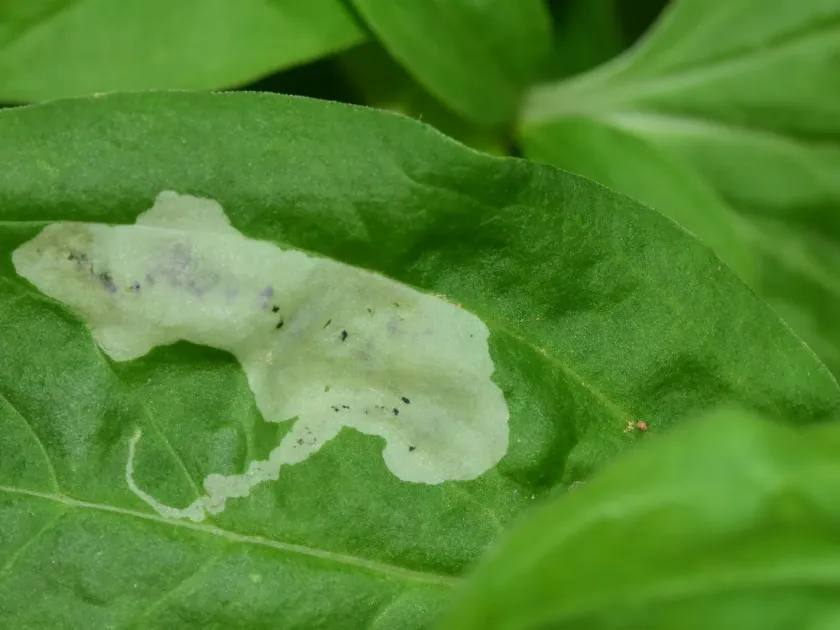
The most visible sign of an Amauromyza infestation is the presence of winding, light-colored trails or spots on the leaf surface, known as mines.
Early signs include tiny, white speckles on the leaf tissue, which are the puncture marks made by the female when she feeds or attempts to lay eggs.
As the larvae grow, the mines expand, often turning brown or necrotic as the internal leaf tissue dies off due to the consumption by the larvae.
One can often observe small, dark, granular deposits along the path of the mine, which are the frass (feces) left behind by the developing larva.
- Winding trails on leaf surfaces
- Small feeding punctures
- Yellowing and necrotic patches
- Premature leaf drop
- Poor growth and low yield
Control measures
Management of Amauromyza requires an Integrated Pest Management (IPM) approach to minimize chemical reliance while maximizing the health of the crop.
Sanitation is a primary control measure. Removing infested plant parts and clearing weeds from around the growing area prevents the spread of the population.
The use of yellow sticky traps is an excellent monitoring tool. These traps attract and capture adult flies, providing data to help time any necessary interventions.
Biological control, such as releasing parasitic wasps, has proven effective in many greenhouses, as these predators hunt for and consume larvae inside the leaves.
If chemical intervention is necessary, apply systemic insecticides that can penetrate leaf tissue to reach the larvae while ensuring adherence to pre-harvest safety intervals.
Taxonomy
- Latin name
- Amauromyza
- Order
- Diptera (flies)
- Family
- Agromyzidae
- EPPO code
- AMAZSP
Discussion
No discussions yet — be the first.