
Many-plumed moth
Alucita spilodesma
Description
How to identify
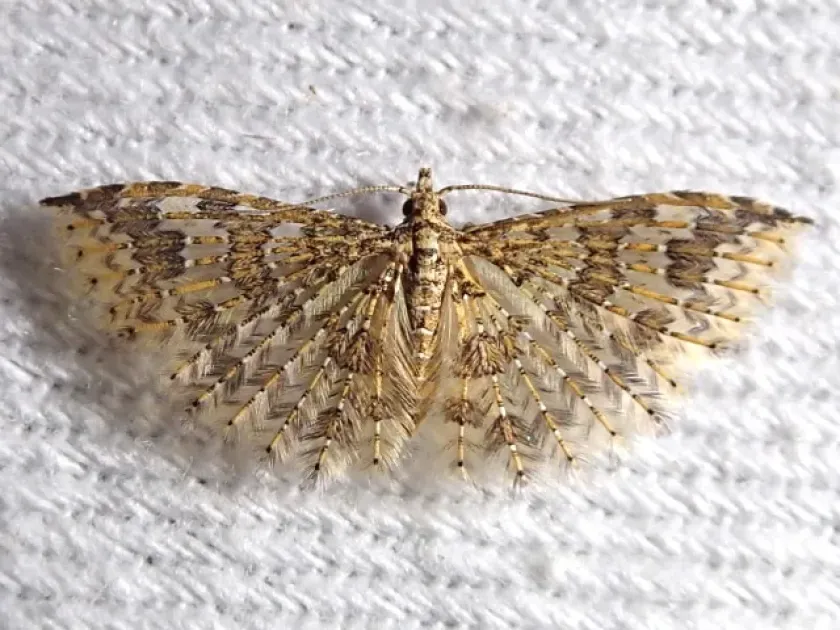
The Alucita spilodesma, commonly known as a type of many-plumed moth, belongs to the family Alucitidae within the order Lepidoptera. Their wings are uniquely split into several plume-like lobes, giving them a distinct feathery appearance.
Adult moths typically have a wingspan of 15–20 mm. Their coloration is usually brownish or ochre, featuring intricate spots that serve as excellent camouflage against dried plant parts.
The body is slender and elongated, which is characteristic of the Alucitidae family. When at rest, they hold their wings at right angles to the body, creating a striking T-shaped or fan-like profile.
The larvae, or caterpillars, lead a secretive life. They are typically found inside buds, stems, or tightly rolled leaves, where they feed protected from predators and external environmental factors.
Pupation occurs within a silk cocoon, often located in sheltered areas near the larval feeding sites, completing their life cycle through stages of egg, larva, pupa, and adult.
What it damages
This pest primarily affects specific herbaceous plants, often targeting decorative species in gardens and nurseries where its host plants are present.
The main damage is caused by larvae feeding on reproductive organs, specifically boring into flower buds and preventing normal bloom development.
Such feeding activities lead to severe deformation of flowers, early bud drop, and a significant reduction in the aesthetic value of ornamental plants.
In some cases, the larvae invade young shoots, causing stunted growth, twisted stems, and overall physiological stress for the host plant.
Under heavy infestation, the cumulative impact can be devastating, leading to poor seed set and potential dieback of affected plant parts.
When it appears
Adult activity of Alucita spilodesma typically peaks in the summer, corresponding with the flowering stage of their host plants.
Females lay eggs near the buds or on young stems, ensuring that hatched larvae have immediate access to soft, nutritious plant tissue.
The speed of their development is temperature-dependent, with warmer summer months facilitating rapid transitions between generations.
The species overwinters as adults, finding refuge in bark crevices, dry debris, or other sheltered spots to survive the winter cold.
Spring emergence is timed with the initial growth of host plants, allowing the moths to start their first reproductive cycle as soon as vegetation becomes available.
Signs of infestation
One of the earliest signs of infestation is the presence of fine silken webbing used by larvae to pull leaves together or secure a bud.
Wilted or discolored buds are strong indicators of larval presence, as the internal tissue is consumed, causing the bud to fail to open correctly.
Small, dark fecal pellets, known as frass, often accumulate near the damage sites, serving as a clear diagnostic sign of larval activity.
Irregular holes in buds or petals, often accompanied by necrotic spots, are classic symptoms of many-plumed moth feeding.
Stunted growth or asymmetric development of flower stalks can also signal an internal infestation that requires closer inspection.
Control measures
Manual removal and destruction of infested plant parts during the early stages of bud formation is the most effective cultural control method.
Biological control, such as using Bacillus thuringiensis, can be effective against young larvae without harming beneficial pollinators and predators.
Chemical intervention with systemic insecticides may be necessary in nurseries; however, application must be timed before larvae bore into the buds.
Sanitation is key; cleaning up plant debris in late autumn reduces the availability of overwintering sites for adult moths.
Regular monitoring using light traps can help determine the timing of adult flight, allowing for better-timed interventions to prevent population spikes.
Taxonomy
- Latin name
- Alucita spilodesma
- Order
- Lepidoptera (butterflies)
- Family
- Alucitidae
- EPPO code
- ORNESI
Discussion
No discussions yet — be the first.