
Many-plumed moth
Alucita hexadactyla
Description
How to identify
The many-plumed moth (Alucita hexadactyla) is a member of the Alucitidae family, within the order Lepidoptera. It is a tiny moth with a wingspan of roughly 14–16 mm.
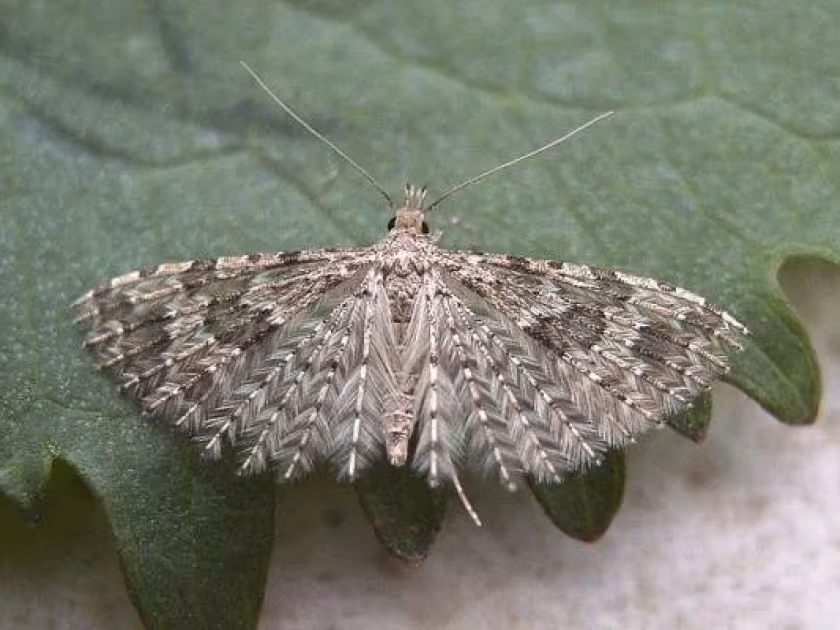
Its most striking feature is the wing structure: each wing is divided into six deep, feathered plumes, giving the moth a unique, fan-like appearance.
When at rest, the moth folds its wings tightly together, which helps it perfectly mimic a small twig, a piece of bark, or a dried leaf, making it hard to spot.
The color of the adult moth ranges from grayish-brown to ochre, featuring dark cross-bands across all the plumes that create a sophisticated camouflage pattern.
The body is slender and delicate, typical of the family, with long, thin legs that allow the moth to perch stably on the surfaces of leaves and flower buds.
What it damages
The primary host plant for the many-plumed moth larvae is the common honeysuckle (Lonicera xylosteum) and several other ornamental honeysuckle species.
The damage is caused mainly by the larvae, which feed inside the floral buds and on young leaves, often binding them together with silk threads.
During periods of high population density, the larvae can significantly diminish the aesthetic appeal of the shrub by destroying a large portion of the flower buds.
Although the infestation rarely kills the entire honeysuckle plant, the weakened state of the buds makes the plant more susceptible to fungal pathogens and other infections.
In nurseries and botanical gardens, this pest is considered a nuisance as it ruins the plant's ornamental quality and may impact the potential fruit development.
When it appears
Adult moths hibernate during the winter months, seeking shelter under loose tree bark, in wall crevices, or inside dry leaves and structures.
As spring temperatures rise, the moths emerge from hibernation, with the timing coinciding with the budding of honeysuckle plants.
Females lay eggs either individually or in small clusters on the buds or the undersides of the leaves of the host plant.
The life cycle from egg to adult takes approximately two months, and depending on the climate, the species may produce one or two generations per year.
The new generation of adults emerges towards late summer and early autumn, actively feeding and searching for protected spots to spend the winter.
Signs of infestation
The first signs of infestation are deformed or webbed-together flower buds that fail to open or appear stunted.
Upon closer inspection of the webbed clusters, one can find small, yellowish or greenish larvae feeding on the developing plant tissues.
Visible holes in the foliage and the presence of frass (larval excrement) within the silken webbing are clear indicators of recent feeding activity.
- Webbed clusters of leaves or flower buds.
- Buds turning brown and failing to bloom.
- Small larvae visible upon opening the webbed material.
During twilight, adult moths can often be seen flying around the host plants, as they are nocturnal and strongly attracted to artificial lights at night.
Control measures
The most effective initial approach is manual removal: pruning and destroying the webbed buds and leaves where the larvae reside to halt the life cycle.
Good garden hygiene, such as clearing away leaf litter and debris in the autumn, reduces the number of suitable hibernation sites for the adult moths.
For large-scale infestations, biological insecticides, such as those containing bacteria or neem oil, are recommended to target the larvae while sparing beneficial insects.
Chemical control should be avoided during the peak blooming season to protect pollinating bees and other insects that frequently visit honeysuckle flowers.
Regular monitoring of your honeysuckle shrubs early in the spring helps catch the population before it reaches a level that necessitates chemical intervention.
Taxonomy
- Latin name
- Alucita hexadactyla
- Order
- Lepidoptera (butterflies)
- Family
- Alucitidae
- EPPO code
- ORNEHE
Discussion
No discussions yet — be the first.