
Many-plumed moth
Alucita
Description
How to identify
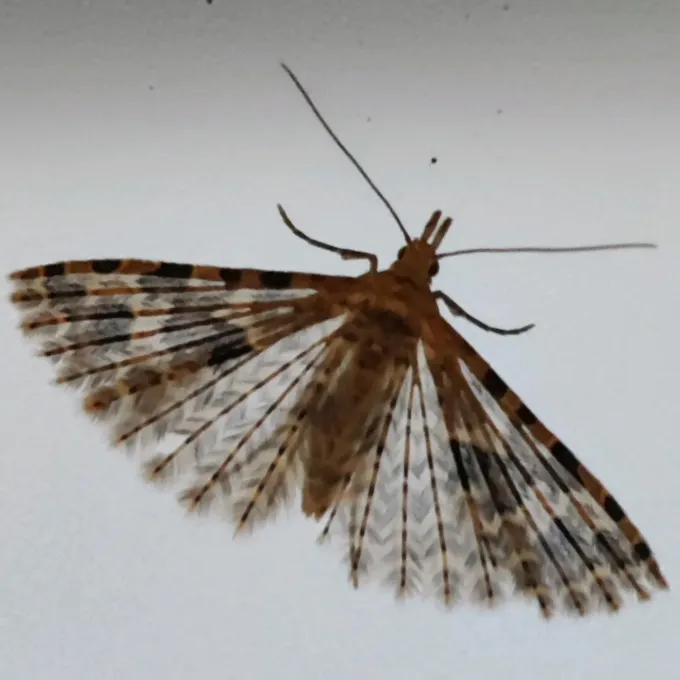
The many-plumed moth (family Alucitidae) is a small, distinct moth whose wings are divided into six narrow, feather-like lobes. This unique morphology makes the moth look more like a cluster of bristles than a traditional insect when at rest.
Adult moths typically display grey, beige, or brownish camouflage patterns, allowing them to blend perfectly with tree bark or dry leaves. Their wingspan usually ranges from 10 to 20 millimeters.
Systematically, they belong to the order Lepidoptera, family Alucitidae. While there are many species worldwide, only a few are considered significant pests to horticultural and agricultural crops.
The larvae are typically cylindrical, pale in color, and lead a hidden lifestyle, often feeding inside the buds, flowers, or fruit of host plants, which makes them difficult to spot during early infestations.
The lifecycle consists of a complete metamorphosis: egg, larva (caterpillar), pupa, and adult (imago). Adults often hibernate in sheltered areas, such as under bark or in building crevices, to survive the winter.
What it damages
These pests primarily target ornamental plants, including honeysuckle, scabious, and various Asteraceae species. Some damage has also been reported in bulbs and specific fruit-bearing crops.
Larvae feed by boring into buds and flowers, consuming the reproductive tissues from within. This results in deformed blossoms, premature bud drop, and a significant loss in the plant’s reproductive capacity.
In cases of high infestation, the pest can devastate a large portion of the flower buds, severely impacting the decorative value of the garden and potential seed yields.
Damaged tissues are prone to secondary infections, as the feeding wounds serve as entry points for various fungal and bacterial pathogens that cause tissue rot.
Economic damage is usually localized but intense, necessitating prompt identification and intervention to prevent the spread of the moth population throughout the garden or field.
Signs of infestation
The first sign of an infestation is the appearance of deformed, curled, or stunted flower buds that fail to open and eventually wither away.
A closer inspection often reveals small, dark granular frass (excrement) left by the larvae inside the flower, as well as fine silken webs used by the caterpillars to bind petals together.
If a damaged bud is opened, a small, active caterpillar is typically found inside, which will often wiggle or drop to the ground when disturbed.
During the flowering season, one might notice whole clusters of blossoms drying up before they reach full bloom, or petals with jagged, chewed edges.
Adult moths are nocturnal and crepuscular, making them difficult to observe during the day; their presence is usually confirmed by the characteristic damage they leave behind.
Control measures
Mechanical control is the primary method: manually collecting and destroying infested buds effectively reduces the population by preventing the next generation of moths from maturing.
Biological control, such as using Bacillus thuringiensis-based insecticides, is highly recommended as it targets the larvae specifically while being safe for bees and other beneficial pollinators.
For severe infestations, chemical insecticides with systemic or contact-stomach action may be required, provided they are labeled for use on the specific ornamental or crop plants affected.
Good garden hygiene, including the removal of plant debris and fallen leaves in autumn, is crucial because many adults use this material as overwintering sites.
Monitoring using pheromone or light traps allows growers to track the activity of adult moths, ensuring that control measures are applied at the most effective time during the egg-laying phase.
Taxonomy
- Latin name
- Alucita
- Order
- Lepidoptera (butterflies)
- Family
- Alucitidae
- EPPO code
- ALUCSP
Discussion
No discussions yet — be the first.