
Alphitophagus
Alphitophagus
Description
How to identify
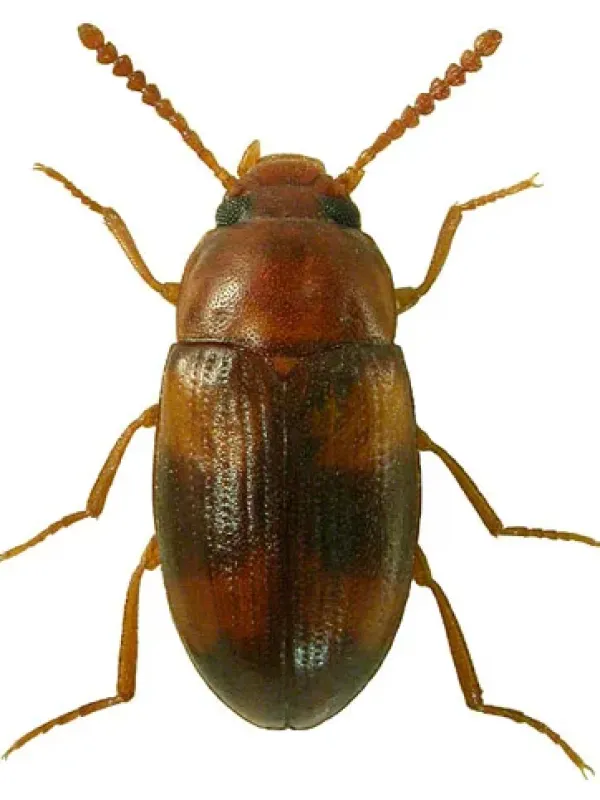
Alphitophagus, most notably the species Alphitophagus bifasciatus, belongs to the family Tenebrionidae. These are small beetles, typically measuring about 2.5–3 mm in length.
The body is oval-shaped and slightly flattened, with a color ranging from reddish-brown to dark brown, which helps them camouflage within grain dust and debris.
A distinctive feature of the adult beetle is the presence of two faint yellowish transverse bands or spots on the elytra, which are visible under magnification.
The larvae are cylindrical, yellowish-white, and have sparse hair cover, developing through a complete metamorphosis including egg, larva, pupa, and adult stages.
These insects are highly mobile and prefer environments with high humidity, making them common inhabitants of damp areas within grain storage facilities.
What it damages
Alphitophagus is considered a secondary pest of stored products, as it primarily infests grain, flour, and feed that has already been damaged by fungi or mold.
They are frequently found in leftover grain remnants in cracks, silos, or under pallets, acting as a reservoir for further contamination of fresh stocks.
The main damage is the degradation of the product's quality through contamination with waste products, such as excreta, molted larval skins, and fungal spores.
Infestation usually leads to an unpleasant, musty odor, significantly reducing the market value and processing quality of the stored agricultural commodities.
While they do not cause the primary breakdown of healthy grains, their presence indicates severe sanitation issues and poor storage conditions that promote spoilage.
When it appears
In temperature-controlled storage environments, Alphitophagus can reproduce year-round, as the life cycle is not limited by seasonal changes in heated facilities.
Peak population growth typically occurs during warmer months when indoor temperatures reach levels conducive to rapid larval development and beetle activity.
In unheated granaries, the activity of the beetle slows significantly during the winter months, although they can easily survive in protected crevices.
The introduction of new, fresh crops into storage is a critical time, as beetles may migrate from residues to the newly arrived healthy grain.
Humidity is the primary seasonal driver, as increases in moisture during any part of the year accelerate the growth of both mold and the pest population.
Signs of infestation
The presence of a musty or moldy smell in storage areas is often the first indicator that mold growth and associated pests like Alphitophagus are present.
Visual identification involves inspecting dust and debris accumulations along floor edges, under storage equipment, and within abandoned grain stockpiles.
Sifting grain samples and observing the debris often reveals the presence of adult beetles or cast-off larval skins, which confirms an active infestation.
The specific pattern on the wing covers of the adult beetle is the most reliable morphological characteristic used by agronomists for field identification.
Clumping of grain, caused by the combined effects of larval tunneling and increased moisture from fungal growth, is a sign of significant infestation sites.
Control measures
The primary control measure is rigorous moisture management, as keeping grain dry effectively prevents the fungal growth that attracts Alphitophagus.
Maintaining strict sanitation standards, including the complete removal of old grain and dust from storage facilities, is essential to prevent infestations.
If high populations are detected, fumigation or surface treatment with approved contact insecticides may be necessary to protect the stored inventory.
- Regular monitoring of grain temperature and moisture levels.
- Thorough cleaning of storage facilities before new harvests.
- Structural maintenance to prevent water ingress and leaks.
- Use of pest monitoring traps to track population trends.
Effective management requires a proactive approach, ensuring that grain storage conditions remain unfavorable for the development of both fungi and pests.
Taxonomy
- Latin name
- Alphitophagus
- Order
- Coleoptera (beetles)
- Family
- Tenebrionidae
- EPPO code
- ALPPSP
Discussion
No discussions yet — be the first.