
Aloe gall mite
Aloephagus myersi
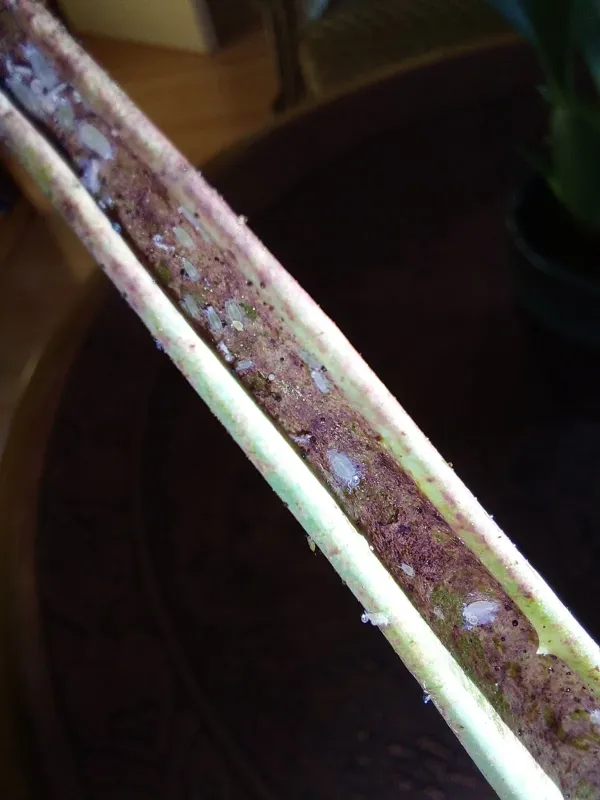
Description
How to identify
The Aloe gall mite (Aloephagus myersi) is a microscopic pest classified within the order Trombidiformes and the family Eriophyidae.
Unlike common spider mites, these pests have an elongated, worm-like body and only two pairs of legs, making them invisible to the naked eye.
They live in protected areas of the plant, primarily in the leaf axils, flower stalks, and the meristematic tissue at the center of the rosette.
Their reproduction is rapid, especially in warm and protected greenhouse or indoor environments, leading to dense colonies within the plant tissue.
Detection usually relies on observing the symptoms produced by the plant rather than seeing the mites themselves, which are extremely small.
What it damages
This mite is a specialized pest that exclusively targets various Aloe species, causing the plant to produce abnormal tissue growths known as galls.
The feeding process triggers a hormonal response in the plant, causing cells to multiply uncontrollably, resulting in the characteristic cauliflower-like swellings.
As the galls enlarge, they disrupt the plant's vascular system, leading to stunted growth, leaf deformation, and a significant loss of ornamental value.
Damaged tissues are highly susceptible to secondary pathogens, such as fungal rots, which often accelerate the decline of the infested plant.
If left unmanaged, the infestation can compromise the structural integrity of the plant, eventually resulting in the death of the specimen.
Signs of infestation
Early symptoms include small, bumpy outgrowths or thickenings at the base of leaves or along the flower spikes of the Aloe plant.
Affected plants often display twisted, curled, or distorted new leaves as the mite interferes with normal tissue development at the growth point.
The surface of the galls may change color, turning from healthy green to yellow, brown, or corky as the tissue becomes hardened and necrotic.
A general lack of vigor and an inability to maintain normal growth patterns despite proper light and water are common indicators of an internal infestation.
In advanced cases, the galls become large and prominent, sometimes covering substantial portions of the plant's crown or leaf surface.
Control measures
Physical removal is the first line of defense; carefully excise and dispose of any galls or heavily infested leaves to reduce the initial mite population.
Chemical control requires the application of systemic acaricides, which are absorbed by the plant and kill the mites feeding on the internal tissues.
Because eggs are resistant to most treatments, repeat applications at 7 to 10-day intervals are mandatory to break the mite's reproductive cycle.
Strict quarantine protocols should be applied to any new plant material entering the collection to prevent the introduction of this highly contagious pest.
Ensure that treated plants are kept under optimal environmental conditions to support their recovery and resilience against potential future outbreaks.
Taxonomy
- Latin name
- Aloephagus myersi
- Order
- Hemiptera (bugs, aphids, leafhoppers)
- Family
- Aphididae
- EPPO code
- ALOPMY
Discussion
No discussions yet — be the first.