
Alder leafhopper
Alnetoidia alneti
Description
How to identify
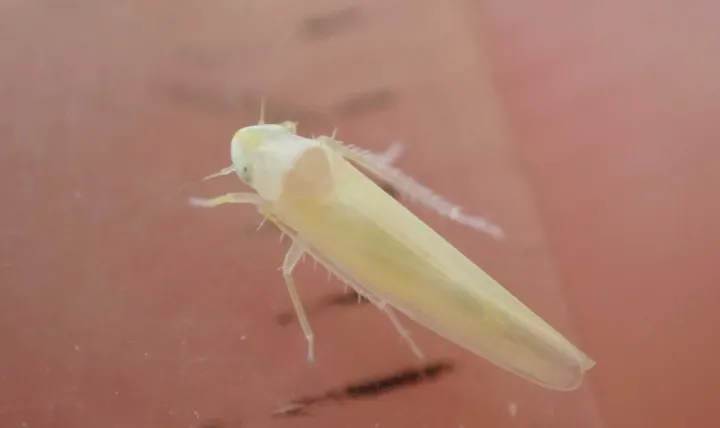
The alder leafhopper (Alnetoidia alneti) is a small insect belonging to the family Cicadellidae and the order Hemiptera. Adult insects typically reach a length of 3 to 4 mm.
They possess a slender, elongated body that ranges from pale yellow to a bright lime green color, providing effective camouflage against green foliage. Their transparent wings are held in a tent-like position over the body.
The nymphs resemble the adults in structure but are smaller and lack fully developed wings. They are extremely active and generally congregate on the undersides of leaves.
Equipped with piercing-sucking mouthparts, these insects are specialized for feeding on plant sap. Females lay eggs directly into the leaf veins or the tissues of tender young shoots.
As a common species in forest ecosystems, parks, and gardens, they thrive wherever their host trees, particularly alder, are abundant.
What it damages
While the alder is the primary host for Alnetoidia alneti, the leafhopper is polyphagous and can infest several other broadleaf tree species in urban and garden environments.
Common hosts include birch, linden, hazel, and sometimes various fruit tree varieties. Damage is usually concentrated on the young foliage and growing tips of the branches.
Continuous sap extraction weakens the plant, disturbing its metabolic functions and reducing its ability to withstand environmental stressors throughout the growing season.
Beyond the direct physical damage, these insects are known vectors of phytoplasmas and viruses that can cause systemic diseases in various deciduous tree species.
During outbreak years, large populations can significantly detract from the aesthetic value and long-term health of the infested tree canopy.
When it appears
The lifecycle of the alder leafhopper is strictly synchronized with the seasonal development of host trees. The species overwinters in the egg stage, typically under the bark.
Nymph hatching occurs in the second half of spring, coinciding with bud burst and the expansion of fresh leaves, which provides an immediate food source.
Depending on the climatic conditions, one or two generations occur annually. Adult activity reaches its peak in mid-summer, specifically throughout June and July.
As autumn approaches, adult females lay eggs to ensure the next generation, embedding them securely into plant tissues for protection during the winter months.
Favorable development conditions include warm, moderately humid weather, which allows the population to flourish and potentially reach high densities quickly.
Signs of infestation
The earliest symptom of an infestation is the appearance of tiny white or pale chlorotic spots on the upper leaf surface, created by the insect's feeding punctures.
As the infestation progresses, the leaf may develop a mottled or stippled appearance, leading to premature yellowing and eventual leaf drop, hindering photosynthesis.
A reliable sign of presence is the sudden emergence of a 'cloud' of small, jumping insects when the branches of an infested tree are disturbed or shaken.
On the undersides of the leaves, one can often find cast skins (exuviae) left behind after molting, along with sticky honeydew secretions that may attract sooty mold.
Severely stressed trees may show stunted growth and reduced winter hardiness, making them more susceptible to secondary pests or fungal diseases.
Control measures
Effective management begins with dormant season pruning, which helps remove overwintering sites, including twigs containing eggs, thereby reducing the initial population.
Encouraging a healthy population of natural predators, such as spiders, lacewings, and predatory bugs, is a sustainable way to keep leafhopper numbers in check.
- Application of bio-insecticides based on entomopathogenic fungi.
- Use of systemic insecticides only during high-density outbreak years.
- Monitoring population levels using yellow sticky traps placed in the canopy.
- Ensuring proper irrigation to boost the tree's natural defense mechanisms.
If chemical intervention is necessary, treatments should be timed with the peak of nymph emergence, as younger stages are significantly more vulnerable to control agents.
Always rotate different classes of insecticides to prevent the population from developing resistance to commonly used chemical active ingredients.
Taxonomy
- Latin name
- Alnetoidia alneti
- Order
- Hemiptera (bugs, aphids, leafhoppers)
- Family
- Cicadellidae
- EPPO code
- ERYTAL
Discussion
No discussions yet — be the first.