
Alder leafhopper
Alnetoidia
Description
How to identify
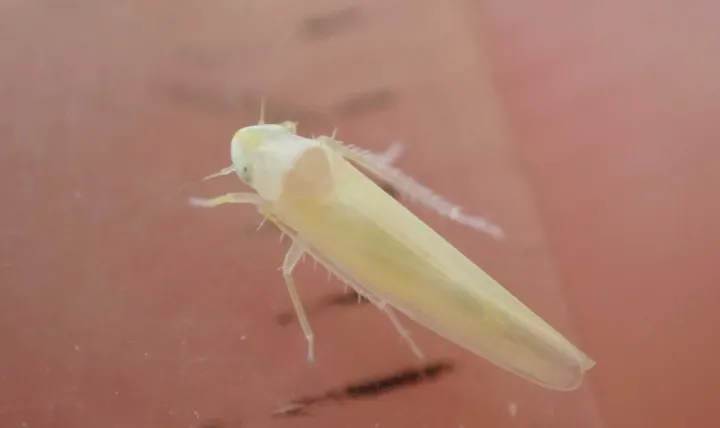
The alder leafhopper (Alnetoidia alneti) belongs to the order Hemiptera and the Cicadellidae family. These insects are relatively small, typically measuring between 3 and 4 millimeters in length as adults.
They possess a yellowish-green coloration that provides excellent camouflage against the underside of host leaves. Their wings are transparent, often displaying a subtle pearlescent sheen when resting.
Nymphs resemble the adults in body shape but lack fully developed wings and are smaller in size. They are highly active and exhibit rapid, jumpy movements when the leaf they are residing on is disturbed.
The life cycle is closely tied to the host tree's phenology. Eggs are typically laid under the epidermis of young twigs or leaf petioles, where they remain throughout the dormant winter season.
The insect undergoes several nymphal stages before reaching adulthood. Throughout these stages, the leafhopper remains a sap-sucking pest, continuously damaging the host plant's tissues.
What it damages
While the species is primarily associated with alder (Alnus) trees, it also infests various other deciduous trees and shrubs. This versatility makes it a widespread pest in both forests and urban landscapes.
Host plants include birch, hazel, hornbeam, lime, and various fruit trees. In densely planted areas, the leafhopper can spread quickly, moving from one tree to another with ease.
The primary damage occurs as the insects feed on plant sap. By puncturing the leaf cells, they disrupt the plant's ability to conduct photosynthesis, leading to reduced vitality and energy reserves.
Secondary infections are a common consequence of infestations. Sooty mold often colonizes the sticky honeydew secreted by the leafhoppers, which can further block sunlight and stress the tree leaves.
Heavy infestations can result in significant leaf chlorosis, premature yellowing, and eventual leaf drop. This reduces the aesthetic value of ornamental trees and impairs the growth of young specimens.
When it appears
Activity typically begins in the early spring as temperatures rise above 10 degrees Celsius, triggering the hatching of nymphs from overwintered eggs located in the tree bark.
The peak population density usually occurs during the early to mid-summer months. During this time, the adult population is at its highest, and individuals are most visible while moving across the foliage.
Depending on the climatic region, the alder leafhopper may produce one or two generations per year. The second generation is often observed toward the end of the summer season.
As autumn approaches, insect activity declines as they prepare for the winter period. Females focus on finding suitable sites to lay their eggs, ensuring the next generation survives the cold months.
Favorable weather conditions, such as warm, moist springs, allow for larger populations to emerge, while severe cold may restrict the survival rate of the overwintering eggs.
Signs of infestation
The most distinctive early sign of an infestation is the appearance of tiny, light-colored stippling on the leaves. These spots are the direct result of the insects' feeding activity on the leaf tissue.
Exuviae, the discarded skins left behind after molting, are commonly found on the undersides of leaves. Identifying these sheds is a reliable method for confirming the presence of the leafhopper.
Sticky honeydew on the leaf surface is a clear indicator of a feeding colony. This sweet secretion is not only problematic for the tree but also frequently attracts ants, which can act as a secondary sign.
Curling or deformation of the leaf edges often occurs as the damage progresses. The tree may take on a faded, sickly appearance as the overall photosynthetic capacity of the canopy is compromised.
Early leaf abscission in mid-to-late summer is a sign of a severe infestation. This exhaustion of the tree's resources can lead to reduced vigor, making the plant more susceptible to further environmental stress.
Control measures
Cultural control methods, such as clearing away fallen leaves and pruning heavily infested twigs during the dormant season, can significantly reduce the overwintering egg population.
Biological control involves encouraging natural predators in the garden, such as lacewings and ladybirds, which act as efficient regulators of leafhopper populations in many environments.
Chemical intervention should be considered when the pest population exceeds the economic injury threshold. Systemic insecticides are generally the most effective against sap-sucking insects.
Yellow sticky traps can be used as a management tool to capture adult leafhoppers, providing both a way to monitor population trends and a physical method for suppressing adult numbers.
- Monitor the canopy regularly during the spring growth phase.
- Ensure adequate tree hydration to help plants withstand feeding damage.
- Use selective, environmentally friendly insecticides to preserve beneficial insect populations.
- Apply treatments during the nymphal stages for maximum efficacy.
Taxonomy
- Latin name
- Alnetoidia
- Order
- Hemiptera (bugs, aphids, leafhoppers)
- Family
- Cicadellidae
- EPPO code
- ALNESP
Discussion
No discussions yet — be the first.