
Spiraea whitefly
Aleyrodes spiraeoides
Description
How to identify
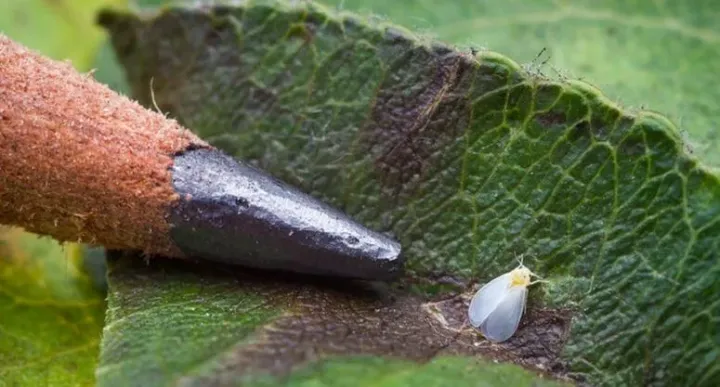
The Spiraea whitefly (Aleyrodes spiraeoides) is a small insect belonging to the family Aleyrodidae. Adult specimens resemble tiny white moths, typically measuring only 2–3 millimeters in length.
The body and wings of the adult whitefly are coated in a fine white powdery wax, which serves as a protective layer against environmental moisture and certain contact pesticides.
Their nymphs, or larvae, are often flat, oval, and pale in color, making them difficult to spot as they reside primarily on the underside of leaves to feed and develop.
The life cycle encompasses several distinct stages, moving from an egg attached to a leaf via a small stalk, through various nymphal instars, to the final pupal stage.
Due to their small size and rapid reproductive rate, they can establish large colonies quickly, especially in environments with limited airflow or high plant density.
What it damages
This pest is a polyphagous insect, meaning it feeds on a diverse range of host plants, including both cultivated crops and wild vegetation found in gardens and fields.
Key agricultural crops such as tomatoes, cucumbers, and peppers are particularly susceptible, as the whiteflies exploit the succulent tissues of these plants for their sap.
Ornamental shrubs and flowers, including Spiraea, roses, and various garden perennials, are frequently infested, leading to stunted growth and loss of aesthetic value.
The whitefly causes significant physiological stress to host plants, primarily by piercing leaf tissues and extracting vital plant juices necessary for energy production.
By acting as vectors for certain plant viruses, these insects can also indirectly cause long-term damage to the plant's health, often affecting harvest quality and yield.
Signs of infestation
A primary indicator of infestation is the sudden appearance of a "white cloud" of insects when an affected plant is shaken or disturbed by the wind.
Early symptoms include yellow stippling or chlorotic spots on the upper side of the leaves, corresponding to the feeding areas of the nymphs on the underside.
The presence of honeydew — a sticky, sugary substance secreted by the whiteflies — often leads to the growth of unsightly sooty mold on the leaves and stems.
As the infestation progresses, leaves may curl, wither, or drop prematurely, and the overall plant vigor will noticeably decline due to the sustained sap loss.
Persistent damage can also lead to deformed fruit or buds, which are often unable to develop normally, resulting in substantial losses for both home and commercial growers.
Control measures
Effective management begins with monitoring using yellow sticky traps, which are highly attractive to adult whiteflies and provide an early warning of their presence.
Cultural control methods involve maintaining healthy plant vigor through proper fertilization, regular weed removal, and ensuring adequate spacing between plants to improve airflow.
Biological control options, such as the introduction of parasitic wasps like Encarsia formosa, have proven highly successful in reducing whitefly populations naturally.
In cases of severe outbreaks, systemic insecticides may be required to protect the plant from within; however, these must be used according to the label instructions.
Always rotate different classes of insecticides to prevent the development of pesticide resistance in the whitefly population, and observe safe harvest intervals.
Taxonomy
- Latin name
- Aleyrodes spiraeoides
- Order
- Hemiptera (bugs, aphids, leafhoppers)
- Family
- Aleyrodidae
- EPPO code
- ALEUSR
Discussion
No discussions yet — be the first.