
Cabbage whitefly
Aleyrodes proletella
Description
How to identify
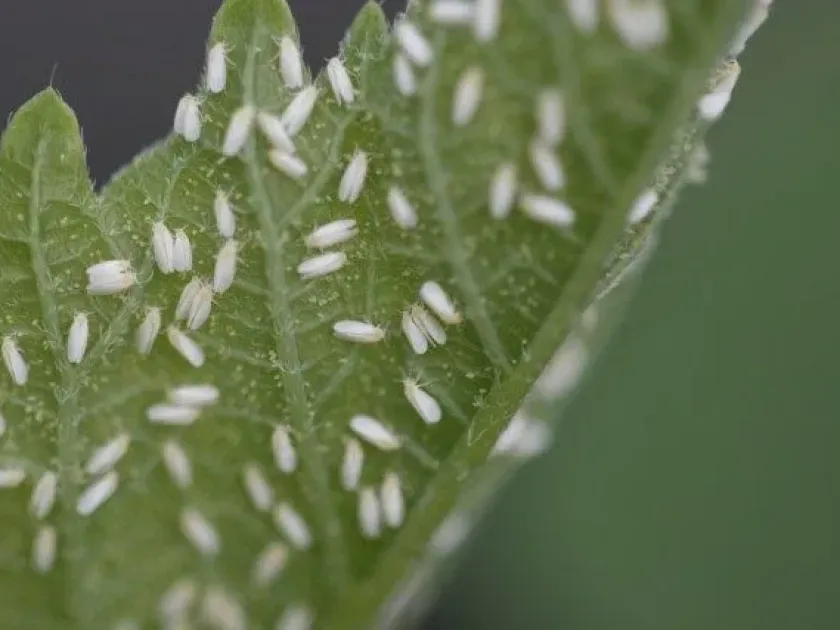
The cabbage whitefly (Aleyrodes proletella) is a small hemipteran insect belonging to the Aleyrodidae family. Adults are easily recognized by their white, powdery wings, which have distinctive dark spots.
The life cycle consists of several stages: egg, four larval instars (the first is mobile, while others are sedentary), puparium, and adult. They are typically found on the undersides of leaves.
The pest thrives in warm and humid conditions, which allows for rapid multiplication and the emergence of several generations during a single growing season.
Adult whiteflies are strong fliers but are often spread across fields by wind or agricultural machinery, making it difficult to contain local infestations.
Wintering usually occurs in the adult stage, hiding among crop residues, weeds, or inside protected structures like greenhouses and tunnels.
What it damages
Cabbage whiteflies primarily attack plants within the Brassicaceae family, such as broccoli, cauliflower, cabbage, Brussels sprouts, and kale.
Both larvae and adults extract plant sap by piercing the leaves, which leads to nutrient loss, stunted development, and reduced overall vigor of the host plant.
The constant feeding stresses the plant, reducing its ability to form high-quality heads or produce sufficient foliage for optimal yields.
Severe infestations cause leaves to wither, curl, and turn yellow, eventually leading to premature leaf drop if the pest population remains unchecked.
Damage is further exacerbated by the transmission of plant viruses and the proliferation of sooty mold on the honeydew secreted by the larvae.
Signs of infestation
The most obvious sign of an infestation is a cloud of white insects rising into the air when the infected plant is disturbed or shaken.
Leaves become covered with a sticky substance known as honeydew, which serves as a breeding ground for black sooty mold that covers the foliage.
Close inspection of the underside of leaves reveals colonies of flat, translucent, scale-like larvae that are firmly attached to the plant tissue.
The plant exhibits chlorosis (yellowing), wilting, and general lack of vitality, significantly impacting the harvestable quality of the crop.
- White clouds of flying insects upon disturbance.
- Sticky honeydew secretions on leaves.
- Black sooty mold growth on foliage.
- Deformed, stunted, or yellowing leaves.
- Early wilting of infested plants.
Control measures
Cultural control is essential, including the removal of cruciferous weeds around the field, which serve as alternate hosts during the early season.
Implementing proper crop rotation helps break the life cycle of the pest, preventing it from establishing deep roots in specific areas of the garden or farm.
Chemical control requires the use of approved systemic insecticides, ensuring that applications are thoroughly directed at the underside of the leaves.
Biological control methods, such as utilizing parasitic wasps like Encarsia formosa, provide an environmentally friendly alternative for managing whitefly populations.
Monitoring using yellow sticky traps can help detect the presence of adults early, allowing for timely intervention before the population reaches an uncontrollable level.
Taxonomy
- Latin name
- Aleyrodes proletella
- Order
- Hemiptera (bugs, aphids, leafhoppers)
- Family
- Aleyrodidae
- EPPO code
- ALEUPR
Discussion
No discussions yet — be the first.