
Whitefly
Aleyrodes
Description
How to identify
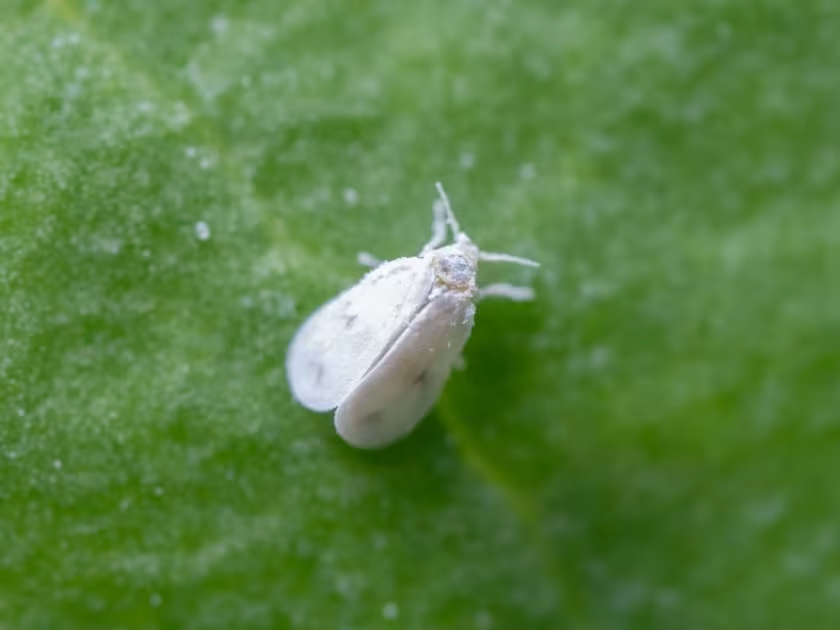
The whitefly is a small insect belonging to the family Aleyrodidae, order Hemiptera. These pests are easily recognized as tiny white, moth-like insects, typically measuring 1-3 mm in length.
Their life cycle consists of the egg, four nymphal stages, and the adult stage. The transition from nymph to adult occurs rapidly, especially in warm, protected environments.
Adult whiteflies are winged and capable of flying, while the larval stages are generally sessile, often remaining attached to the underside of plant leaves.
They are prolific breeders; a single female can lay hundreds of eggs during her lifespan, which allows the population to explode in a very short time.
Whiteflies are primarily found in greenhouses, but during the summer months, they can migrate to outdoor crops, thriving in warm and humid conditions.
What it damages
Whiteflies are polyphagous pests, known to attack a wide variety of plants, including tomatoes, cucumbers, peppers, brassicas, and many ornamental species.
Both adults and nymphs feed by inserting their piercing-sucking mouthparts into the phloem of leaves, extracting essential plant sap.
Continuous feeding causes the plant to become weak, stunted, and eventually leads to leaf yellowing (chlorosis) and wilting if not addressed early.
Beyond direct feeding damage, whiteflies are major vectors for various plant viruses, which can devastate entire crops by causing systemic disease.
Damage is often most severe on young seedlings, where the loss of sap can kill the plant before it has a chance to establish properly.
Signs of infestation
The most visible sign of infestation is a cloud of small, white insects flying up when a plant is disturbed or shaken.
Plants often exhibit a sticky, glistening substance known as honeydew on their leaves, which is excreted by the feeding nymphs.
Honeydew often promotes the growth of black sooty mold, a fungus that covers the leaf surface and disrupts the plant's ability to photosynthesize.
Affected leaves may curl, turn pale yellow, or dry out, leading to a general decline in the plant's overall health and aesthetic quality.
- Sticky residues on foliage
- Yellowing of lower leaves
- Presence of tiny scale-like nymphs on leaf undersides
- Increased ant activity near the plants (attracted to honeydew)
Control measures
Effective whitefly management involves integrating cultural, biological, and chemical techniques to keep populations below the economic threshold.
Cultural practices include cleaning greenhouses between cycles, removing infested plant parts, and managing host weeds that may harbor the pests.
Biological control using beneficial insects such as Encarsia formosa (a parasitic wasp) or Macrolophus pygmaeus (a predatory bug) is highly effective in greenhouses.
Chemical control should rely on rotation of systemic and contact insecticides to prevent the development of pesticide resistance in whitefly populations.
Always ensure that spray applications provide thorough coverage of the leaf undersides, as this is where the majority of eggs and nymphs reside.
Taxonomy
- Latin name
- Aleyrodes
- Order
- Hemiptera (bugs, aphids, leafhoppers)
- Family
- Aleyrodidae
- EPPO code
- ALEUSP
Discussion
No discussions yet — be the first.