
Strawberry whitefly
Aleurotuba jelinekii
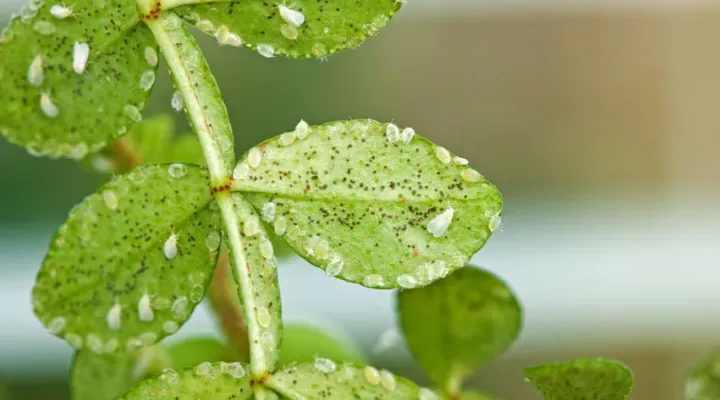
Description
How to identify
The strawberry whitefly is a small insect belonging to the family Aleyrodidae. Adult insects are approximately 1.5 mm long, with wings covered in a white, powdery wax.
The nymph stage appears as small, scale-like structures, often pale yellow or translucent, attached firmly to the underside of the leaves, making them difficult to spot.
Eggs are minute and elongated, laid by the female in clusters on the underside of young strawberry leaves, often near the leaf veins for better protection.
The life cycle progresses through egg, four nymphal instars, and adult stages, with populations increasing rapidly during warm and humid weather conditions.
Identification is best achieved using a hand lens to inspect the underside of leaves, as the immobile nymph stages look very similar to leaf tissues.
What it damages
The primary host for this pest is the cultivated strawberry, though it may occasionally be found on wild relatives within the Rosaceae family.
Both adults and nymphs cause damage by piercing the plant tissue and sucking cell sap, which leads to a significant loss of vigor in the strawberry plants.
Infested plants exhibit stunted growth and reduced metabolic function, which directly impacts fruit set and the overall quality of the berry harvest.
Whiteflies excrete honeydew, a sticky substance that promotes the growth of sooty mold, covering leaves and further stressing the plant.
The presence of sooty mold interferes with the plant's photosynthetic capacity by clogging stomata, leading to premature leaf drop and potential yield loss.
Signs of infestation
The most noticeable sign is a cloud of tiny, white, moth-like insects that fly up when the strawberry foliage is disturbed or brushed during the day.
Leaves often show symptoms of chlorosis, appearing pale or yellowed, and may become distorted or curled due to the sustained feeding pressure of the nymphs.
The presence of a sticky, shiny substance (honeydew) on the leaves or fruit, followed by the appearance of dark, fuzzy patches of sooty mold, confirms an infestation.
General plant health declines, showing signs of nutrient deficiency despite proper fertilization, caused by the depletion of sap from the vascular system.
In cases of heavy infestation, the entire leaf surface may become coated with nymphs and honeydew, leading to total wilting of the plant canopy.
Control measures
Managing the strawberry whitefly requires an integrated pest management (IPM) strategy that combines physical, biological, and chemical interventions.
Cultural practices such as weed removal and maintaining proper plant spacing are crucial for preventing the rapid spread of the pest across the field.
Yellow sticky traps are highly effective for monitoring adult activity and can help in timing biological or chemical applications to maximize efficacy.
Biological control agents, including parasitic wasps and entomopathogenic fungi, provide a sustainable way to suppress whitefly populations in the field.
- Apply systemic insecticides only when necessary and during the early stages of infestation.
- Ensure thorough coverage of the leaf undersides during spray applications.
- Remove and destroy severely infested plant parts to reduce the localized population density.
Taxonomy
- Latin name
- Aleurotuba jelinekii
- Order
- Hemiptera (bugs, aphids, leafhoppers)
- Family
- Aleyrodidae
- EPPO code
- ALTRJE
Discussion
No discussions yet — be the first.