
Camellia whitefly
Aleurotrachelus camelliae
Description
How to identify
The Camellia whitefly (Aleurotrachelus camelliae) belongs to the Aleyrodidae family of the order Hemiptera. Adults are small insects with wings covered in a fine, white, waxy powder.
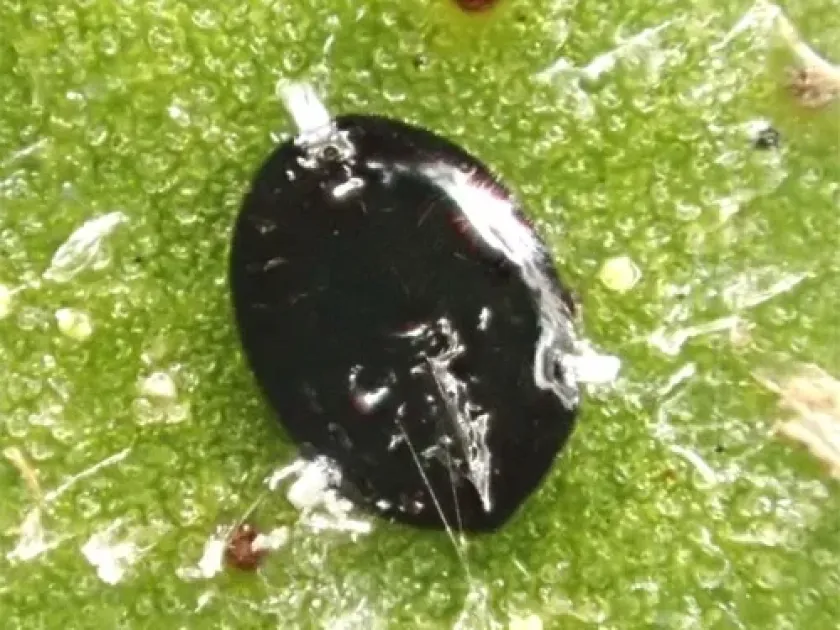
The larvae are typically oval and flattened, living a sessile life on the underside of leaves. They range in color from translucent white to yellowish, often making them difficult to detect without careful inspection.
As a sap-sucking pest, it passes through several developmental stages, including egg, larval instars, and puparium. The puparium stage is the most distinctive feature used by specialists for identification.
Colonies usually inhabit the lower surface of leaves, appearing as a dense, mealy white layer comprised of both living larvae and their shed skins.
For professional identification, agronomists often use microscopic analysis to observe the specific morphological features of the puparium, such as the arrangement of marginal setae.
What it damages
The primary hosts are plants of the genus Camellia, including Camellia japonica and Camellia oleifera. This pest can also affect other ornamental shrubs in greenhouse conditions.
Both adults and larvae cause damage by piercing leaf tissues and extracting cellular sap. This significantly weakens the host plant, compromising its overall health and vitality.
Severe infestations lead to leaf deformation, yellowing, and premature abscission. Photosynthesis is severely hampered, which stunts plant growth and reduces flower bud formation.
Beyond direct damage, whiteflies act as vectors for various plant viruses. Furthermore, their sugary excretions (honeydew) serve as a substrate for sooty mold, which coats leaves in a thick black film.
Sooty mold does not just impair the plant's appearance; it also inhibits gas exchange by clogging the stomata, further stressing the plant.
When it appears
The activity of the Camellia whitefly is highly dependent on temperature. In greenhouse or indoor environments, they can breed year-round if the climate remains favorable.
The peak population growth usually occurs in warm conditions, with temperatures between +22°C and +28°C. High humidity levels further accelerate their life cycle and reproductive success.
In outdoor garden settings, activity typically begins in late spring as temperatures rise and continues until the onset of autumn cooling.
Multiple generations can occur within a single growing season, leading to rapid population explosions. The insect typically overwinters in the puparium stage on fallen leaves or plant bark.
Monitoring should commence early in the spring, focusing on the undersides of new foliage where females prefer to deposit their eggs.
Signs of infestation
The first indicator of infestation is the appearance of small, white, flake-like insects on the underside of leaves that disperse when a branch is disturbed.
Yellow patches or chlorosis appear on the upper side of the leaf, which expand as the infestation progresses. Leaves become sticky due to the honeydew secreted by the larvae.
The development of a black, sooty coating on the leaves indicates a chronic infestation that requires immediate corrective action.
Stunted development of new shoots and poor blooming are common symptoms of severe sap loss and overall plant stress.
- Presence of flying adults upon leaf disturbance.
- Sticky honeydew droplets on leaves and surrounding surfaces.
- Black sooty mold growth on foliage.
- Deformation and yellowing of leaf tissues.
- Reduced vigor and stunted shoot growth.
Control measures
The most important control strategy is consistent monitoring and the physical removal of heavily infested leaves to reduce the overall population pressure.
Chemical control involves the use of systemic insecticides that are absorbed into the plant tissues, making the sap toxic to the pest. Products containing acetamiprid or imidacloprid are generally effective.
Biological control options include the introduction of natural enemies, such as parasitoid wasps of the genus Encarsia, which can help regulate whitefly numbers.
For home gardens, a gentle application of insecticidal soaps or horticultural oils can be used to coat the insects and physically block their spiracles for respiration.
Good agricultural practices, such as ensuring adequate ventilation, avoiding high-humidity pockets, and maintaining strict sanitation in growing areas, are essential for long-term management.
Taxonomy
- Latin name
- Aleurotrachelus camelliae
- Order
- Hemiptera (bugs, aphids, leafhoppers)
- Family
- Aleyrodidae
- EPPO code
- ALTRCM
Discussion
No discussions yet — be the first.