
Aleurothrixus
Aleurothrixus
Description
How to identify
Aleurothrixus is a genus of whiteflies within the family Aleyrodidae, known for being significant pests in agricultural and horticultural settings worldwide.
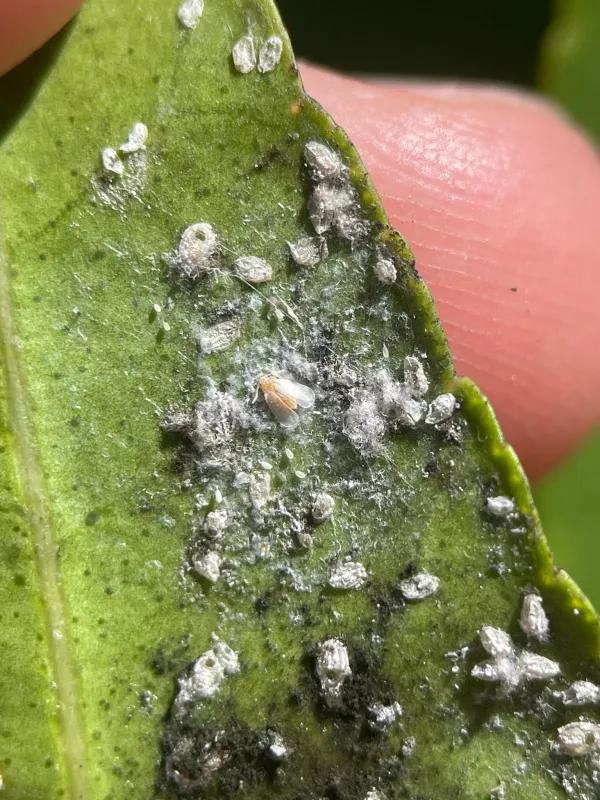
The adult form is a tiny insect with wings covered in a white powdery substance, which is a common diagnostic feature for this group of pests.
The immature stages, including larvae and puparia, are sedentary and typically found on the undersides of leaves, often protected by a dense waxy fringe.
The life cycle progresses through eggs, three larval instars, a pupal stage, and the adult form, with generation times highly dependent on ambient temperature.
These insects are adept at rapid reproduction, allowing populations to explode within a few weeks if conditions are favorable for their development.
What it damages
These pests primarily target citrus trees, causing damage by feeding on phloem sap, which deprives the plant of essential nutrients and water.
Beyond citrus, Aleurothrixus can infest a variety of broad-leaved ornamental plants, posing a threat to both outdoor orchards and indoor greenhouse environments.
Severe infestations weaken the host plant, resulting in stunted growth, leaf chlorosis, and the potential for total branch dieback if left untreated.
The excretion of honeydew by the larvae attracts various secondary issues, most notably the development of sooty mold, which blocks sunlight from leaves.
Reduced crop quality and yield are typical consequences of significant whitefly pressure, making control measures vital for commercial growers.
When it appears
Aleurothrixus thrives in warm and humid environments, often peaking in activity during the spring and summer months when weather is optimal.
In greenhouse or indoor settings, they do not experience seasonal dormancy and can continue their reproductive cycle throughout the entire year.
Hot, dry weather can trigger mass dispersal events, where adult whiteflies move to colonize healthy plants in surrounding areas.
Low temperatures may slow down their metabolic processes, but adult and pupal stages often survive in protected niches until conditions improve.
The lack of a severe winter in subtropical regions allows these insects to remain active and problematic for citrus production across all seasons.
Signs of infestation
The most reliable sign of an infestation is the presence of white, cottony masses on the underside of leaves, which are actually clusters of larvae.
A sticky film of honeydew covering the leaves and branches often precedes the appearance of black, dusty sooty mold growth on the foliage.
Leaves affected by feeding may appear yellowed, curled, or scorched, leading to premature leaf drop and an overall decline in plant vigor.
Adult whiteflies are easily disturbed; shaking a branch usually causes a visible cloud of small white insects to fly up temporarily.
Observation of fruit quality will often reveal smaller sizes and uneven ripening as the tree diverts energy from fruit production to stress recovery.
Control measures
Effective management begins with strict quarantine measures for new nursery stock to prevent the introduction of the pest into the orchard.
Yellow sticky traps are an excellent monitoring tool, providing early detection of adult movement and helping to track population density over time.
Biological control is highly effective, utilizing specific parasitoid wasps or predators that hunt and consume the whitefly larvae efficiently.
Systemic insecticides are frequently used in commercial settings, as they provide longer-lasting protection compared to contact-based sprays.
- Regular pruning to improve air circulation within the canopy
- Washing foliage with high-pressure water or insecticidal soap
- Rotation of chemical products to prevent pest resistance
- Monitoring nearby weeds that may act as alternative hosts
Taxonomy
- Latin name
- Aleurothrixus
- Order
- Hemiptera (bugs, aphids, leafhoppers)
- Family
- Aleyrodidae
- EPPO code
- ALTHSP
Discussion
No discussions yet — be the first.