
Rugose spiraling whitefly
Aleurodicus rugioperculatus
Description
How to identify
The Rugose spiraling whitefly (Aleurodicus rugioperculatus) is a member of the Aleyrodidae family. It is recognized as a significant invasive pest that spreads rapidly in tropical and subtropical climates.
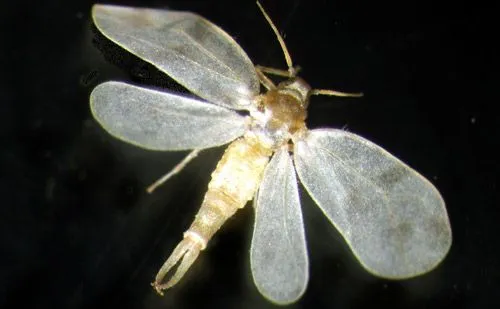
The adult whitefly is larger than the common greenhouse whitefly and is characterized by a distinctive white, waxy appearance. Their wings often feature irregular, grayish-brown markings.
The name "spiraling" comes from the unique oviposition behavior of the female, who deposits her eggs in a circular, spiral pattern on the underside of leaves.
The life cycle consists of the egg, four nymphal stages, and the adult stage. The waxy, woolly filaments produced by the nymphs are a primary diagnostic feature of the species.
Entomologists identify these pests by examining the morphology of the pupal case, as the wax filaments and specific pore structures are highly characteristic of this specific whitefly.
What it damages
This species is a highly polyphagous pest, meaning it feeds on a vast array of plant species. Common hosts include palms, bird of paradise, hibiscus, and various fruit trees.
In landscape settings, it can infest over 100 different plant species, leading to severe aesthetic damage and the overall decline of plant health in public parks and residential gardens.
The pest causes damage by inserting its piercing-sucking mouthparts into the phloem of leaves, extracting large amounts of nutrients and plant sap.
Heavy infestations lead to the rapid yellowing of foliage and subsequent leaf drop, which stresses the plant and inhibits its ability to produce new growth or flowers.
Fruit production is also negatively impacted by the presence of this whitefly, as the energy required for fruit development is redirected to counteract the pest infestation.
Signs of infestation
The most visible sign is the accumulation of honeydew on the leaves, which is a sticky, sweet substance secreted by the whiteflies while feeding on the plant sap.
This honeydew serves as a perfect medium for sooty mold, a fungus that forms a thick black coating on leaves, stems, and fruits, which significantly reduces photosynthesis.
The undersides of the leaves often display heavy waxy deposits and white, fluffy masses that resemble cotton or wool, protecting the nymphs and the eggs from environmental factors.
Plant appearance declines significantly, with leaves becoming chlorotic (yellowed) and distorted due to the direct impact of constant feeding by the insect colony.
In highly infested areas, the presence of whiteflies is easily detected by the clouds of small, white adults that rise into the air when the foliage is disturbed or brushed against.
Control measures
Managing the Rugose spiraling whitefly requires an Integrated Pest Management (IPM) approach to minimize the use of broad-spectrum insecticides and promote biological control.
- Utilizing biological control agents like parasitic wasps, specifically Encarsia noyesi, which effectively hunt nymphs.
- Implementing regular pruning of heavily infested foliage to remove the bulk of the population from the plant.
- Applying systemic insecticides as a last resort, ensuring they target the plant's vascular system to protect against sap-feeding stages.
- Using horticultural oils or insecticidal soaps to disrupt the waxy coating, which effectively dehydrates and kills the insects.
- Monitoring population levels with yellow sticky cards to detect the arrival of adults before the infestation becomes critical.
Cultural practices, such as maintaining healthy plant growth through proper irrigation and fertilization, help plants better withstand whitefly stress.
Education and public awareness are crucial, as human movement of infested plant material is the primary method of long-distance spread for this invasive species.
Taxonomy
- Latin name
- Aleurodicus rugioperculatus
- Order
- Hemiptera (bugs, aphids, leafhoppers)
- Family
- Aleyrodidae
- EPPO code
- ALEDRU
Discussion
No discussions yet — be the first.