
Porous whitefly
Aleurodicus poriferus
Description
How to identify
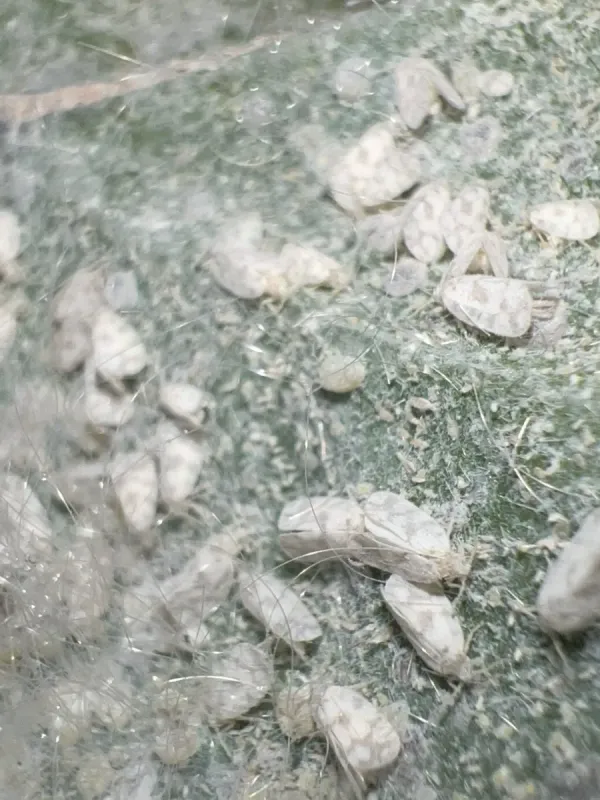
The porous whitefly (Aleurodicus poriferus) belongs to the Aleyrodidae family of the order Hemiptera. It is recognized by the distinct porous structures on the dorsal surface of its puparium, which are characteristic of this species.
Adult whiteflies are small, moth-like insects with wings covered in a powdery, wax-like substance. This secretion serves as protection against moisture and environmental stress.
The life cycle progresses through the egg stage, four nymphal instars, and the adult stage. The initial nymphal stages are mobile, while later stages remain stationary on the leaf surface.
These insects thrive in tropical and subtropical conditions, making greenhouses an ideal environment for their population to explode throughout the year.
Accurate species identification usually requires professional microscopic examination, as many Aleurodicus species share similar morphological traits during the adult stage.
What it damages
Aleurodicus poriferus is a polyphagous pest, meaning it attacks a wide variety of ornamental plants, fruit crops, and greenhouse-grown vegetables.
Damage is primarily caused by nymphs and adults sucking sap from the phloem. This nutrient loss leads to weakened plant vitality, leaf yellowing, and overall stunted growth.
The secretion of honeydew is a significant secondary issue. This sticky substance promotes the growth of sooty mold, which physically blocks sunlight and hinders photosynthesis.
Heavy infestations can lead to leaf senescence and premature abscission, significantly reducing the yield and aesthetic value of commercial crops.
In addition to direct damage, whiteflies can act as vectors for various plant viruses, further compromising the health and survival of host plants.
Signs of infestation
The most noticeable sign of a porous whitefly infestation is the presence of sticky honeydew on the upper surfaces of leaves situated below the main colony sites.
Observers will see small, white, flying insects when the foliage is disturbed, indicating that the adult population is actively moving within the canopy.
Sooty mold growth, appearing as a dark or black dusty layer on leaves and stems, confirms a long-term presence of whiteflies on the affected plant.
Visual inspection of the underside of leaves will reveal the presence of small, flat, white nymphal cases attached to the leaf veins and tissue.
General plant decline, including curled leaves, stunted terminal growth, and a lackluster appearance, is a strong indicator of an unchecked whitefly population.
Control measures
Integrated Pest Management (IPM) is essential. The use of yellow sticky traps serves as a primary tool for early detection and population density monitoring.
Systemic insecticides are generally the most effective chemical measure, as they are translocated throughout the plant to target feeding larvae effectively.
Resistance management is critical; chemical treatments must be rotated between different classes of insecticides to maintain efficacy and prevent resistant strains.
Biological control, such as releasing parasitic wasps like Encarsia formosa or using predatory mites, offers a sustainable solution for greenhouse environments.
Strict sanitation protocols, including the removal of infested plant debris and thorough cleaning of equipment between cycles, are vital to preventing re-infestation.
Taxonomy
- Latin name
- Aleurodicus poriferus
- Order
- Hemiptera (bugs, aphids, leafhoppers)
- Family
- Aleyrodidae
- EPPO code
- ALEDPO
Discussion
No discussions yet — be the first.