
Spiraling whitefly
Aleurodicus dispersus
Description
How to identify
The spiraling whitefly (Aleurodicus dispersus) is a member of the Hemiptera order and Aleyrodidae family. Adult insects are approximately 2 mm long, characterized by a white, waxy body appearance that makes them easily recognizable.
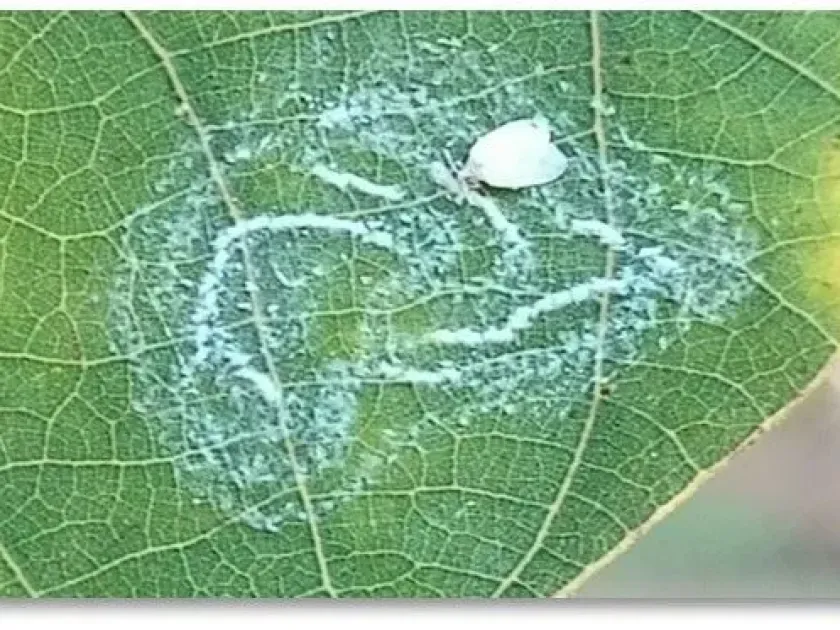
The name "spiraling" comes from the female's unique oviposition behavior: she lays eggs on the underside of leaves in distinct spiral patterns, covered by protective white waxy threads secreted from specialized glands.
The life cycle progresses through the egg stage, four nymphal instars, and the adult phase. Adults are highly mobile and easily dispersed by wind currents, which facilitates the rapid spread of infestations across agricultural landscapes.
After the first instar, nymphs become sedentary and attach themselves firmly to plant tissues, feeding on phloem sap. They appear as pale, translucent scales surrounded by a cottony or waxy residue.
This species thrives in warm, humid climates, making it a major threat to crops in tropical regions and a persistent challenge for indoor greenhouses with controlled temperatures.
What it damages
This pest is highly polyphagous, attacking a wide range of host plants. Major economic impacts are observed in fruit orchards, including bananas, citrus, guava, and mango, as well as essential vegetable crops like tomatoes and peppers.
Ornamental plants and urban vegetation are also frequently targeted, which can lead to severe aesthetic and health decline for landscaped areas and commercial plant nurseries.
Signs of infestation
The most reliable sign of an infestation is the presence of the characteristic white waxy spirals on the underside of leaves, which are indicative of active egg-laying sites.
Secondary signs include the development of sooty mold. As whiteflies feed, they excrete large amounts of honeydew, a sticky substance that promotes fungal growth, potentially blocking sunlight and hindering plant photosynthesis.
Plants infested with Aleurodicus dispersus often exhibit chlorosis, curling leaves, and premature leaf drop, resulting in stunted growth and a significant reduction in fruit yield.
Control measures
Managing the spiraling whitefly requires a robust Integrated Pest Management (IPM) program that combines cultural, biological, and chemical strategies to keep populations below economic injury levels.
Biological control is the cornerstone of successful management. The introduction of natural enemies, such as the parasitoid wasp Encarsia dispersa, has proven highly effective in suppressing whitefly populations in many regions.
Cultural control methods involve the physical removal of heavily infested plant parts, ensuring proper plant spacing to improve airflow, and controlling weeds that provide refuge for the insects.
Chemical control should be used judiciously, focusing on systemic insecticides. Due to the protective waxy covering of the nymphs, treatment timing and coverage are critical for achieving success.
- Deployment of yellow sticky traps for population monitoring.
- Regular inspections of imported nursery stock.
- Application of insecticidal soaps for early-stage infestations.
Taxonomy
- Latin name
- Aleurodicus dispersus
- Order
- Hemiptera (bugs, aphids, leafhoppers)
- Family
- Aleyrodidae
- EPPO code
- ALEDDI
Discussion
No discussions yet — be the first.