
Coconut whitefly
Aleurodicus destructor
Description
How to identify
The Coconut whitefly (Aleurodicus destructor) belongs to the Aleyrodidae family within the order Hemiptera. Adult insects are characterized by their white, powdery appearance caused by waxy secretions covering their wings.
The biological cycle consists of egg, four larval instars, and the adult stage. A unique trait of this species is the spiral pattern in which females deposit eggs on the underside of leaves.
Larvae pass through stages where they remain sedentary, feeding continuously by inserting their stylets into the plant's vascular tissue to extract phloem sap.
They thrive in tropical climates where high humidity and warm temperatures allow for overlapping generations throughout the entire year.
The dispersal of this pest is largely facilitated by human activity, particularly the movement of infested seedlings and fruits across regional borders.
What it damages
As the name suggests, the coconut palm is the primary host, but the species is highly polyphagous, attacking banana, guava, mango, and many ornamental plants.
Greenhouse environments provide ideal conditions for this pest to migrate across diverse crop species, making it a difficult threat to manage in protected cultivation.
Direct damage occurs through the massive withdrawal of plant sap, which leads to general chlorosis, retarded growth, and reduced yield in affected plantations.
The physical damage to the leaf structure reduces the efficiency of photosynthesis, further weakening the plant's ability to resist secondary diseases.
Heavy infestations can lead to significant economic losses, affecting both local food security and the commercial output of the affected palm industry.
Signs of infestation
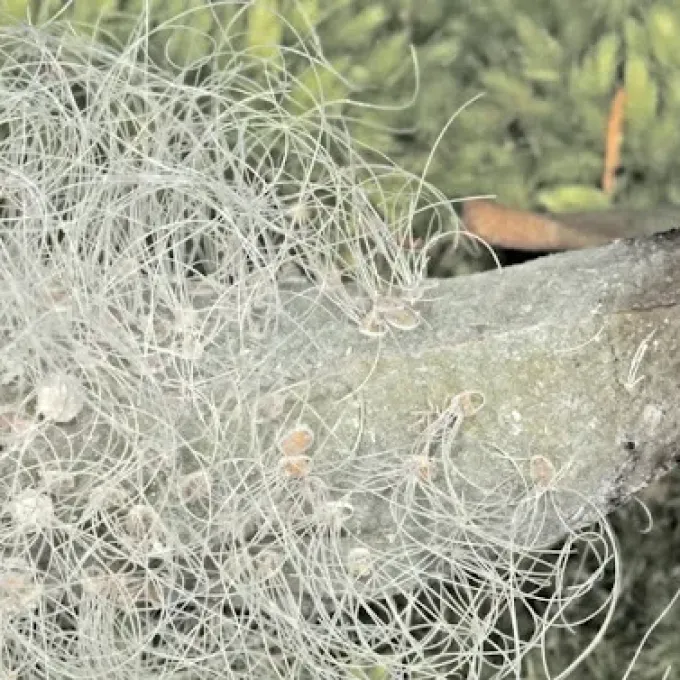
The most visible sign of infestation is the presence of white, cottony, or waxy filaments covering the undersides of leaves, which act as a protective barrier.
The secretion of honeydew is another critical symptom, creating a sticky residue on the leaf surface that attracts ants and promotes fungal growth.
Sooty mold, which develops on top of the honeydew, covers the leaves in a black layer, effectively blocking sunlight and further damaging the plant's health.
The characteristic spiral egg clusters found on the undersides of leaves are definitive evidence used by agronomists to identify Aleurodicus destructor.
Yellowing, curling, and eventually shedding of older leaves are common indicators that the pest population has reached a critical, damaging level.
Control measures
Integrated Pest Management (IPM) strategies are essential, utilizing systemic insecticides that kill the larvae feeding inside the plant tissue.
Biological control agents, particularly parasitoid wasps like Encarsia species, have shown great effectiveness in suppressing whitefly outbreaks naturally.
Good agricultural practices, such as pruning and destroying heavily infested leaves, help in reducing the primary sources of infestation within a plot.
Strict phytosanitary inspections and quarantine protocols are vital to prevent the unintentional spread of this species to new growing regions.
Yellow sticky traps should be deployed for early detection of adults, allowing farmers to apply localized treatments before a full-scale outbreak occurs.
Taxonomy
- Latin name
- Aleurodicus destructor
- Order
- Hemiptera (bugs, aphids, leafhoppers)
- Family
- Aleyrodidae
- EPPO code
- ALEDDE
Discussion
No discussions yet — be the first.