
Aleuroclava similis
Aleuroclava similis
Description
How to identify
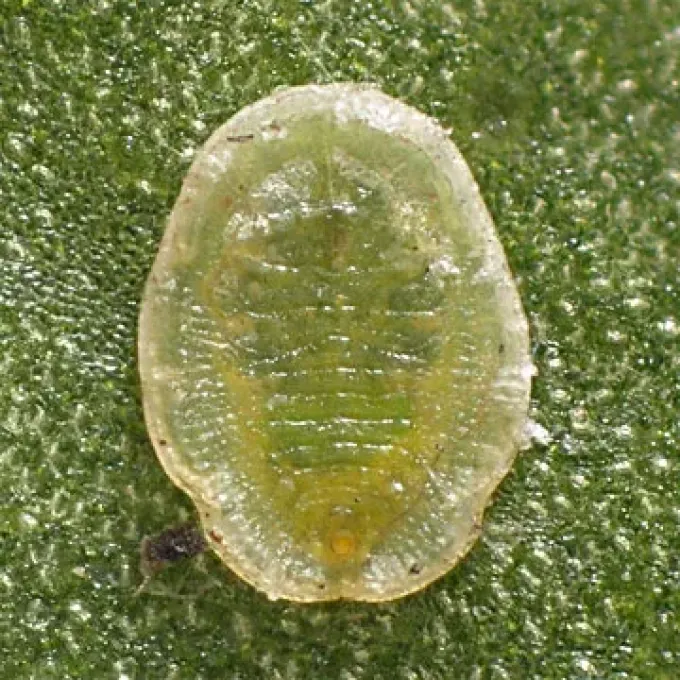
Aleuroclava similis belongs to the whitefly family (Aleyrodidae), order Hemiptera. This species of minute insects is characterized by a specific puparium structure, which has an oval shape with distinctive serrated margins.
Adult individuals have two pairs of wings covered with a whitish waxy powder, resembling tiny moths. The imago size is extremely small, usually not exceeding 1–2 millimeters in length.
For accurate species identification, entomologists use microscopic examinations of larval stages, specifically focusing on the structure of the respiratory tubes and the arrangement of setae on the dorsal side of the body.
Sexual reproduction is the primary method of propagation, yet many species in this genus exhibit high fecundity, allowing the pest to rapidly colonize new territories under favorable conditions.
Unlike some related species, this pest shows high adaptability to different temperature regimes, which complicates visual identification without the use of pheromone traps.
What it damages
The primary host range includes ornamental plants, shrubs, and certain greenhouse crops. The pest feeds on plant sap by piercing the leaf epidermis.
The most active damage occurs on young leaves and shoots, where nutrient concentration is highest. Continuous sap extraction leads to general suppression of the host plant's physiological processes.
During feeding, the insects secrete honeydew, which becomes a favorable substrate for the development of sooty mold. This secondary infestation hinders photosynthesis and significantly reduces the quality of commercial produce.
Heavy infestation leads to leaf deformation, yellowing, and premature leaf drop. Plants lose turgor and become susceptible to other infectious diseases.
Economic damage involves not only direct yield loss but also significant expenses for sanitation measures and chemical plant protection.
When it appears
The pest's activity is directly dependent on environmental temperatures. In greenhouse conditions, reproduction can continue year-round if a host base is available.
In spring and summer, as stable warm temperatures arrive, a population surge is observed. Optimal conditions for larval development include high humidity and the absence of direct rainfall.
The developmental cycle includes the egg, several nymph stages, and the imago. Generations often overlap, making it common to find all pest stages on a plant simultaneously.
Adult migration to neighboring plants occurs mainly during morning and evening hours at low wind speeds. Pest spread can also occur via contaminated planting material.
By autumn, as average daily temperatures decrease, the metamorphosis rate slows down, though the pest successfully overwinters in the larval or puparium stage in sheltered areas.
Signs of infestation
The first sign of the pest is the presence of small white insects that fly up at the slightest disturbance of the infested plant. This is the most visible indicator of colony presence.
- Colonies of immobile larvae and puparia are found on the underside of leaves.
- Appearance of a sticky coating on leaf surfaces and surrounding objects.
- Development of black sooty mold on areas contaminated with honeydew.
- Gradual curling of leaf margins and color change to chlorotic.
- Stunted overall growth and development of the plant compared to healthy specimens.
Examination with a magnifying glass reveals empty exuviae (cast skins) left after adult emergence, indicating the completion of the current generation's cycle.
In early infestation stages, symptoms may be subtle as the pest concentrates in hard-to-reach leaf axils, necessitating regular monitoring.
Control measures
A comprehensive protection system is required, incorporating both preventive and extermination measures. Using yellow sticky traps allows for early detection of imago migration.
Agrotechnical methods include regular pruning to ensure proper air circulation and timely removal of severely infested plant parts. Avoiding over-irrigation is also essential.
The biological control method involves using natural enemies such as parasitic wasps or predatory mites, which effectively suppress whitefly larval populations.
In cases of high pest density, systemic chemical insecticides are applied. It is crucial to rotate products from different chemical groups to prevent resistance development.
After treatment, monitoring is necessary to check the efficacy by examining larval survival on the undersides of leaves 7–10 days after spraying.
Taxonomy
- Latin name
- Aleuroclava similis
- Order
- Hemiptera (bugs, aphids, leafhoppers)
- Family
- Aleyrodidae
- EPPO code
- ALCLSI
Discussion
No discussions yet — be the first.