
Aucuba whitefly
Aleuroclava aucubae
Description
How to identify
The Aucuba whitefly (Aleuroclava aucubae) is a small hemipteran insect belonging to the Aleyrodidae family. Adult individuals are tiny, measuring about 1-1.5 mm in length, with wings covered in a characteristic white waxy bloom.
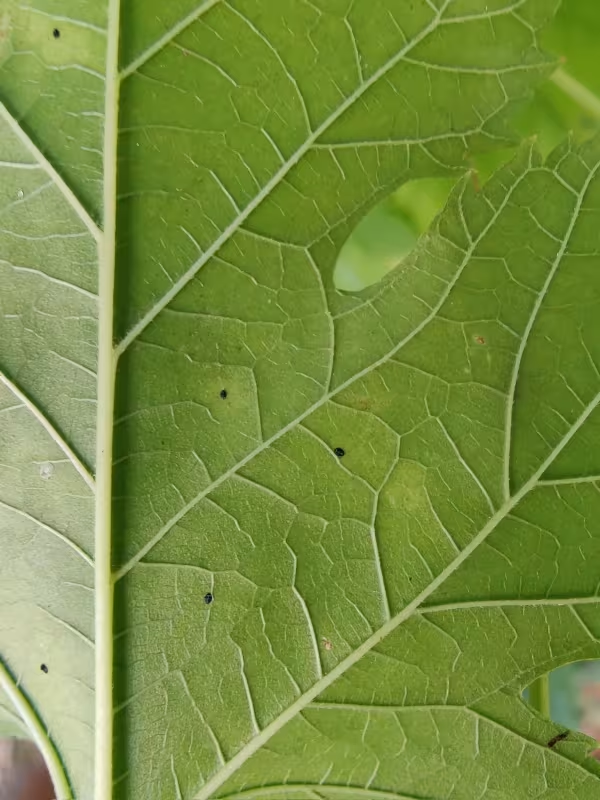
The nymphal stages, often referred to as puparia, are sedentary and oval-shaped. They firmly attach themselves to the underside of leaves, often blending in with the foliage color, making them difficult to detect during early infestations.
The lifecycle includes an egg stage, three distinct nymphal stages, and the adult phase. Depending on the environment, the duration of these stages can vary, allowing for multiple generations per year under greenhouse conditions.
These insects prefer warm, sheltered environments, which makes indoor plants, glasshouses, and botanical nurseries primary sites for their colonization and rapid population expansion.
Morphological identification is usually based on the appearance of the waxy fringe surrounding the nymphal body, a diagnostic feature used by entomologists to distinguish this species from other whitefly types.
What it damages
While primarily associated with Aucuba japonica, this pest also infests various other evergreen shrubs, including citrus species and laurel. The damage is caused by both adults and nymphs feeding on phloem sap.
As the insects feed, they extract vital nutrients from the plant, causing foliage to lose its vigor, develop chlorotic patches, and eventually wither. The stress placed on the plant makes it significantly more susceptible to other diseases.
A major indirect damage is the secretion of honeydew, a sugary substance deposited on the leaves. This excretion serves as a breeding ground for sooty mold, which coats the leaves in a black, powdery fungus.
The presence of sooty mold physically inhibits photosynthesis by blocking sunlight, further starving the plant and causing premature leaf drop. In severe cases, the entire plant may become defoliated.
The loss of aesthetic value is a major concern for ornamental plant owners. Once the infestation reaches a high density, the plant's growth is stunted, and its overall lifespan is substantially reduced.
Signs of infestation
Early warning signs include sticky residues on the leaves (honeydew) and the presence of a black fungal layer. Shaking the branches often causes a swarm of tiny white insects to fly up temporarily.
Closer inspection of the leaf undersides reveals the presence of small, flat, immobile scales. Leaves may show yellowing or mottled spots, which are classic symptoms of prolonged sap-sucking activity.
Control measures
Effective management begins with mechanical removal of infested leaves and washing plants with insecticidal soaps. Consistent monitoring of the underside of the foliage is essential to catch outbreaks early.
Biological control agents, such as parasitoid wasps (e.g., Encarsia formosa) or predatory mites, can be highly effective in greenhouse settings. These natural enemies significantly reduce pest populations without chemical impact.
Chemical control involves the use of systemic insecticides that are absorbed by the plant and ingested by the whiteflies. Regular applications are necessary to break the lifecycle of the pest.
Integrated Pest Management (IPM) practices should be employed, alternating insecticide classes to prevent the development of pesticide resistance. Ensure thorough coverage, especially targeting the underside of leaves.
- Monitor adult populations using yellow sticky traps.
- Prune and destroy heavily infested plant parts immediately.
- Maintain optimal plant health through balanced fertilization.
- Use neem oil sprays as a preventative measure.
- Quarantine new plants before introducing them to an established collection.
Taxonomy
- Latin name
- Aleuroclava aucubae
- Order
- Hemiptera (bugs, aphids, leafhoppers)
- Family
- Aleyrodidae
- EPPO code
- TETLAU
Discussion
No discussions yet — be the first.