
Aleuroclava
Aleuroclava
Description
How to identify
Aleuroclava is a genus of whiteflies within the family Aleyrodidae, order Hemiptera. These insects are extremely small, typically measuring between 1 and 2 millimeters in length, and resemble tiny white moths.
Adult specimens are covered in a fine white powdery wax secreted by glands on their body, which serves as a protective layer against moisture and pesticides. The immature stages (nymphs) are often scale-like and immobile.
Accurate identification of the species within the genus requires microscopic analysis of the puparium. Key diagnostic features include the arrangement of papillae and the shape of the vasiform orifice on the dorsal surface.
The life cycle of Aleuroclava is highly dependent on ambient temperature. In warm greenhouse environments, they can complete multiple generations in a single season, leading to exponential population growth.
Due to their small size and rapid reproductive cycle, these pests can quickly establish large colonies on the undersides of leaves, making early detection difficult for non-specialists.
What it damages
As polyphagous pests, members of the Aleuroclava genus attack a broad range of economically important crops, including tomatoes, cucumbers, eggplants, and various ornamental plants found in nurseries.
Both adults and nymphs cause direct damage by feeding on plant sap. This process removes vital nutrients, leading to reduced vigor, stunted growth, and a loss of overall plant health and productivity.
Feeding results in the excretion of honeydew, a sticky substance that coats the leaves. This honeydew facilitates the growth of sooty mold, which blocks sunlight and severely interferes with the plant's photosynthetic process.
Furthermore, these insects are known vectors for various plant viruses. Transmission of these pathogens can cause irreversible damage, leading to leaf curling, mosaic symptoms, and distorted or unmarketable fruit.
In cases of severe infestation, the cumulative effect of nutrient loss and secondary infections leads to leaf yellowing, senescence, and eventual plant death if left untreated.
Signs of infestation
The most recognizable sign of an Aleuroclava infestation is the presence of small white flies on the underside of leaves. When the foliage is disturbed, they take flight in a distinctive cloud.
Initial symptoms include the appearance of chlorotic (yellowish) spots on the leaves. Over time, these spots expand, covering larger areas and causing the leaf tissue to lose its natural color and vitality.
A sticky, shiny residue on leaves is a primary indicator of honeydew production. Subsequently, the development of black sooty mold on the foliage gives the plants a characteristic dirty and sickly appearance.
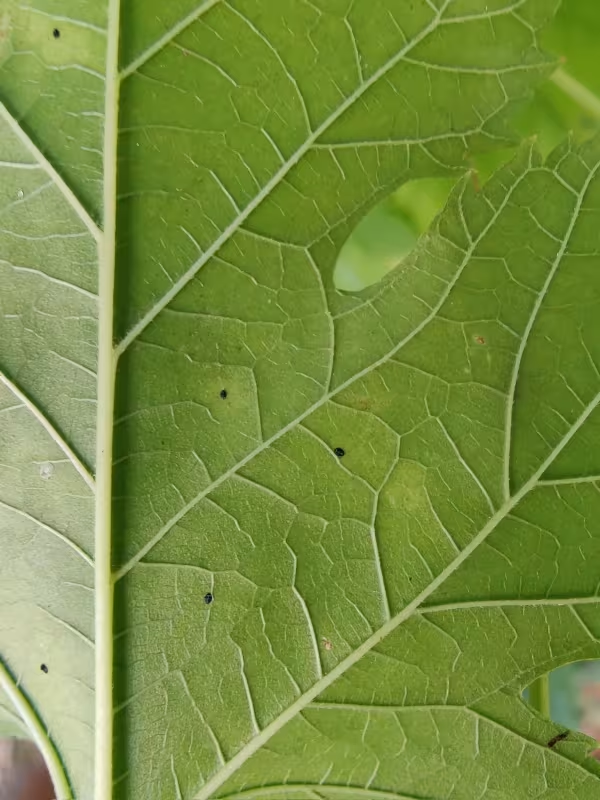
Upon closer inspection of the leaf undersides, one can observe nymphs. These look like small, flat, semi-transparent or waxy scales that are firmly attached to the veins and leaf surface.
Deformed terminal shoots and curled, malformed younger leaves serve as clear warnings that the whitefly population has become established and requires immediate management action.
Control measures
Effective management of Aleuroclava relies on an Integrated Pest Management (IPM) approach that combines cultural practices, biological controls, and judicious chemical applications.
Cultural control involves removing weed hosts from the vicinity of the greenhouse, maintaining strict sanitation protocols, and using fine-mesh screening on vents to prevent the migration of adult whiteflies.
Biological control is highly successful in protected cropping systems. The introduction of parasitoid wasps, such as Encarsia formosa, provides a sustainable way to keep populations below the economic injury level.
When chemical intervention is necessary, insecticides with systemic action are preferred. To manage resistance, growers must rotate products with different modes of action while strictly adhering to safety intervals.
Consistent monitoring using yellow sticky traps is essential for early detection. Detecting the first arrivals allows for targeted interventions, preventing the outbreak from escalating into a major crop-threatening event.
Taxonomy
- Latin name
- Aleuroclava
- Order
- Hemiptera (bugs, aphids, leafhoppers)
- Family
- Aleyrodidae
- EPPO code
- ALCLSP
Discussion
No discussions yet — be the first.