
Maple whitefly
Aleurochiton pseudoplatani
Description
How to identify
The maple whitefly (Aleurochiton pseudoplatani) is a small insect belonging to the family Aleyrodidae. Adult insects are characterized by their white, powdery appearance and small size, typically measuring around 1.5 to 2 mm in length, which makes them look like tiny moths.
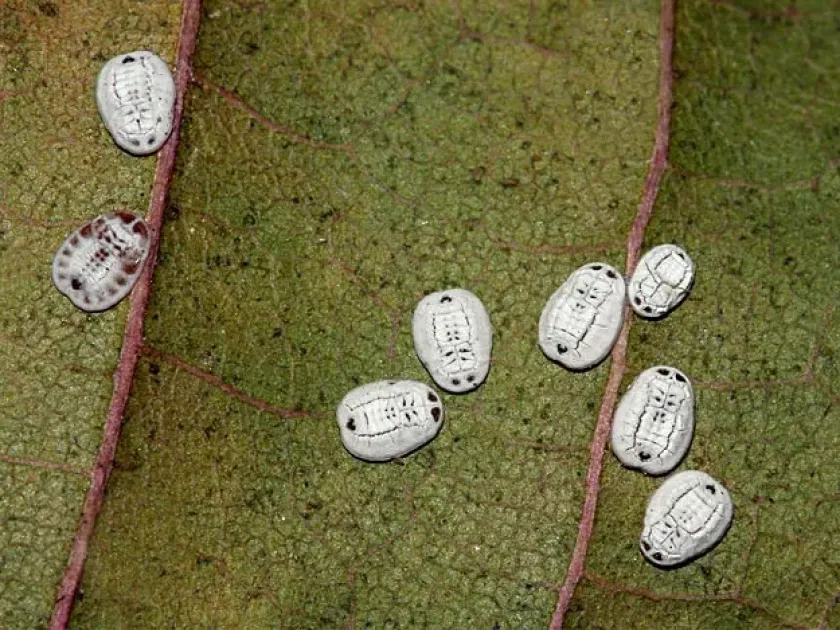
The nymphs of this species are flat and scale-like, often appearing translucent or pale yellow. They adhere tightly to the undersides of maple leaves, where they undergo their development, making them easily overlooked by untrained observers.
A reliable way to identify an infestation is to shake a branch of the affected tree; if whiteflies are present, a cloud of small white adults will suddenly take flight. This behavior is a diagnostic indicator for the presence of the pest.
The insects leave behind waxy secretions and translucent larval skins on the leaves, which serve as further evidence of their activity. These signs are often concentrated near the veins on the leaf underside.
Experts often use hand lenses to examine the lower leaf surfaces during the spring and summer months to detect the presence of the stationary nymph stages before the adult population peaks.
What it damages
The primary damage is caused by the nymphs, which pierce the leaf tissue to feed on the plant sap. This process saps the tree's energy, often leading to reduced growth rates and overall weakening of the host plant.
Infested leaves may exhibit chlorosis, curling, or early senescence. In severe cases, extensive defoliation can occur, which stresses the tree and makes it more susceptible to environmental factors like drought or frost.
The secretion of honeydew by the whiteflies provides a nutrient-rich substrate for the growth of sooty mold. This black fungus covers the leaves, hindering photosynthesis and causing further decline in the tree's health and aesthetic appeal.
For maple trees in urban environments, the aesthetic damage caused by sooty mold and leaf discoloration can be significant, reducing the value of the ornamental plantings.
Long-term infestations can lead to canopy thinning and reduced wood production, which is particularly concerning for young or newly planted maple trees that lack established root systems.
When it appears
These insects overwinter as nymphs, usually settling in sheltered areas on the bark of the trunk or branches, often near the buds. As spring temperatures rise, the nymphs resume feeding as the leaves begin to open.
The first generation of adult whiteflies emerges in late spring or early summer, aligning with the tree's peak foliage development. This is the period when the infestation begins to spread across the canopy.
Throughout the summer, multiple generations can occur, especially in warm climates. The life cycle from egg to adult is relatively short, allowing the population to grow rapidly if conditions remain favorable.
As autumn approaches and temperatures drop, the final generation of nymphs migrates to the woody parts of the tree to find suitable overwintering sites, ensuring their survival until the next season.
Understanding these seasonal patterns is essential for planning management strategies, as treatments are most effective when timed with the emergence of the vulnerable crawler stages.
Control measures
Effective management begins with maintaining high tree vigor through proper irrigation and fertilization. Healthy trees are better equipped to withstand the stress caused by whitefly feeding.
Chemical control involving systemic insecticides is often used for severe infestations. These products are absorbed by the tree and make the sap toxic to the whitefly nymphs, effectively controlling the population.
Biological control should be encouraged by protecting natural predators such as lady beetles, lacewings, and parasitic wasps, which can significantly regulate whitefly numbers in a balanced ecosystem.
Sanitation practices, such as removing and destroying heavily infested branches during the dormant season, can help reduce the population that will emerge in the following spring.
- Regular inspection of the canopy for signs of honeydew and sooty mold.
- Use of yellow sticky traps to monitor adult flight activity.
- Application of insecticidal soaps if the infestation is caught early and is localized.
Taxonomy
- Latin name
- Aleurochiton pseudoplatani
- Order
- Hemiptera (bugs, aphids, leafhoppers)
- Family
- Aleyrodidae
- EPPO code
- ALENPS
Discussion
No discussions yet — be the first.