
Maple whitefly
Aleurochiton aceris
Description
How to identify
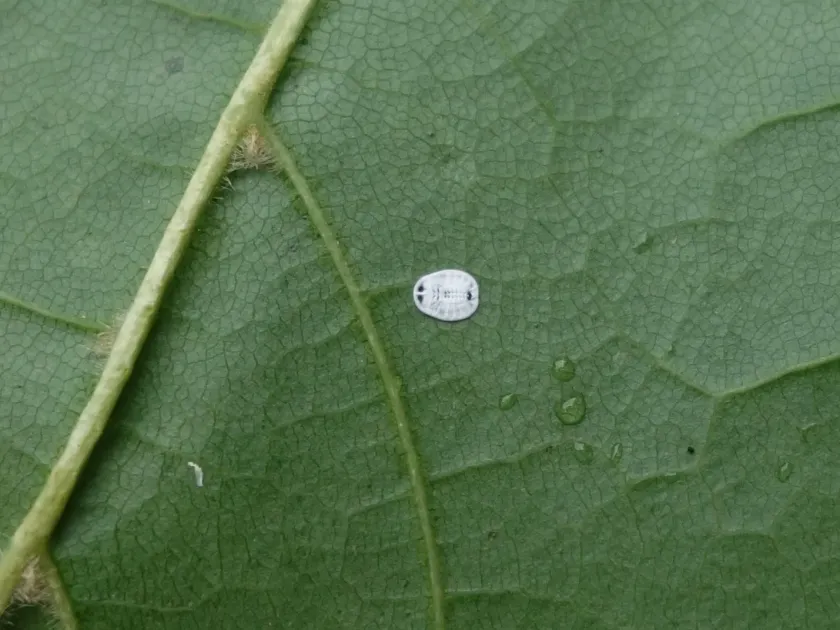
The maple whitefly (Aleurochiton aceris) is a small hemipteran insect belonging to the Aleyrodidae family. Adult specimens are tiny, moth-like insects with wings covered in a characteristic white, waxy powder.
The larvae are flat, scale-like, and translucent, often blending into the foliage of maple trees. They are largely sessile, spending most of their developmental stages attached to the underside of leaves.
The life cycle encompasses eggs, four larval stages, and the adult stage. The waxy secretion produced by the larvae serves as a protective shield against environmental stressors and predators.
Identifying this pest in the early stages requires close inspection, as the larvae are often overlooked due to their small size and specific color matching with leaf veins.
Visual identification focuses on the undersides of leaves, where clusters of white or pale yellow scale-like insects indicate an active infestation.
What it damages
The primary host for this pest is the maple tree. By extracting sap, the larvae rob the tree of essential nutrients, leading to stunted growth and impaired physiological performance.
Heavy infestations result in yellowing, wilting, and premature leaf drop. The aesthetic quality of the maple trees is significantly compromised, particularly in urban landscape settings.
A secondary issue is the development of sooty mold, which grows on the honeydew (sticky secretions) produced by the whiteflies, potentially blocking photosynthesis on the leaf surface.
Severe and chronic attacks can weaken the tree's immune system, making it more susceptible to frost damage, environmental stress, and secondary infections or diseases.
- Yellowing and wilting foliage
- Development of black sooty mold
- Stunted growth of new shoots
- Premature loss of leaves
When it appears
The life cycle begins in early spring as temperatures rise. Emerging larvae move to the newly formed leaves of the maple tree to begin their feeding process.
Multiple generations can occur throughout the summer months, with peak populations usually observed during the warmest periods of the year when metabolic rates are highest.
In July and August, the density of larvae on the underside of the leaves is often at its maximum, leading to the most visible damage to the canopy.
As autumn approaches, the insect prepares for overwintering, typically staying in the late larval stage on branches or in leaf litter on the ground.
Effective monitoring should start in late spring and continue throughout the summer to ensure that the infestation is managed before it becomes widespread.
Control measures
Managing the maple whitefly involves a combination of mechanical and chemical strategies designed to interrupt the pest's life cycle at critical stages.
Fall cleanup is essential; removing and destroying fallen leaf litter significantly reduces the overwintering population, thereby limiting the initial spring emergence.
For chemical control, systemic insecticides are highly effective as they are absorbed into the plant's vascular system, directly targeting the sap-feeding larvae.
When using contact insecticides, it is crucial to ensure thorough coverage of the leaf undersides, as the waxy protective layer can prevent the chemical from reaching the pest.
Promoting tree health through proper fertilization and watering helps increase the tree's natural resistance, making it a less desirable host for whitefly populations.
Taxonomy
- Latin name
- Aleurochiton aceris
- Order
- Hemiptera (bugs, aphids, leafhoppers)
- Family
- Aleyrodidae
- EPPO code
- ALENAC
Discussion
No discussions yet — be the first.