
Maple whitefly
Aleurochiton
Description
How to identify
Maple whitefly (genus Aleurochiton) is a small hemipteran insect belonging to the family Aleyrodidae. Adult insects are tiny, moth-like creatures, usually 2–3 mm long, with wings covered in a characteristic white, powdery wax secretion.
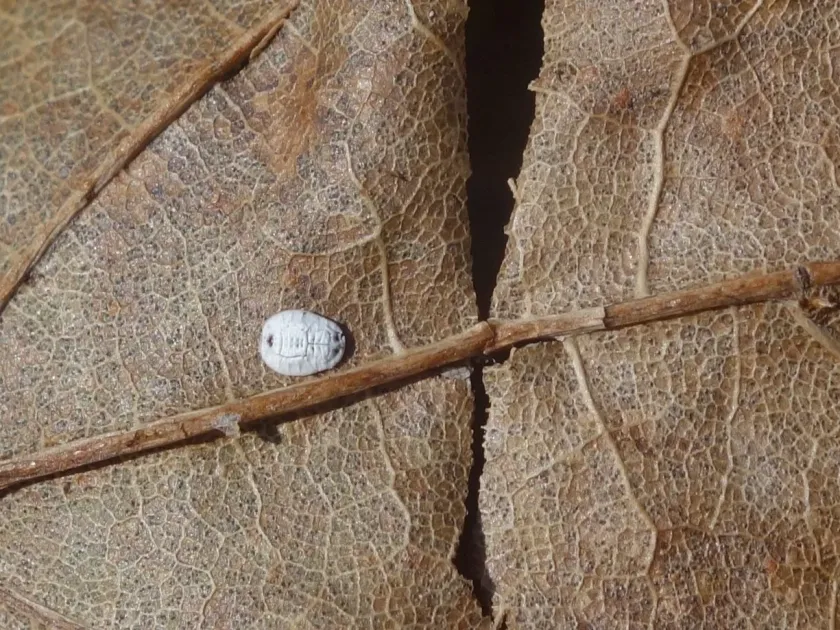
The immature stages, known as nymphs or puparia, are flat, scale-like, and often translucent or yellowish. They attach themselves firmly to the undersides of maple leaves, making them difficult to detect without close inspection.
The life cycle typically includes the egg stage, three nymphal stages, a puparium stage, and the adult (imago). The pest overwinters primarily as late-stage nymphs, hiding in bark crevices or among fallen leaves.
Adult females deposit clusters of eggs on the undersides of leaves, ensuring that the next generation has immediate access to food and shelter from environmental stressors.
Identification of the specific species within the Aleurochiton genus often requires laboratory examination of the puparium's morphology, specifically the structure of the wax glands and marginal features.
What it damages
The maple whitefly specifically targets maple trees (Acer spp.), including Norway and field maples. The pest feeds by piercing the leaf tissue and extracting phloem sap, which is vital for the tree's health.
Infestation leads to leaf yellowing, stunting, and reduced overall vigor of the tree. Severe cases result in premature leaf drop, which can significantly stress the tree before the onset of winter.
A major indirect threat is the production of honeydew, a sticky waste substance. This substance serves as a substrate for sooty mold, a fungus that covers leaves in a black, powdery layer.
Sooty mold growth drastically reduces the leaf's ability to perform photosynthesis. Over time, the energy reserves of the tree are depleted, leading to stunted shoot growth and branch dieback.
Urban trees are particularly susceptible to heavy whitefly populations. Weakened trees become more prone to secondary attacks by wood-boring insects and pathogenic fungi, threatening the tree's survival.
When it appears
The activity of adult maple whiteflies usually begins in late spring, coinciding with the tree's bud break. This is the period when they search for suitable foliage to lay eggs for the first generation.
A second wave of adult activity often occurs in mid-to-late summer. The duration and number of generations are heavily dependent on local climatic conditions, with warmer seasons fostering faster development.
By autumn, the nymphs settle into their final stages and prepare for overwintering. During this time, they become dormant, clinging to bark or remaining attached to leaf litter on the ground.
Monitoring should be persistent throughout the growing season. Early detection is essential, especially during the spring, to manage the population before it reaches damaging levels.
If climatic conditions remain favorable throughout the summer, the whitefly population can expand rapidly, necessitating mid-summer management interventions to protect the canopy.
Control measures
Managing the maple whitefly requires a multi-faceted approach. Cultural, biological, and chemical methods should be balanced to ensure effective long-term control.
Sanitation is a critical cultural practice; removing and destroying fallen leaves in the autumn reduces the number of overwintering nymphs that will emerge the following spring.
Chemical control should be targeted. Systemic insecticides, which are absorbed by the tree and circulate in the sap, are highly effective against sap-sucking insects like whiteflies.
- Apply systemic insecticides (e.g., neonicotinoids) as a soil drench or trunk injection.
- Use yellow sticky traps to monitor and reduce adult population numbers.
- Promote biodiversity by encouraging natural predators like ladybirds and lacewings.
- Maintain tree health through proper watering and mulching to improve resistance.
- Prune out heavily infested branches to improve air circulation within the canopy.
Always follow label directions and local regulations when using chemical treatments. Rotating modes of action is necessary to prevent the whitefly from developing resistance to common insecticides.
Taxonomy
- Latin name
- Aleurochiton
- Order
- Hemiptera (bugs, aphids, leafhoppers)
- Family
- Aleyrodidae
- EPPO code
- ALENSP
Discussion
No discussions yet — be the first.