
Citrus blackfly
Aleurocanthus woglumi
Description
How to identify
The citrus blackfly (Aleurocanthus woglumi) is a small hemipteran insect belonging to the whitefly family (Aleyrodidae). Adult specimens are approximately 1.5 mm long and are easily recognized by their distinct bluish-black wings.
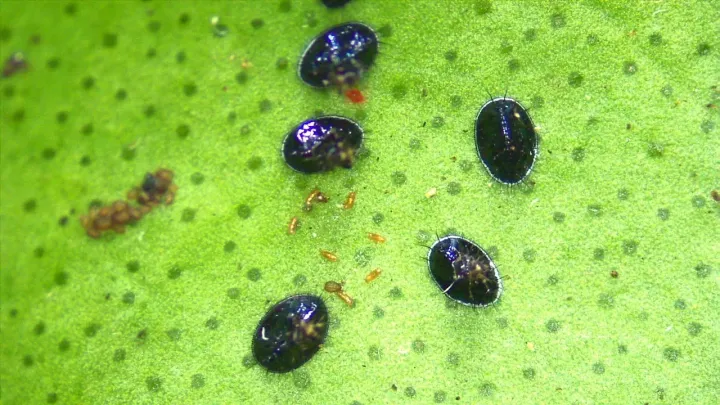
The larvae go through several developmental stages before becoming pupae. The pupal stage is highly diagnostic; these pupae are oval-shaped and typically fringed with a white waxy secretion, which serves as a key feature for field identification.
Females lay their eggs in characteristic spirals on the underside of leaves. After oviposition, the egg clusters are often covered with a dark, powdery substance, making them inconspicuous to the untrained eye during casual inspection.
The biological cycle is deeply rooted in tropical and subtropical environments, where the species can complete up to six generations annually. High humidity and stable warm temperatures create the ideal conditions for rapid population growth.
Reproduction is sexual, with a single female capable of laying several hundred eggs in her lifetime. The growth rate of the population is heavily influenced by the nutritional status of the host plant and the overall environmental stability of the habitat.
##damage##Citrus trees are the primary hosts, including lemons, oranges, mandarins, and grapefruits. However, the pest is a polyphagous insect and also attacks avocados, mangoes, coffee plants, and a wide variety of ornamental landscape species.
Both adults and larvae cause damage by piercing the leaf epidermis and extracting sap. This feeding process results in significant loss of vigor, shoot deformation, and a marked reduction in total fruit yield for the affected tree.
As they feed, citrus blackflies excrete large amounts of honeydew. This sticky substance serves as an excellent substrate for the growth of sooty mold, a fungus that quickly covers the leaves in a thick, dark layer.
The presence of sooty mold physically inhibits photosynthesis by blocking sunlight from reaching the leaf surface. If left unmanaged, this condition leads to premature leaf drop and can eventually result in the death of the tree.
Beyond the direct physical impact, the citrus blackfly is a known vector for various plant pathogens. These viruses can cause systemic damage to citrus trees, leading to stunted growth and unmarketable, deformed fruit.
Signs of infestation
The most immediate visual sign of an infestation is the presence of a sticky, glistening honeydew layer on the leaves and branches. Shortly thereafter, the development of black sooty mold gives the tree an unsightly, charred appearance.
Upon inspecting the underside of the leaves, one can find clusters of dark, fringe-bordered pupae. The spiral pattern of egg deposition is a reliable indicator of citrus blackfly presence and helps differentiate it from other whitefly species.
Adult flies are highly mobile and will take flight in large numbers when the foliage is disturbed. Frequent sightings of these small black insects in the canopy are a clear indicator of a severe and established infestation.
The plant will exhibit visible signs of nutrient stress, including yellowing leaves and stunted new growth. Fruit on heavily infested branches often remains undersized and may drop prematurely, causing significant economic losses.
- Yellowing and curling of leaves.
- Sticky honeydew coating on foliage.
- Heavy black sooty mold coverage.
- Spiral-patterned egg clusters on leaves.
- Large numbers of adults taking flight when disturbed.
Control measures
Biological control is the cornerstone of sustainable management for this pest. The use of specific parasitoid wasps, such as those from the genera Encarsia and Eretmocerus, has proven highly effective in suppressing population levels.
Chemical control programs involve the use of systemic insecticides during peak larval activity periods. It is critical to rotate between different chemical classes to prevent the pest from developing resistance to common active ingredients.
Cultural practices include regular pruning to improve canopy aeration and light penetration. Removing heavily infested twigs or branches during the early stages of an outbreak helps reduce the total pressure on the host tree.
Washing the canopy with high-pressure water mixed with insecticidal soaps or horticultural oils can mechanically remove honeydew and many nymphs. This practice aids in restoring leaf function and mitigates the growth of sooty mold.
Monitoring populations using yellow sticky traps is essential for timely decision-making. Consistent surveillance allows for early detection, enabling farmers to apply control measures before the population reaches an uncontrollable threshold.
Taxonomy
- Latin name
- Aleurocanthus woglumi
- Order
- Hemiptera (bugs, aphids, leafhoppers)
- Family
- Aleyrodidae
- EPPO code
- ALECWO
Discussion
No discussions yet — be the first.