
Citrus spiny whitefly
Aleurocanthus spinosus
Description
How to identify
The Citrus spiny whitefly (Aleurocanthus spinosus) is a destructive member of the Aleyrodidae family. It is a significant quarantine pest, particularly threatening to citrus and other evergreen plantations worldwide.
Adults are easily distinguished from common whiteflies by their dark, slate-grey wings adorned with small light spots. They are approximately 1.5 mm long and possess a body covered with a waxy secretion that makes them resilient.
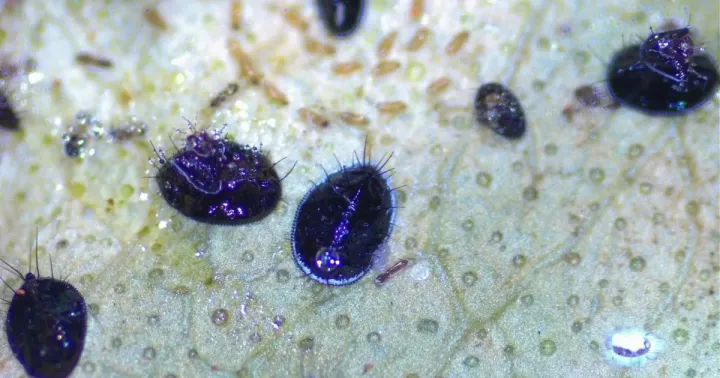
The larval stages are the most characteristic, presenting as dark, oval, and flattened structures. Their bodies are fringed with distinct, long, dark spines, which provides the primary visual identification key for this species.
The pupal stage occurs within a dark, spiny puparium that is firmly attached to the host leaf. This stage is extremely hardy and is the primary vector for the pest's accidental spread across international borders via nursery stock.
Development depends heavily on temperature and humidity. Under optimal conditions, the life cycle completes in a few weeks, allowing for multiple overlapping generations within a single growing season.
What it damages
The primary hosts are citrus species such as lemon, orange, and mandarin, but the pest is also known to infest grapes, pears, and Camellia sinensis. It is highly polyphagous, posing a threat to various crops.
By piercing and sucking phloem sap, the whitefly depletes the plant's resources. This leads to stunted growth, yellowing of leaves, and a significant reduction in fruit yield and quality, often making produce unsalable.
A major indirect impact is the secretion of copious amounts of honeydew. This sticky substance coats the leaves, providing a perfect substrate for the colonization of sooty mold fungi, which appear as black, powdery patches.
The sooty mold covers the leaf surface, effectively blocking sunlight and inhibiting photosynthesis. If left unchecked, the plant may suffer from severe leaf drop, twig dieback, and, in cases of extreme infestation, total mortality.
In addition to physiological damage, the presence of the pest leads to increased costs for pesticide applications and potential trade restrictions on agricultural products from affected areas.
Signs of infestation
The earliest symptom is the presence of a sticky, glistening honeydew residue on the leaves. Shortly after, this residue turns black due to the rapid growth of sooty mold fungi on the surface.
A closer inspection of the undersides of the leaves will reveal the colonies of spiny larvae. Their dark, fringed appearance is quite different from the typical yellowish or translucent larvae of other whitefly species.
Trees exhibiting severe symptoms show signs of chlorosis (yellowing) and early senescence of leaves. The overall canopy may appear thin, and the plant often looks lackluster compared to healthy, uninfested counterparts.
Adult whiteflies can be observed flying around the canopy when the foliage is disturbed. Yellow sticky cards are highly effective for monitoring the presence and population density of the adult stages.
Ant activity on the branches is another common indicator, as ants are often attracted to the sweet honeydew secreted by the whitefly colonies and will sometimes defend the pests from natural predators.
Control measures
Strict phytosanitary control is the first line of defense. All incoming plant material, especially citrus seedlings, must be thoroughly inspected for puparia on the underside of the leaves to prevent local establishment.
Cultural control involves pruning and disposing of highly infested branches. Destroying infested plant debris by burning or deep burial is essential to reduce the inoculum load in the orchard or garden.
Chemical control focuses on the use of systemic insecticides, particularly those in the neonicotinoid class, which are absorbed by the plant and kill the nymphs as they feed. Application timing is critical to target the more vulnerable nymphal stages.
- Application of horticultural oils to suffocate nymphs and eggs.
- Biological control through the release of parasitoid wasps such as Encarsia spp.
- High-pressure water sprays to physically dislodge the nymphs and clean honeydew.
An integrated pest management (IPM) approach is recommended. This includes rotating chemical classes to prevent resistance development and monitoring natural enemy populations to allow for biological control to assist the process.
Taxonomy
- Latin name
- Aleurocanthus spinosus
- Order
- Hemiptera (bugs, aphids, leafhoppers)
- Family
- Aleyrodidae
- EPPO code
- ALECSO
Discussion
No discussions yet — be the first.