
Mango blackfly
Aleurocanthus mangiferae
Description
How to identify
The mango blackfly, scientifically known as Aleurocanthus mangiferae, is a significant agricultural pest belonging to the Aleyrodidae family. Unlike common whiteflies, the adults possess a dark, greyish-blue or black body, which makes them quite distinct during inspection.
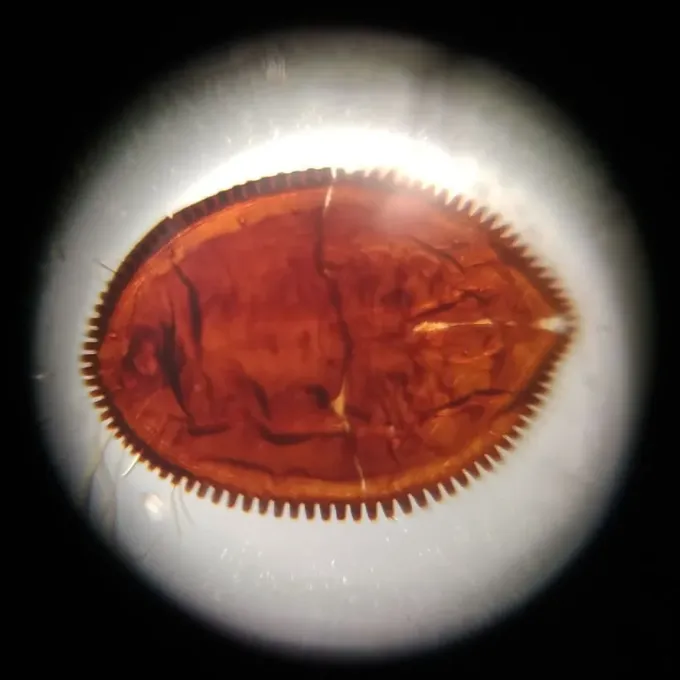
The most recognizable stage of this pest is the pupal stage. These pupae are observed on the underside of leaves as small, spiny, jet-black oval structures arranged in groups, often in circular or spiral patterns characteristic of this species.
Developmental stages include eggs, several larval instars, pupae, and winged adults. The speed of the life cycle is highly dependent on ambient temperatures, with development occurring more rapidly in hot, humid tropical climates.
Adults are typically found on the underside of young leaves, where they congregate to feed and lay eggs. Their small size and cryptic behavior make early detection a challenging task for growers.
Monitoring should be conducted frequently during the flushing periods of mango trees, as the soft tissues of new shoots provide the most suitable site for oviposition and larval settlement.
What it damages
The primary host for Aleurocanthus mangiferae is the mango tree (Mangifera indica). However, heavy infestations can occasionally spread to other evergreen fruit trees in the surrounding orchard environment.
Damage is caused by both larvae and adults extracting phloem sap from the leaves. This continuous feeding weakens the host tree, leading to stunted growth, leaf chlorosis, and, in severe cases, branch dieback.
A secondary but equally damaging effect is the excretion of honeydew. This sticky substance coats the leaf surface, promoting the rapid growth of sooty mold, which effectively blocks sunlight and severely impairs the tree's photosynthetic ability.
Fruit quality is significantly reduced by the presence of sooty mold and honeydew, making the crop unmarketable. Furthermore, trees weakened by constant feeding are more susceptible to other secondary pests and pathogens.
If left unmanaged, a high population of blackfly can cause total yield failure, especially in young orchards where trees have less energy stored in their woody tissues.
Control measures
Effective management of the mango blackfly requires an Integrated Pest Management (IPM) approach. The key is to reduce the population density while minimizing the impact on natural beneficial insects that keep the pest in check.
Cultural practices remain the first line of defense. Proper orchard sanitation, including the removal and disposal of heavily infested leaves and branches, can significantly reduce the potential for re-infestation in the following season.
Biological control is highly recommended. Several species of parasitic wasps (e.g., Encarsia spp.) and ladybird beetles are natural enemies that can keep blackfly numbers below economic threshold levels in balanced ecosystems.
Chemical control should be applied judiciously. Systemic insecticides are effective but should be used sparingly to prevent the development of resistance. Always ensure that the chosen chemicals are compatible with local regulatory standards for fruit crops.
- Utilizing yellow sticky traps for monitoring adult flight activity.
- Applying insecticidal soaps to wash away honeydew and kill soft-bodied larvae.
- Spraying horticultural oils to create a suffocating barrier over pupae.
- Maintaining proper tree pruning to ensure adequate light and airflow within the canopy.
Taxonomy
- Latin name
- Aleurocanthus mangiferae
- Order
- Hemiptera (bugs, aphids, leafhoppers)
- Family
- Aleyrodidae
- EPPO code
- ALECMA
Discussion
No discussions yet — be the first.