
Alebra
Alebra
Description
How to identify
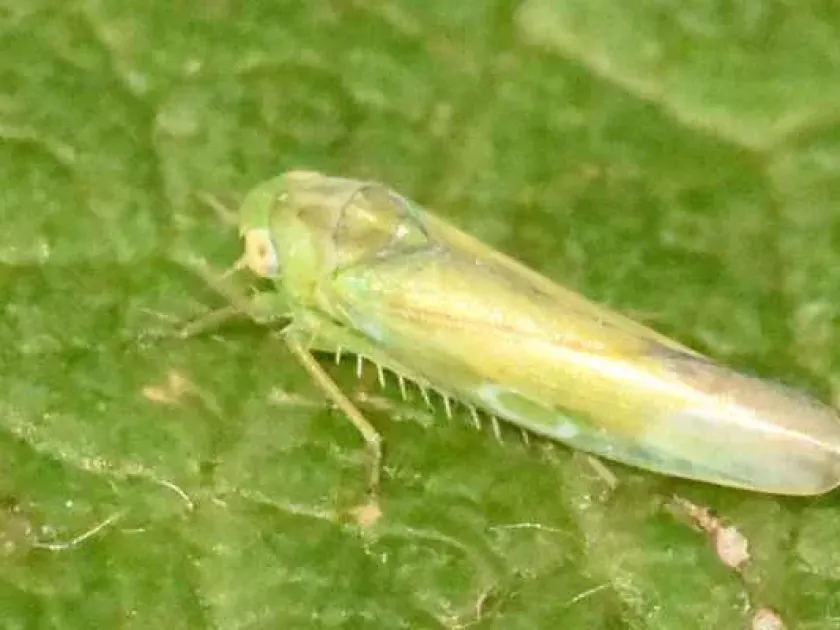
Alebra is a genus of leafhoppers belonging to the family Cicadellidae. These are small insects, typically measuring between 3 and 5 millimeters in length.
The adults are characterized by a slender body and are capable of sudden, rapid jumps. They often display a greenish or yellowish hue, providing effective camouflage against foliage.
Nymphs resemble the adults but lack wings and are smaller in size. They go through several developmental instars, becoming larger with each molting phase.
These insects prefer to dwell on the undersides of leaves, which allows them to remain hidden from predators and often makes direct pesticide application more challenging.
Identification is best achieved by inspecting the underside of leaves or by using yellow sticky traps, which attract the mobile adult leafhoppers.
What it damages
Alebra affects a wide variety of woody plants and crops, including grapes, apple trees, pear trees, maples, and various ornamental shrubs.
Both adults and nymphs cause damage by piercing leaf tissue and sucking the sap. This process impairs the plant's ability to conduct photosynthesis efficiently.
Heavy infestations result in yellowing leaves, the appearance of necrotic spots, and premature leaf drop, which significantly weakens the plant over time.
In addition to direct feeding damage, leafhoppers act as potential vectors for various plant pathogens, including viruses and phytoplasmas, posing an indirect threat.
Reduced vigor due to sap loss makes the plants more susceptible to environmental stress, winter damage, and secondary infections, leading to lower yields.
When it appears
The life cycle of Alebra is heavily dependent on temperature. The first generation typically emerges in late spring once the weather warms sufficiently.
Population density often peaks during the mid-summer months when optimal heat and humidity support rapid development and reproduction of multiple generations.
Because there are several generations per growing season, continuous monitoring is required to ensure that the pest does not reach damaging levels.
In the autumn, the insects transition toward a dormant state. They frequently seek shelter in bark crevices or plant debris to survive the winter temperatures.
Understanding the timing of these life stages is crucial for applying control measures at the precise moment when the pests are most vulnerable.
Signs of infestation
The earliest sign of an Alebra infestation is the development of small, whitish stippling or spotting on the upper surface of the leaves.
Observation of the leaf underside often reveals the presence of live nymphs or discarded, translucent skins (exuviae) left behind after molting.
Leafhoppers produce honeydew, a sticky substance that can accumulate on leaves, often leading to the growth of unsightly black sooty mold fungus.
The presence of sooty mold is a clear indicator that the leafhopper population is high and has been feeding on the plant for a significant period.
Yellowing, curling, and early wilting of leaves are advanced symptoms indicating that the pest pressure has significantly damaged the plant's vascular system.
Control measures
Integrated Pest Management (IPM) is the most effective approach to handling Alebra, focusing on monitoring and reducing population levels.
- Utilizing yellow sticky traps for monitoring and reducing adult leafhopper numbers in the orchard or vineyard.
- Applying systemic or contact insecticides during the early nymph stages to prevent population explosions.
- Maintaining weed-free conditions around crops to eliminate secondary host plants that harbor the pests.
- Encouraging natural predators such as ladybugs, lacewings, and parasitic wasps to maintain ecological balance.
- Sanitizing the area by clearing away and destroying leaf litter in the fall to reduce overwintering sites for the insects.
Taxonomy
- Latin name
- Alebra
- Order
- Hemiptera (bugs, aphids, leafhoppers)
- Family
- Cicadellidae
- EPPO code
- ALEBSP
Discussion
No discussions yet — be the first.