
Corn blotch leafminer
Agromyza parvicornis
Description
How to identify
The corn blotch leafminer (Agromyza parvicornis) is a member of the Agromyzidae family, order Diptera. These small flies are known for their larvae which mine the leaves of various plant species, particularly corn.
Adults are small, generally dark-colored flies. The females use an ovipositor to insert eggs directly into the leaf tissue, ensuring the larvae have immediate access to food upon hatching.
The larvae are typically pale, maggot-like, and live entirely within the mesophyll layer of the leaf. Their small size makes them difficult to observe from the surface without inspecting the mines.
The life cycle varies based on environmental temperatures, allowing for multiple generations per year in warmer climates, which significantly impacts the intensity of the infestation.
Pupation primarily occurs in the soil or within plant debris. Managing these overwintering sites is a crucial step in reducing the population size for the following season.
What it damages
The primary host for this pest is corn, though it can also infest various wild grasses. Heavy infestations are most damaging during the early vegetative growth stages of the crop.
Larval mining activity destroys the leaf tissue, disrupting photosynthesis. This leads to a reduction in the plant's overall vigor and can slow down its physiological development significantly.
Extended leaf damage leads to chlorosis and premature tissue death. In severe cases, the photosynthetic capacity of the plant is reduced, impacting grain filling and final yield.
Secondary infections, such as bacterial or fungal spots, often colonize the damaged leaf areas, further stressing the plant and exacerbating the impact of the initial insect damage.
Field-wide losses are usually localized, but if the infestation starts early in the season, it can lead to stunted growth and reduced uniformity across the corn crop.
Signs of infestation
The earliest signs of an infestation are small, white feeding punctures caused by adult females when they feed on plant sap or prepare to lay their eggs on the leaves.
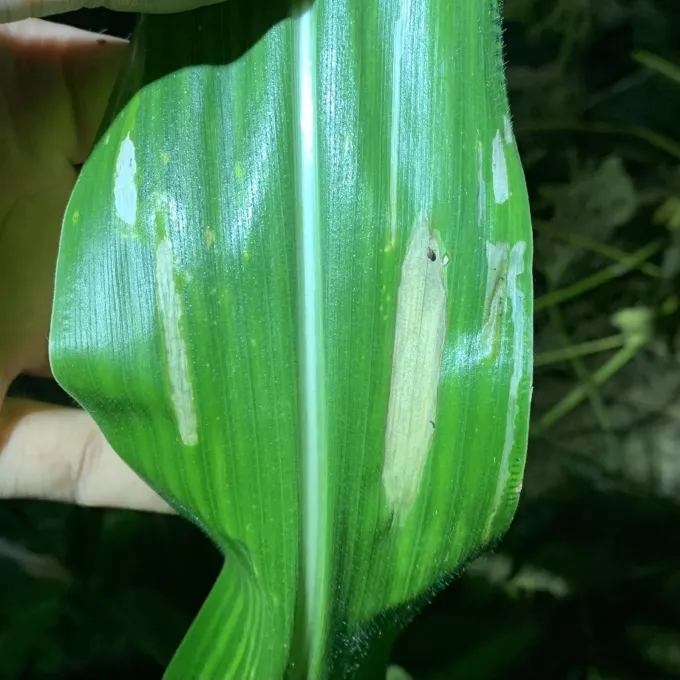
The most distinctive symptom is the development of linear or blotchy mines. These tracks are initially thin and become wider as the larva develops and consumes more tissue.
Affected leaves often show yellowing and necrotic patches along the tracks. When viewed against the light, the tunnels appear as distinct translucent patterns within the leaf blade.
The presence of small dark fecal pellets inside the mines is another diagnostic sign that confirms the activity of the leafminer larvae rather than other leaf-damaging agents.
Damage is typically first visible on lower leaves. As the population grows, the mining activity moves to higher, younger leaves, potentially affecting the plant's growth point.
Control measures
Cultural control is the first line of defense. Deep plowing after harvest helps bury crop residues and pupae, effectively reducing the survival rate of the overwintering population.
Crop rotation is an essential strategy. By avoiding continuous corn planting in the same area, farmers can significantly break the life cycle of the leafminer.
Weed management, especially the removal of perennial grasses around field borders, is critical as these plants serve as alternative hosts for the pest throughout the season.
Chemical control involving systemic insecticides is necessary when infestation levels reach economic thresholds. Such products must be capable of reaching the larvae inside the leaves.
- Use of systemic seed treatments to provide early-season protection.
- Monitoring of adult fly activity using sticky yellow traps in the field.
- Targeted insecticide applications during early crop development phases.
Taxonomy
- Latin name
- Agromyza parvicornis
- Order
- Diptera (flies)
- Family
- Agromyzidae
- EPPO code
- AGMYPA
Discussion
No discussions yet — be the first.